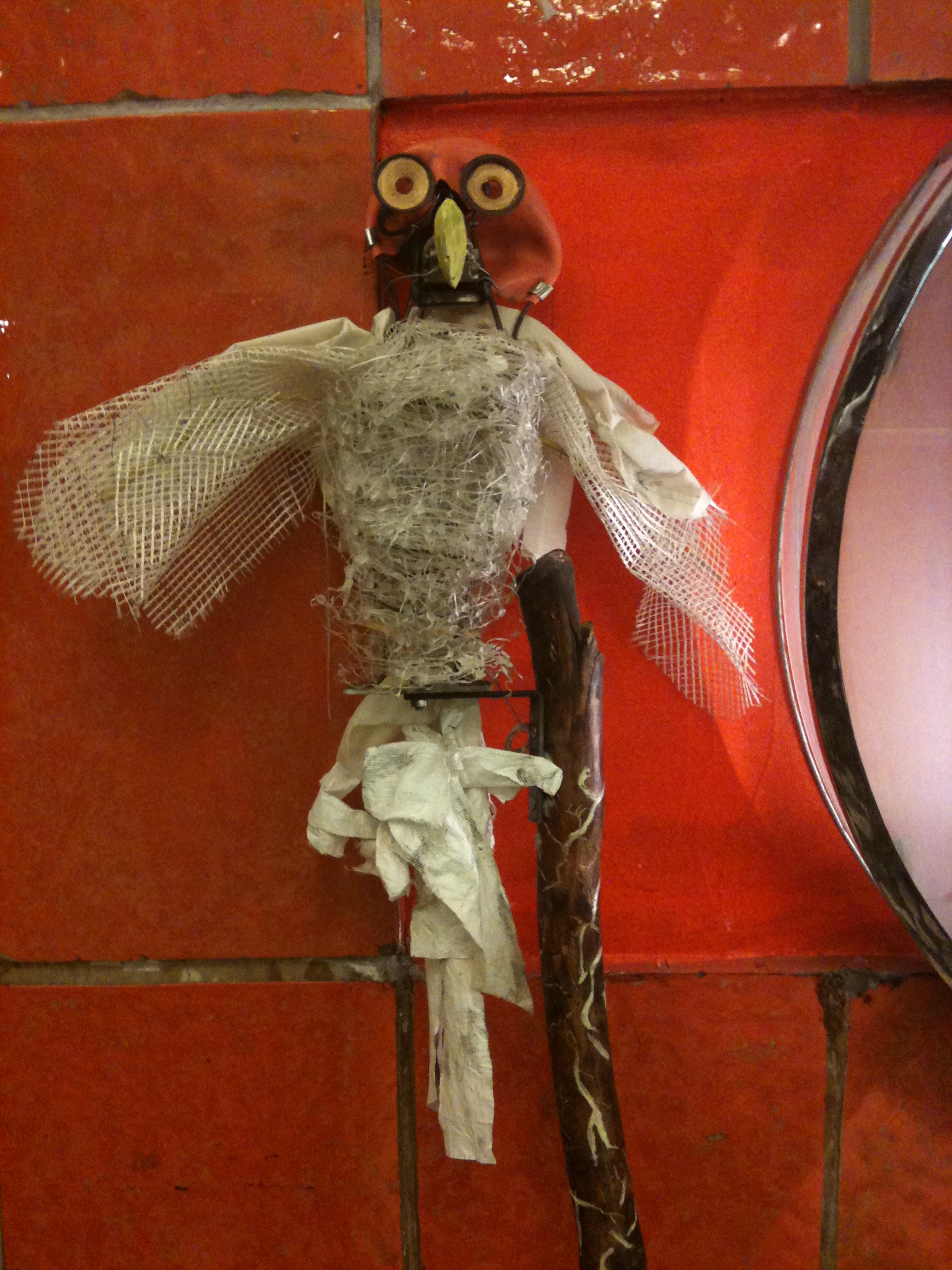
DEZSŐ TAKÁCS ARTIST EXHIBITION AT THE CITY OF PÉCS

This slideshow requires JavaScript.

A few days ago, Dezső  Takács, Rudnay-winning graphic artist,  teacher, painter, graphic artist  has stepped into his 8th decade and on this occasions the City of Pécs’s  Gallery, at the Szécsényi Square opens an exhibition of his art work.

January, 25 to be seen until February 24. 2013.

The exhibition will be opened by Kossuth Prize winning architect and professor Zoltán Bachmann.

In the beginning of his career  for  two years  worked as a teacher  at Villány. Moved to Pécs in 1961 where from then on he lived and worked.  His significant works as an art teacher, as an inspector,  as a consultant in planning  art education  at the surrounding school in Pécs.

At Leipzig was a scholarship, where he was at a local college and educated himself at lithography workshops. Between 1977-78 took part in the creating community by reorganizing art at Mako. For many years to come he taught artists from home and abroad of stone and printing preparation at the occupations Graphics and Creative Workshop for Educators Workshop. For sixteen years, founder and teacher at the Creative Arts Workshop,  Head of the Fine Arts in Mecsek Mining Circle (now Medgyessy visual artist Francis Circle).

Basically, deals with graphics. In the 60s produced mainly lino technique . In the second opart of the ’60s, he had his first solo exhibition, also in this period brought the ink drawing geometric-constructive concept.

His most characteristic works can be seen  at the city of Pécs  o the etchings depicting buildings. Dezső Takács have had already 100 solo exhibitions. Also held exhibitions in many European countries, Pretoria, South Africa.  His permanent exhibition at Pécs  can be viewed at the Aquarium and Terrarium at the English-German Language School Center.

He also has a number of different graphic communicated in the daily and weekly newspapers. His most characteristic works of the city of Pécs sights etchings depicting buildings.

Dezső Takács known series: Miner’s Life, Old Pécs, Gates at Pécs,  Monuments of Pécs,  Churches, Temples, Baranyai German’s minority villages, and Region Tettye, Reflections, Villany-Siklos Wine Route.

Awards and Honors:  National Service Medal of Merit Gold Standard.

Update by Aggie Reiter

CÉZANNE – INTERNATIONAL SYMPOSIUM – MUSEUM OF FINE ARTS – BUDAPEST

At the Budapest’s Museum of Fine Arts you can rarely see such a great life’s work  held at the comprehensive exhibition with the show of Cézanne. Previously, had the pleasure to visit the breathtaking exhibition and looking forward to be present at the forthcoming International Symposium.

Just a brief reminder of  Cézanne’s past … “Although Cézanne (1839-1906) is usually associated with Provence, he cannot be confined to the south of France. He spent more than half of his time as a painter in Paris and its environs. He travelled between Aix-en-Provence and Paris over 20  occasions, of course, not for the same reasons when he was 20, nor  when he was 60 yrs. old.. When he was already an elderly man and still racked with doubts (“I am making slow progress,” he wrote at the end of his life) he painted in secluded spots on the banks of the Marne or near Fontainebleau, or made portraits of an art dealer or a critic and often his wife. He was no longer the young man eager to “conquer” Paris, wanting to be admitted to the fine art school and show his works in the Salon. In Paris, he came up against both tradition and modernity. He worked out “formulas” that he later used in Provence. He shuttled back-and forth between Provence and the Ile de France, although the rhythm of his journeys changed. After 1890, critics, art dealers, and collectors started to take an interest in his work. Cézanne longed for recognition which could only come from Paris. More than any other artist, he left his stamp on modern art: avant-garde artists from the postimpressionists to Kandinsky looked on him as a forerunner, “the father of us all” as Picasso said.”

Below the source is from the Museum of Fine Arts -Budapest

Symposium-Cézanne and the Past

Cézanne and the Past. Tradition and Creativity

International Symposium

At the Museum of Fine Arts, Budapest, Baroque Hall

Access: District XIV. 41 , Dózsa György Rd.

Monday, January 28, 2013.

Open hour 10 a.m. to 5.30 p.m.

The conference is free of charge.

This symposium, organised in the occasion of the Cézanne and the Past. Tradition and Creation exhibition will focus on different themes and issues that could not be dealt with in detail within the frame of the show and its catalogue (such as Cézanne and Antiquity, Cézanne and Courbet etc.). The invited lecturers (all internationally renowned scholars) will examine different aspects of Cézanne’s relationship to the past from a new, original point  of view.


The symposium will be chaired by Richard Shiff, professor at the University of Texas at Austin, who also participated to the exhibition catalogue with an article entitled Sensation, Cézanne. His book Cézanne and the End of Impressionism. A Study of the Theory, Technique, and Critical Evaluation of Modern Art, published in 1984, was one of the most influential studies on Cézanne of the last decades.

Faya Causey, Head of the academic programs department at the National Gallery of Art, Washington, D.C. A specialist in ancient art, Causey is the author of many articles appearing in a variety of journal and catalogues. She will examine the influence of Antiquity (especially Greek and Roman sculpture) on the art of Cézanne. Causey studied the relationship between antique and modern art in her essay Jasper Johns: Ancient Aspects.

Matthew Simms, associate professor at California State University, Long Beach, will present a lecture entitled Cézanne, Drawing and the Past. Simms has worked extensively on nineteenth century French art and criticism. His research and writing on Paul Cézanne resulted in articles or reviews. His first book, entitled Cézanne’s Watercolors: Between Drawing and Painting was published by Yale University Press in 2008.

Mary Tompkins Lewis, professor at Hartford Trinity College, Connecticut contributed to the catalogue of the Cézanne and the Past exhibition with an essay on „Cézanne and Louvre”. On the occasion of the symposium, she will examine the copies made by Cézanne after the so-called „Écorché”. The French artist copied this sculpture, traditionally attributed to Michelangelo, no less than twenty times in drawing, watercolour and oils.

André Dombrowski, Assistant Professor at the University of Pennsylvania, Philadelphia will discuss the topic Cézanne, Wagner and the Origin of Art. His dissertation, completed in 2006, focuses on Cézanne’s early works and many of his essays articles deal with the French artist. He is the author of Cézanne, Murder, and Modern Life (University of California Press, December 2012)

Jean-Claude Lebensztejn Parisian art historian and critic will present the circumstances of creation of Cézanne’s painting Female Nude (Léda II) (presently exhibited at the Museum of Fine Arts, Budapest). This lecture will provide an interesting complement to Lebensztejn’s analysis of Cézanne’s „Leda series”, published in his book Études Cézanniennes (2006), collecting his essays on the French master.

Denis Coutagne will study Cézanne and Courbet’s artistic relationship. As the former director of musée Granet in Aix-en-Provence and being the president of the Paul Cézanne Society, Coutagne participated to the preparation of several exhibitions on Cézanne. In 2006, Coutagne was cocurator of the Cézanne in Provence exhibition showed in Aix and Wahington. In 2011, he was member of the Scientific committee of the exhibition Cézanne and Paris (musée du Luxembourg, Paris).

The Symposium will end with András Rényi’s lecture focusing on the copies by Cézanne after Caravaggio’s Entombment. András Rényi, Head of the Institute for Art History at Faculty of Humanities, Eötvös University (ELTE), Budapest. He studied Caravaggio’s masterpiece in an article published in 2001: A holtpont igézete. Adalékok Caravaggio testfelfogásához és „naturalizmusának” képi szintaxisához (Enigma, 2001, 30 sz).

The conference will be held in English and French (Simultaneous interpretation from French to Hungarian will be provided).

Update by Aggie Reiter

“KING ARTHUR” ARRIVING IN ENGLISH LANGUAGE TO THE ÁTRIUM FILM AND THEATER – BUDAPEST

King Arthur snap


King Arthur Part Two-The Round Table.

A TIMELESS MYTHS

Átrium Film-Theater – Budapest

    Friday, February, 08. and 15. 2013 – 7 p.m.

District,  II.  55 Margit Blvd. Budapest

„The Emblem” dominants ideas, such as the love of God, men, and noble deeds. „The Cross” is a reminder to live a pure and stainless life, to strive after perfection and attain the „Holy Grail”.A few thoughts connected to the Emblem of the Knights
The Emblem of the Knights was  given at a ceremony  being made a „Knights at the Round Table” by King Arthur. All the Nights worn the Emblem around their necks.

„The Red Dragon” of King Arthur represents the allegiance to their King. „The Round Table” was to illustrate the Eternity of God, the Equality, Unity, undertook dangerous quests,  protected ladies and damsels and Comradeship of the Order and Singleness of purpose of all the Knights.

King Arthur – Part Two is a tale about the Round Table!

The birth of lifelong friendships, and it presents the change from a young man to a great king. But careful; not everyone is who they appear to be!

King Arthur Part Two is the first project of the Budapest Expatriate Amateur Theater (BEAT).

There is a historical basis to the character, no need for a reminder of him as a legendary figure from the late Middle Ages. No question, he would have gained fame as a warrior battling the Germanic invaders in the late 5th and early 6th centuries. Since there is no conclusive evidence for or against Arthur’s historicity, the debate will continue … but what can not be denied is the influence of the figure of King Arthur who has captured imagination in numerous historical novels, in art, in music, and the view of the society from the Middle Ages up to the present days showing theater performances all around the world.

Here in Hungary, at the Átrium Theater, Budapest , in the area of the Buda side of Budapest a  long-awaited  English language theater performance will be on stage in with Hungarian subtile. This will be a superb opportunity for practising the English language and an awesome evening for the foreigners to enjoy theater performance in their mother-tonge language.

Be prepared for a great casting:  Roderick Hill, as King Arthur, James Clok, as Merlin, Liana Andrews, as Guinevere, Antonios Vellerefontis, as Lancelot, Madeline Damasdi, as Morgause,  Kathleen Meyts, as Witch/Sir Kay, Katie Benson, as Coba Witch/Village Boy, Gretchen Meddaugh, as Witch/King Pellinore .

The play is directed by László Magács.

Ticket  can be purchased at the ticket office on the spot: or further information through dailing: 

+36 1 317 9338 or +36 1 318 9844


Update  by Aggie Reiter

EXPERIENCE THE JOURNEYS ON THE MÁV NOSTALGIA TRAIN PROVIDED FOR THEIR PASSANGERS IN FEBRUARY, 2013

Upcoming programs for February, 2013.

Seems like now-a-days the winter imbedded itself, but hopefully will wake-up and slowly go.  Until then,  the  MAV Nostalgia Ltd. offers  a variety of new trips coming up this year. Romantic breaks to spend time at historical sites, hopping over to festivals, enjoying the, adventures, services while trolling  on  the trails to-and-from on the MÁV nostalgic trains. After the winter break opening the trails, the first route will be at February, 14 for the lovers and the  ones who will become lovers on Valentine’s Day. The Valentine’s Day CandleLight Express crooner will be Róbert Gergely on the  Orpheum  car to  entertain the guests.

Now in brief to the upcoming date, February, 14 the Valentine Day on the CandleLight Express. This is a special journey on a luxury train which takes you away from the average days for three hours. The dining with delightful menu for meat or vegetarian lovers is served in the original Orient Express dining carriage along with the finest Hungarian wines to met the taste offered by a sommelier. Also on board a saloon car and a bar will be available at their fingertips. To make the place and time unforgettable, the company can kae  arrangements in providing a bunch of flowers on your table, or the event is connected to ones birthday, then arrange a birthday cake, a bottle of champagne. The guests arriving to  the CandleLight Express will be welcomed with a glass of  champagne at the Western Railway Station in the “Royal waiting room”  (easy to reach from the outdoor parking area)  Boarding on the train is expected to be 45 minutes before the dinner is served.  The CandleLight Express will be on track number 9. at the Western Railway Station, Budapest.r.

Shorty after the route ont he CandleLight Express route comes one of the most popular events outside of Budapest between February, 22-24 will be heading to the City of Miskolc to participate at the 13th Meat Jelly Festival. To get into the details of every single minute of the 36 hours at the Meat Jelly Festival would take here pages, and too much writing may wear out the eyes and above that I do not wish to share all the secrets,but at Miskolc will be able to get to know what is the connection between the legend of the Meat Jelly with Miskolc, so just  mentioning a few interesting backgrounds to get into the mood and hop on the MÁV Nostalgia Ltd. train and head to feel, see it for yourself.

The MÁV Nostalgia Ltd and the train itself  … Modern, convenient, with a classy elegant touch. The excursion train will take all the passengers on a fun ride. What do I mean by saying „’Fun Ride! It is in the name, the staff will do their best to make this journey memorable for young and old. Programs throughout the whole route back-and-forth will ensure a fun ride full of pleasures for instance: as for the start a „welcome drink” games, gifts, little surprises, a real adventure too.

As  already mentioned,  the train will run to the City of Miskolc to take passengers  b oth ways to the Meat Jelly Festival. A lifetime experience with unforgettable programs for everyone from the age of 3 up to 103 that will be ensured by traveling on the Hungarian State Railway – MÁV Nostalgia Ltd. If you wish to be a part of it and explore a terrific and tasty event, plan your journey, your place is on this train. The Meat Jelly festival is „more than a legend”.  Along the journey your host will be Mr. András Szendrey, Executive Director, who will make sure all passengers on board will feel they are the only one on board. Will not allow anyone to feel bored nor dull. Even those who may be dozing he surely will enrich all the way full programs by holding games, hands out gifts, little competitions with small surprises, welcome drink and far haven’t mentioned all the goodies and entertainment that surely will draw the attentions. Mr. Szendrey also will be talking about the background, the birth of the Nostalgia Train Ltd. Also rolling it’s historical wheels  on the track back in time when the Orient Express worn the overhead sliding rails through Europe.

More to the entertainment side, there will be an “Entertainment Car” so-called Orpheum set up with modern sound system and light effects. A live band will be giving over the dance floor to those who would like to dance their way to Miskolc. The time flies even though the journey was by train and not by plane. The train rolls into the Railway Station at Miskolc after two and a half hours on the trails and you just simply don’t realize “how come we have already arrived”!

More information regarding to the further programs of this year’s MÁV Nostalgia Ltd. see  www.mavnosztalgia.hu/en

Update by Aggie Reiter

DIRECTORIAL DEBUT OF DUSTIN HOFFMAN WITH THE MOVIE “QUARTET”

This slideshow requires JavaScript.

PREMIER ON THURSDAY, JANUARY 24. AT THE URÁNIA CINEMA

 District VIII. 21, Rákóczi Rd. Budapest
+36 1 486 3400
Tickets are available on the spot.

Now, at age 75, Dustin Hoffman has  a new added “director” to his resume. His first debut as a directorial with the „QUARTET” is just about to come to our doorstep in  Hungary. After the premier in Great Britain, in the United States of America,  Australia and New Zealand here in Budapest can enjoy the Quartet movie.  Bet Dustin Hoffman enjoyed  every single minute of shooting the film.  Now it’s up to you  to have a carefree time at the Uránia Cinema.

… Now on Thursday, January, 24. the Uránia Cinema address: District , Rákóczi Rd. Budapest will hold its premier.

The movie will be visible with  subtitled  and also come out with synchronous version by the ADS Service Ltd.

In a nutshell … Following the ordinary life at Beecham  retired home, the everyday life comes are over when beside the peaceful tenor, alt and bass  opera singers,  suddenly realize a soprano has moved in the house.

Grievances and affection, sympathy, and defiance alliances are concluded. Onwards and upwards are to arrive on the scene  with the lifelong friends  Billy Connolly, as Wilf and Tom Courtenay, as Reggie, together with Pauline Collins, as Cissy, when Jean Horton, as Maggie Smith arrives and moves into the Beecham House. She is Reggie’s ex-wife. She becomes the fourth and the Quartet is completed. From then-on the plans for this year’s concert start to unravel. As old grudges threaten to undermine past glories and theatrical temperaments play havoc with the rehearsal schedule, it becomes apparent that having four of the finest singers in English operatic history under one roof offers no guarantee that the show will go on. BUT … YES the show goes on as a joyous and entertaining film is about to fulfill. Redefining old age and growing old with hope, life and the human spirit dimmed even as the brightest stars start to fade.

Don’t expect to see a boring movie… not at all, especially in the winter season of foggy, hail, snowy, the bruuhaa weather. This movie will take you out of your everyday’s normal  life. Will warm up each-and-every soul at the movie… why(?) cause there are plenty of laughter to come, getting hot-and-cold, giving and taking, all well-known in our everyday lives.

Excellent choice of actors by Dusty Hoffman, such as … Six-time „Oscar” nominee and two-time winner Maggie Smith (The Harry Potter seriesDownton Abbey, Gosford Park). The Double „Oscar” nominee and BAFTA winner Tom Courtenay (The Dresser, Doctor Zhivago, Billy Liar). BAFTA nominee Billy Connolly (Mrs. Brown). The „Oscar” nominee and BAFTA winner Pauline Collins (Shirley Valentine). The ” Oliver” Award-winning Sheridan Smith (Legally Blonde, The Musical), last but not least the four-time BAFTA winner Michael Gambon (the Harry Potter series, Gosford Park).

Dustin Hoffman once said, the best directors comes from being former actors. 

(May I add here …yes…  through the past decades of  movies we have seen some superb actors with awesome director skills.)

Dustin Hoffman believes in the actors, as he  once said, “Let them fail, try over-and-over again and all at the end will be perfect. The directors spend quite some time on creating the scene, take, sound spotting, finding the right ankle for the shot, where the placement of the lights should be etc. and when the director feels he/she got what it takes, calls the actors from the waiting room to do their first shot perfectly.  If, the first shot immediately does not come to the need of the director he/she becomes impatient.” These experiences led Hoffman to build a production  from his own acting experiences and  indeed,  holds all it needs to have a grand success.

First-time director Dustin Hoffman is one of the world’s most celebrated actors. He has received seven „Oscar” nominations, winning two Best Actor Awards, for Rain Man and Kramer vs. Kramer, and ten BAFTA nominations as Best Actor, winning four awards, including Best Actor for both Tootsie and Midnight Cowboy. The above list of the films Hoffmann played reflects of  a marvelous talented actor and the most promising newcomer on the scenes since in 1969.

Sir Ronald Harwood CBE is equally celebrated as author, playwright and screenwriter, with three „Oscar” nominations, winning the Best Adapted Screenplay for: The Pianist, and four BAFTA nominations, winning the Best Adapted Screenplay for The Diving Bell and the Butterfly in the year 2008.

The Quartet movie is based on Sir Ronald Harwood’s, stage play of the same title.

Also Sir Harwood’s play, the Quartet, is on the playlist, in Hungarian language with the title: „The Big Four” at the Downtown Theater „Belvárosi Színház”. Furthermore, two more presentations, bonded to the name of Dustin Hoffman is the Rainman and the Kramer kontra Kramer also at the Downtown Theater on their repertoire. Address: District VII. 3/a Károly Blvd. Budapest.

Update  Aggie Reiter

CIRCUS GALA AT ITS BEST HUNGARIAN ACROBATS AND ARTISTS IN BUDAPEST AT THE CIRCUSLAND

This slideshow requires JavaScript.

Throughout the year 2012, with its outstanding shows the Circus and Variety MACIVA Hungarian Nonprofit Ltd. was recognized for its success. The Human Resources Department declared the national performing arts organization. This means that the Hungarian Circus  and Variety …. similar to the Hungarian State Opera House and the National Theater, also become a part of the apex cultural institutions.

UPCOMING CIRCUS GALA with the well-known Hungarian  acrobats and artists,  opening on  Saturday, January, 12. 2013 and to be seen until  Sunday, March, 10. 2013.

At District XIV. 12/a Állatkert  Blvd. Budapest

Tickets available on-line: http://www.fnc.hu, by dialing: +36-1-343-9630 or purchase on the spot.

The on-line ticket purchasing system designed with 5% discount to buy tickets for performances.

Why this Gala is so exceptional and outstanding to come in performance at the Hungarian circus arena (?) A large number of  Hungarian acrobats and artists are around the World fulfilling their invitations at the World’s circus areas. Certainly, was not easy to coordinate their performances, having these excellences within the same place and time to appear on the motherland arena with their breathtaking productions … more to it … not only the building itself  is the only stone circus in central Europe, but now-a-days … not too often appears … the arena’s floor is covered with sawdust  mixed with sand to comfort the animals feet, not to be damaged during the show on the hard plastic floor …. so we were told at to-day’s press demonstration.

The show presents today’s best Hungarian acrobats, artists  minute-by-minute with spectacular and most beautiful circus animals, such as the four Asian camelsSandra, the Indian elephant, a number of forty beautiful horses, two Scottish Grey Cattle, Dutch Friesian horses figure dancing to the music together with the Circus’s dancers.

In 2013, the year’s first  national circus show… staring

Famous elephant … Sandra  “the movie star”  will be showing her grand performance. She appeared as a “co-star” in one of the James Bond movie, staring Roger Moore. This time neither James Bond, nor Roger Moore will be in the arena but, you bet … Sandra will show up.

Loránd Eötvös  & Partner – virtuoso juggling duo.  Recognitions and Awards: 1998 Hortobágy Charlemagne Prize, 2004 Budapest International Circus Festival – Special Prize. Old friends, representing the Eötvös circus dynasty.

Ágnes Németh & Roland Dittmar – comedy duo. Roland Dittmar’s awards: 2008 Circus Festival of Budapest – bronze prize and award-winning comedy duo at last year’s International Circus Festival of Budapest. Arrived just for the Budapest’s Circus Gala from France  to entertain the audience at the Hungarian arena. Stunning show and also proves that size does not matter!  No tricks here, the lady’s height is above 2 meters and the gent’s is a but higher than 1.60 meters. The married pair both have big spoon spiced with humor… that’s what you get!

Elastic-Fantastic-Bombastic – bungee jumping. The four boys between the dome mounted synchronized flying trapeze show awesome bungee-jumping with  superb acrobatic exercises.

Freiheit  – free style dressage horses. One of the greatest virtues of circus art!  Beautifully presented co-operation in harmony between man and animal. Amazing scenery lays in front of us conjure mounts joint coordinated work, synchronous movements, “spinning” technique by the free style training Dutch Frisians and Arab thoroughbred.

The FACE  – László Simet & Olga Simet & Diana Bakk  – the giant semaphore. Recognitions and Awards 1992 Circus Festival of Budapest – bronze prize, 1992 Wuhan – Gold Award, 1998 Warsaw – Gold Award, 2008 Grenoble and Dax – Gold Award, 2008 Knight’s Cross of the Hungarian Republic. László Simet, one of to-day’s biggest star of Hungarian circus amazingly versatile. There was a time when he crossed over the Western Railway Station breathtaking heights on wire balancing  through the bustling traffic over the Grand Boulevard in Budapest … but for millions or billion  TV viewers watched him with goosebumps  from head-to-toe, tip-toeing the heights on wire at the closing ceremony of the 2012 Olympic Games in London. Now, the heights “are in space”  with women dressed in spacesuit treading among the stars.

Mail van – horse show.  A national circus gala presentation is unimaginable without the well-known and admired equestrian traditions. This figure is at once evokes the colorful world of knights riding and virtuoso skill, an atmosphere of attractions. Horse standing at stud bridles also stems sights.

Gypsy Camp – jugglers, fire eaters, dancers. Wandering, dancers, merry cavalcade, knife thrower productions, music, jugglers,  a show with classic Gypsy camp atmosphere.

Comic trampoline. Get ready to see  a humorous with spiced acrobatic elements which already conquered many European  circus arenas. The audiences will surely view the perfect mix of comedy.

Golden Power – power-lifters. We can be confident that  in 2004 Monte Carlo International Circus Festival Bronze Clown Laureate duo’s efforts were recognized and once again here in Budapest crowned with success. Their slow movements, the ease of almost unimaginable power simply radiates.

Flórian Richter and equestrian acrobats – jockey show. Recognitions and Awards 2004 Monte-Carlo – Silver Clown Award winner and 2008  Monte-Carlo – Golden Clown Award winner. The show in 2008 at the Monte Carlo Circus Festival was without a doubt the highlight of the night which brought the Golden Clown Prize to the equestrian acrobats. The Hungarian State Circus audience can see now for the first time  Florian Richter and the equestrian acrobats.

 Update and snaps Aggie Reiter

SZÉLL KÁLMÁN SQUARE – MOSCOW SQUARE – SZÉLL KÁLMÁN SQUARE

This slideshow requires JavaScript.

One Topic … Two Exhibitions!

“Let’s meet under the clock!!!”

For more than 40 years this was the sentence all the residents of Budapest knew exactly by heart where the place is ,

Moscow Square …  2011 back to its original name Széll Kálmán tér!

1929-1951 named Szell Kalman Square

1951-2011  named Moscow Square

Back in 2011,  renamed Széll Kálmán Square.

So this square has 84 years of history and if these pathways could talk, I would have to write novels-over-novels …what a talk it would be!

January, 8. 2013 –  6 p.m. media and press representatives were call to the „Erzsébet tér” Elisabeth  Square at the Budapest’s Design Terminal.  The Elisabeth Square, for the elder folks may be more known as the Engels Square, but after the regime change, it was renamed to Elisabeth Square. In the past at this square was the central bus termini en-route to the countryside. To-day the Design Terminal, after its reconstruction, open its doors for all kind of exhibitions. At the opening there were the main city managers who dealt with the renewal  project of the Széll Kálmán tér.

The winner of the tender was  announced, as the  Építész Stúdió  Kft. “Architect Studio Ltd.” and Léptek-terv Kft. “Scale-Plan Ltd.” and Főmterv Engineering Design Ltd. who  jointly prepared the detailed implementation plans and approval. The construction works  are hopefully to  start during the springtime  of 2014.

“Last year in December, the Budapest Transport Center, the “BKK”, published a tender for spatial reconstruction” said by Dávid Vitézy, CEO Budapest’s Transport Center  who also added: ” Basically, the Széll Kálmán Square is the structure of  problems, on the narrow pedestrian corridors are a lot of dead spaces in the loop line and of course unnecessary.” Indicated the need of finding the area, the place for the bus termini, also that the current terminal can increase the proportion of green areas. He added that the importance of placing  several commercial catering  to function will  support many on their way to work to pick a sandwich or some dairy food.

The triangular space  is accessible from all directions and since it lies en route for everyone rolling by, ensuring the passengers,  or just as well for the road bikers for a much better comfort concept  to be re-built at one of the most busiest cross-junction at the Széll Kálmán Square in Budapest.
The Municipality of Budapest and the Budapest Transport Center “BKK” plan was step-by-step  was updated. The works submitted in the tender competition can be seen by the general public and the professions within the walls of the Budapest’s Design Terminal from January, 8. until January, 20. 2013.  Inside the exhibition hall a questionnaire is placed for visitors so that they could give their views, ideas on what kind of spaces should be implemented on the sidewalks.
Balázs Szeneczey, Deputy Mayor at Urban Development said that the tender’s gross cost of 22 million HUF was available. He described with detailed planning of public transport, walking and cycling aspects are taken into account, new elevators, and escalator stairways are needed. The interior in all directions hidden housing LED-lit lanes would be leading to-from-around the pedestrians.

The whole project cost  4.2 billion HUF which is connected  for reconstruction, in which the central budget, the interweaving of the “Buda Tram Project” and by the use from the source from the European Union.

Keeping  that in mind, the opening of the exhibition  has a wide-spread of photograph, entitled: “A Square in Budapest”, taken by Simon Móricz. All the squares,  like anywhere in the world have a geographic number, this Budapest’s Public Square  stands the number of  “7706” . Its name is now Széll Kálmán Square, but for many it still rings the bell as the Moszkva tér, “Moscow Square”! Simon Móricz says, “In the mid 90’s I met the Moscow Square,  and since then I feel like nothing has changed here in time. The Square remained an unfriendly, cold, wind-blown transport hub. The square is  at one of  Buda’s’ central area, the gate of the city in the city, however, in narrower scope the Moscow Square is mainly in use for two purpose, one for transportation or connection to other trams, buses and the other reason as a meeting point, to meet with friends, family, hubby. Every day hundreds of thousands of people break their way through the crowd. During the morning hours from drowsiness and in the afternoon’s  in the mood of trouble dazed.”

Well what’s true is true, the square’s body has an ugly birthmark of the city and it should be, and hopefully by the year 2015 reborn with more clear,  environmentally friendly and  philanthropic design. Just  to add one more note to the Moscow Square. In 1955, at the Moscow Square terminus the tram number 56 started its route. In 1999, the termination of the number 56, changed to the tram’s number 61. For many decades at the Moscow Square the number 56  tram abraded the 1956’s revolution, the old wounds, disgrace from the past history of  Hungary.

Update and snaps Aggie Reiter

VAKNYUGAT (THE LONESOME WEST) FRATRICIDAL STRUGGLE IN TWO ACTS AT THE ATRIUM-FILM-THEATER – BUDAPEST

This slideshow requires JavaScript.

Co-lecture of the Culture Crew and the  Átrium-Film-Theater.

The  VAKNYUGAT  … the tiny dynamite which can exploded anytime … comes from  “The Lonesome West”  by the author Martin McDonagh and in Budapest the play is directed by Péter Gothár. The comedy and the agony comes from the same source, a fusion of hilarity and cruelty of a play of darkness. This play, I assume is acute at many societies and here at the Atrium-Film-Theater we are all social observers of  a great core story about family relationships and the troubles that often go on in families. Those troubles are exaggerated for comedic effect, but when you strip away that exaggeration there is a really true relationship that we can all relate to and in relating to it we can laugh-and-laugh at it.

The Vaknyugat is a four actors awesome play. You get hot ands cold at then same time with the features of arguing brothers Coleman and Valene, whose father has just died in a so-called shotgun accident. Valene agreed to provide a false alibi for Coleman, stating that their father’s death was accidental. In exchange, he demanded Coleman’s share of the inheritance money. Neither of the brothers show any grief or remorse at their father’s death. Valene’s only interest is in his religious ornaments,and drinking potatoe pálinka. While Coleman’s only mission is to daily attend at  funerals to eat and to collect free sausage rolls.  Father Welsh, the alcoholic parish priest, attempts to fix their relationship, but his advice goes unheard. It is revealed later in the play that Coleman had shot his father because he insulted his  new haircut.

The majesty of the Church is now reduced to the ineffectual, alcoholic priest, Father Welsh, played by Róbert Alföldi, who had a remark that said it all … „It seems God has no jurisdiction in this town. None at all. Even living on alcohol he sees the Catholicism in Ireland is collapsing. He  sees himself as a failure, measured by the murders around him … the local policeman kills himself. Coleman kills his father.  The lack of moral perspective of the two brothers Valene, play by István Ficza and Coleman, played by Tamás Rétfalvi  sometimes funny but overall tragedies of their lives. Main fights are about who’s is what … who has any hidden potato pálinka in the house and oh, those potato chips goes as a battle of  life and death. Struggling about the newly bought stove…“the stove is mine, don’t you dare to touch it”  Fighting the whole day on everything and anything, but overall both are complete dependence on each other. Outside the brothers world there is also other kind of loneliness shown by the Kiscsilány “Girleen” played by Piroska Mészáros who is mocking and teasing, yet fond of Father Welsh, but in return he tells her his mind is set on saving the souls of Valene and Coleman. He is so depressed because of the hatred between the brothers and with a low self-esteem writes a letter begging the brothers to get along, asserting that he will stake his soul on it. Father Welsh, after writing this letter meets Kicsilány and gives the letter to pass it on to the brothers,  then after he goes to proceed to drown himself in the lake.  When Coleman and Valene read his letter they decide to reconcile themselves by confessions, as to admit the wrongs that they had secretly done to each other in the past and to forgive each other’s  sins. They both try to top their past acts and the floor get rough. They agree that fighting is actually good for them and they hope and believe that Father Welsh’s soul will be just fine.

Not only the power of the gunpowder hits the two acts. The actors create a world which in a  real world, so miserable, unbearable and as an observer your sweeten away by the superb play of the four actors.

At the moment the play is only in Hungarian language. Been told, plans are out to have it subtitled in English. Until then, surely recommend to go and see this McDonagh’s play at Budapest’s  “Átrium Film-Theater”. Why? … I believe the very talented and engaging cast of Hungarian actors performance will be memorable. and as for  the foreigners who are working, temporary staying in Hungary and have had already read the The Lonesome West play by McDonagh’s will be easily followed by the superb actors and also may be a good language practise.

 The play gives you something to think about. It’s funny at times because of how true it is.

Somehow this play rang the bell to the prehistoric times of two brothers: Cain and Abel which was so tragic. At the same time with all the funniest situations was a reminder of the 20th century’s two famous enemy figures called Tom and Jerry.  It all depends what mood we are in, what angle we look at when we watch these awesome actors of the Vaknyugat!

This update is upon the presentation play of December, 30, 2012 at the Átrium-Fim-Theater.

Was filled with joy to hear that my proposal has been heard and later implemented having English subtitle screened above the stage. Even more happy that foreigners living in Hungary now on can be familiar with the outstanding actors performance.

VAKNYUGAT - LONESOIME WEST leaflet

Address: District II. 55, Margit Blvd. Budapest

Tickets are available on the spot at the Átrium – Film – Szinház  

Local phone call: 317 9338  or 318 9844

E-mail: atriumfilmszinhaz.jegy.hu

Also at the Broadway ticket box office

Local phone call: 340 4040 or 780 0780

By order through e-mail: www.jegyplaza.hu

Updated and snaps  by Aggie Reiter

RODIN … MASTER OF SCULPTURES AT THE MUSEUM OF FINE ARTS – BUDAPEST

This slideshow requires JavaScript.

Museum of Fine Arts – Budapest   “Opened in 1906, the museum concentrates on international art exemplifying all major periods of European art. Its 100,000-item permanent collection – founded on contributions from Buda Castle, the Esterhazy and Zichy collections – is organized around six sections: Egyptian, Greek and Roman Classical Antiquities, Old Sculpture Gallery, Old Master Paintings (13th to 18th centuries), the Modern Collection, and Graphic Art (printmaking and drawings). Highlights include a superb collection of works by El Greco, Velazquez and Goya, as well as German, Netherlandish, Flemish, French and English master artists. Modern artworks exemplify Barbizon landscapes, French Impressionism and sculpture by Auguste Rodin.”

A brief overview of what took place at the officially opening  at  the Rodin exhibition.

Dr László Baán, General Director of the Museum of Fine Arts and the Hungarian National Gallery posted in invitation to the opening of the cabinet exhibition and naturally had the pleasure to participate at the master of arts, Rodin’s exhibition. As the director started his talk, he said: ” The Museum of Fine Arts, Hungary is honored to the Rodin Museum, Paris whom supported this exhibition and we pay  tribute to the magnificent cooperation between our two museums for being able to hold an exhibition of the greatest French sculptor artist of the 19th century.”

The opening speech presented by Pál Mácsai, Jászai Mari-winning Hungarian actor and since 2004 founder and director of the István Örkény Theater: “I am not too often doing speeches at openings, but my good friend László Baán ask me to open Rodin’s exhibition and I felt very honored for the call despite I am also is fond of Rodin’s artworks. He added: “We actors may only leave some prints of our acts to our audience whether it is a good or a poor act on the floors of the theater.” Absolutely, on the stage of  Rodin’s you just hold your breath, and be amaze the sophisticated artistic creations that will remain immortal.

Ferenc Tóth, curator of the exhibition and also curator at the Department of Art after 1800.This exhibition is the 8th part of the cabinet exhibition series of the Department of Art after 1800 held  a presentation connected to the opening of the magnificent artworks of Rodin.

The “Rodin”   exhibition can be visited at  the Museum of Fine Arts until March, 3. 2013.

Opening hours throughout the  week 10 a.m. until 6 p.m. except on Mondays 

Background of what to see at the exhibition:

The Budapest Museum of Fine Arts collection representing the art of the turn-of-the-century was assembled in the period between the founding of the institution in 1896. The opening to the public was in 1906. In the following years it was moulded into unit notable on an international level as well. From among all contemporary acquisitions the purchasing of 5 Rodin statues prepared by the artist distinctly stands out.

How it all happened … The details of the negotiations conducted in the next 2 years on two bronze, two plasters and one marble sculpture can be traced step-by-step in Térey’s letters addressed to Rodin. These are preserved in the archives in Paris at the Rodin Museum, also of these records at the Museum of Fine Arts Budapest. Through the source-book accompanying the exhibition these important documents are published for the first time. The year 1900 brought a decisive turn in the popularity of Rodin’s work. The Museum of Fine Arts obtained the five superb sculptures of the artist at the most opportune moment, prior to the rising of his international career and thus the price of his works.Three of the five artworks,”The Age of Bronze”, the “Portrait of Alexandre Falguiere” and “Eternal Springtime” were made directly on commission by the museum,

“Eternal Springtime” photograph dedicated by Auguste Rodin to Gyula Wlassics, Hungarian minister of religion and public education. The photo was taken by Eugéne Druet between 1896 and 1900. To-day it is at a Hungarian private collector.  The dedicated photograph taken of a previously made marble copy of “Eternal Springtime” was requested from the artist by Gábor Térey in order to persuade the minister to purchase the sculpture.

The Hungarian state’s following order was the plaster cast of two of the works shown in the time the Paris World Fair, The Age of Bronze and Alexandre Falguiére Portrait. At the time the plaster casts of the statues were considered of equal rank. Rodin developed this technique to so far unheard of perfection. An X-ray image taken in 2011 of the example of  The Age  of  Bronze held by the Museum of Fine Arts proves the procedure of plaster casting. It has been established that the wall of the cast in comparison to the full size of the work is very thin, around 57mm. The separately cast elements are held together by a tightly bound fabric net, pasted from the inside. Without using armature,m the insures the stable structure of the standing figure. Though the solution was characteristic of Rodin’s workshop in the case of smaller works, in this size it is considered a rarity.

Beside others can be seen: Theseus Fighting the Centaur Bianor from 1849, by Antoine-Louis Barye, 1896 – 1875 Paris. Also Portrait of Auguste Rodin from 1897, by Eugéne Carriére , 1849 – 1906.

The exhibition and catalog were created with the assistance of the Vaszary Villa  at Balatonfüred.

To visit the permanent collection and temporary exhibitions it is also possible with  the Rodin’s entrance ticket.

Update and snaps by Aggie Reiter

HUNGARIANS IN CUBA … OPENING NIGHT AT THE LA BODEGUITA DEL MEDIO …FÉSZEK CLUB BUDAPEST

This slideshow requires JavaScript.

WHERE ELSE THAN IN BUDAPEST AT THE NEWLY OPENED CUBAN HOUSE  AT THE  „FÉSZEK” CLUB!… (NEST)

A huge slice of old Havana’s brightness, sunshine along with the live cuban music, dancers, food as the Cubans like it.  Smashing  tropical cocktails blew away the invited visitors on the occasion of the opening the offshoot original Cuban La B  Del M …. La Bodeguita Del Medio … here in Budapest at the “Fészek” Club „Nest” …  A real Cuban Bar and Restaurant on the

57, Dob Street, located in the VIIth District of Budapest.

The original La Bodeguita Del Medio in Havana, was establishment dating back to the 40’s and for many around the World well-known for its famous visitor Ernest Hemingway,who often was rolling along up to the bar to have his Mojito or a shot of  Havana Club Blanco, lemon, sugar, mixed with frozen Daiquiri. By-the-way, that was the birthplace of the topical Mojito.

Beside the writer Hemingway, as regular guests,  like Brigitte Bardot, Gabriel Garcia Marquez, Sophia Loren rolled in and even to-day’s fabs of the Hollywood’s world have been visitors to this place and lefts their handprints, snaps on these walls.

Here at the Fészek’s Cklub on the  upstairs there is one little corner furnished just the way as it stands in Cuba, as a  reminder of  where Hemingway was watching the world go by drinking his Mojito.  Entering at first into the Fészek’sClub, the inside view doesn’t seem to be a huge place, yet moving more further, it leads through to a large, high-ceiled place with snaps from the 4o’s, palm trees, mirrors all around, a huge bar desk where the busy hands were preparing the tropical cocktails, as if they were in a kinda competition. The group of cuban musicians blow the house away with their temper emotions.

Beside the cuban dishes which are not really common in Hungary,  were mouth-watering bits-and-pieces such as the Malanga… the tubers like potatoes which are so common beside Cuba at Puerto Rico. Just mentioning another delicious taste the Conger, the famous Cuban beans and rice, garlic, onion, paprika, cumin, bay leaves, oregano, pepper and salt cooked together.

The restaurant’s name La Bodeguita Del Medio in Spanish means.. “Pub in the middle of the street.”  Interesting in a way, because in those days the pubs and bars were standing on the corners of the streets. This restaurant in Havana was opened at the 27,  Empedrado Street  which was located in the middle of the street.

Budapest’s newest colorful spot at the Fészek Club, the Cuban restaurant was inaugurated by many celebs.  The evening was pumped up with hot salsa music and dancers,  colorful exotic Caribbean’s favorite long drinks and the cream on top was the real hand-made authentic Cuban Cohiba cigars brought by  Zoltán Németh, manager of the Pannon Tobacco Ltd.  So after having a drink inside,  the cigar quarter at the courtyard’s garden was full  of    men and ladies puffing smoke-signs.

The Fészek Club …   was full of  many celebrities fascinated of Cuban carefree merriment, while Edina  Gombos, TV presenter, here as the moderator of the event shared a lot of interesting facts on the backgrounds of this moody Cuban Bar and Restaurant. Also how her and her husband’s dream went through the dusty roads to finally have it come true to the present day to  open for the public this exotic place. Edina also added ” This place is never closed… Yes! … Open during the Xmas time as well.  More to it, every night there is a Barman show, Cuban live music and dance … last but not least we welcome guests but the only thing that we await from them is to feel good!” Edina,  including her husband, Cuban-born Alberto Costafred celebrated together  the opening  by dancing the hot salsa, showing the Cuban feeling.

Yes Sirs… the Cuban La Bodeguita Del Medio  is an  awesome place to drop in during these grey, snowy time outside in this time of  the year, to refresh ourselves with the hot mood,  leisure and entertainment. By-the-way they are having  the New Year Party starting at 7 p.m., dancing at Year-end with Cuban rhythms in the streets of Budapest. Nowhere planned to go… be a part at the secular New Year’s program enriched by the atmosphere of Cuba!

Update  and snaps by Aggie Reiter