Imaging Korea – Ferenc Hopp Museum of Asiatic Arts – 2016.

This slideshow requires JavaScript.

Ferenc Hopp Museum of Asiatic Arts

District, VI., 103. Andrássy Road – Budapest

May, 6. –August, 28. 2016.

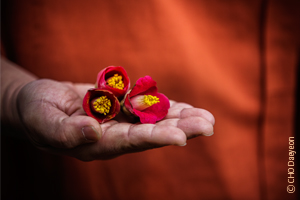
The sculptures are made by sculptors hand figment … these photos are taken seen by the eye, which are creations of places, people, buildings to be seen at the garden and inside the Ferenc Hopp Museums by the visitors.

The first station to the traveling exhibition arrived in Budapest.  The press representatives were to see the exhibition before the official opening welcomed  by SEOK Jaehyun – Curator – Professor of Daegu Future College, and the Korean photographers KANG Woongu,  KWON Taegyun, KIM Jungman, PARK Jongwoo, LEE Gapchul, CHO Daeyeon, SEO Heunkang telling the story of Korea.  The touring exhibition begins at Budapest – Hungary, also will be presented in six other European countries, Germany, Poland, Belgium, Kazakhstan, Spain, and  naturally in Korea.

The Ferenc Hopp Museum of Asiatic Arts was founded by Ferenc Hopp (1833-1919). He was a former wealthy optician, world traveller, art patron and art collector. The museum displays his own Oriental collection, which numbered 4000 items, containing Chinese, Japanese, Indian, Tiberian and Mongolian statues, paintings, ceramics, sculptures, embroideries. To-day, there are over 20000 items out on display, with an emphasis on medieval Japanese arts and Chinese bronze and porcelain items. Ferenc Hopp’s mansion is used as a temporary exhibition hall for Eastern arts.

Enjoy the „IMAGING KOREA -Beyond the People, Land and Time” snaps taken at the venue and having interest, mark a date in your calender to hit the road to  the Ferenc Hopp Museum of Asiatic Arts.

Opening hours: Tuesday–Sunday 10 a.m. – 6 p.m.

Ticket prices:

1000HUF – Full price (adult)

500HUF – Student ticket (age 6-26), pensioner’s ticket (age 62-70

2300HUF – Family ticket (2 adults and their children)

500HUF – Photo ticket

3000HUF – Video ticket

Update and snaps by Aggie Reiter

Badacsony wines – New York Palace – Budapest 2016.

This slideshow requires JavaScript.

For the 5th occasion the region of Badacsony (Lake Balaton) – the home of the “Kéknyelű” wines  presented itself at the New York Palace – Budapest. The wine makers personally offered personally their wines to the wine lovers glasses and also introduced the varieties in flavors. In connection with the jubilee anniversary was decided that this year wines over the last five years, including the real terrain wines should be presented.

In the Gastro Experiences Year perhaps is more important to get to know a bit  better the wine-makers from the Badacsony wine region, the area itself and the traditions they follow. At the New York Palace there were from the smallest craft wineries, the producers and the largest wineries from the region of Badacsony. The Badacsony Wine atmosphere was brought to life in Budapest. All the wines on the spot were previously qualified by a professional committee by only leaving the finest products  to be offered at the event.

Within the wine tasting program film screenings, lectures, demonstrations and photos enriched the event. Dr. András Csizmadia gastro philosopher gave lecture about how food can be paired with the wines of Badacsony. Professor Dr. Gabriella Mészáros gave a lecture on where the varieties of grapes stand at the Badacsony land. Journalist Robert Smyth spoked about what does it mean for an outsider the county of the volcano’s wine.

Special soil, lots-and-lots of sunshine, tradition and beautiful scenery. All is at the fingertips at Badacsony which is needed for a world-class wine region. The wine-makers regularly hold wine excursions! From February to June every Saturday a different winery is open and the locals organize a special program for those who wish to gain better knowledge of the Badacsony wines.

Keep in mind the wineries awaiting to be visited: Borbély Family Winery, Németh Cellar, Óbester, Borbarátok (Wine Friends), Szabó Family Winery, VÁLIBOR, Róza Szegedy Róza House Literary Museum and Wine, Málik Cellar, Léránt Cellar, Szent György Cellar,  Güns Cellar,  Csobánci Wine Manufactory,  Kisfaludy House, Thomay Cellar,  Sipos Wine House.

Definitely have to underlinre two outstanding tables, one was from the Horváth Cellar – Badacsony, with its heavenly  2011 – Szürkebarát  (Pinot Gris) – produced from the grapes Grape, the other which was unique by itself being at the Badacsony wines event, was the selection of the family owned Renaissance Pálinka House, also from Badacsony.

Badacsony is particularly an awesome place to admire the beauty of the scenery, taste the delicious flavors or just to spend a week-end relaxing and enjoying the countryside company.

Update and snaps by Aggie Reiter

Zwack Museum and Visitor Center – Barefoot Musicians – 2016.

This slideshow requires JavaScript.

FOUR QUARTER: 4 SEASONS – 4 MUSICAL JOURNEY

New classical music salon at the Zwack Museum and Visitor Center

District, IX., 1. Dandár Street – Budapest

The Zwack Museum and Visitor Center launched its first music program in September, 2014., within the series of four quarters. Each season a different musical is taken the audience to the journey of classical music. The aim of these joint concerts encounters between different branches of life.

Before the “Barefoot Musicians” concert, the visitors were called on a tour down the basement where massive and large in size of wooden barrels were standing through the corridors. Was told that most of the barrels were taken away by the russians during WW2 for the sake to build bridges, but before taken the barrels into pieces they drank all the unicum.  The only wooden barrel remained before drinking all the unicum was the one with the iron plate indicating 1937 … it was the biggest in size and extremely heavy for them to take apart.

At the Unicum tour the visitors received from the tap  tastes of Unicum. The 42% alcohol had its results … getting into the mood by the time walking up the stairs to the concert hall for the start of the Barefoot Musicians concert.

The Baroque couplet title itself refers to the strong contrast that characterizes the structure to the music concert. The most beautiful Baroque concert arias and chansons of the last century Hungarian world and of sound in the world although very different. They share the extreme sentimental reflection.

Arriving  on April, 29., an hour before the concert, visitors could take part in a guided tour into the Unicum Heart, the distillery and cellars of old Unicum.

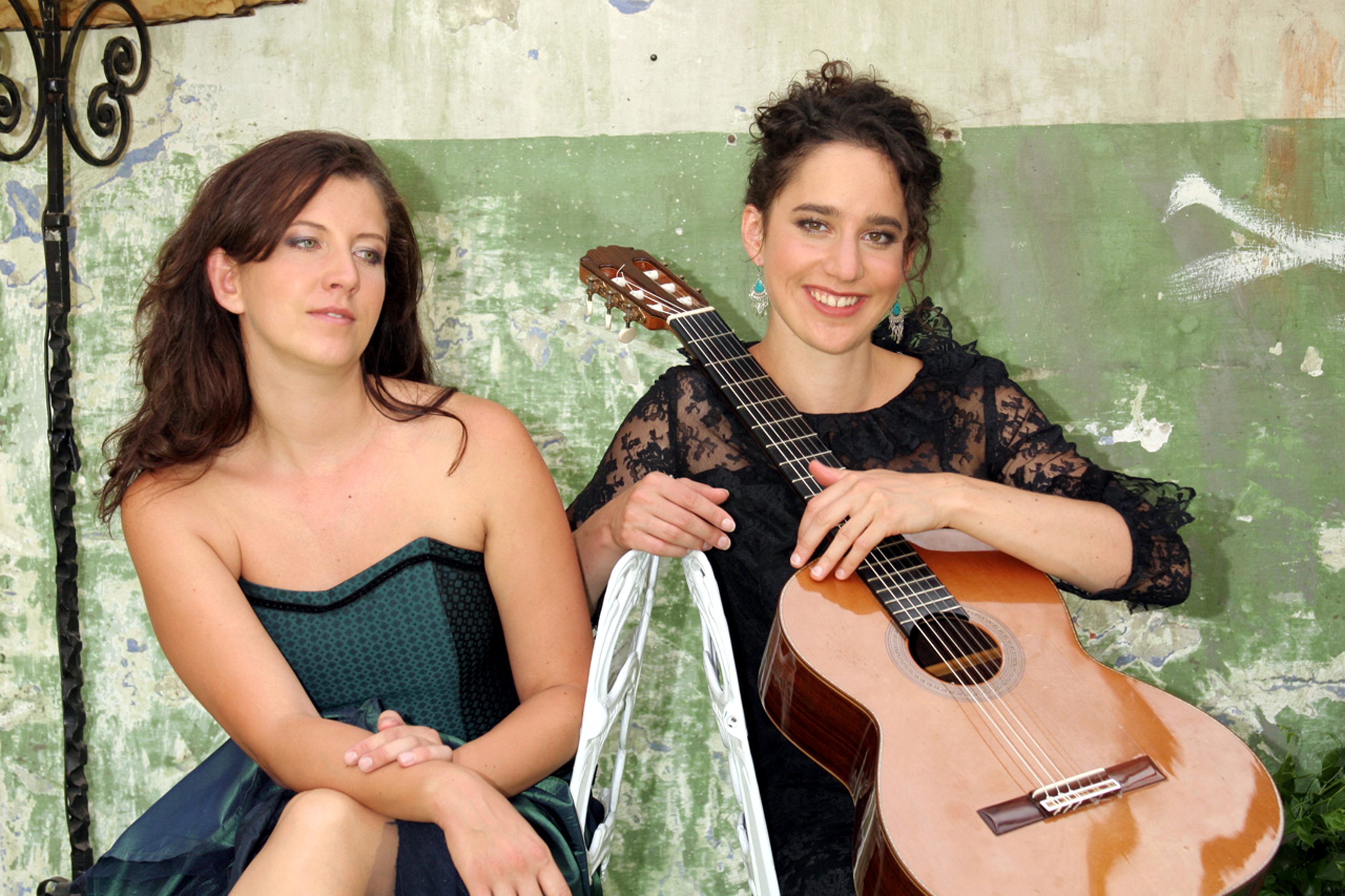
The „Barefoot Musicians” event contained popular baroque arias, chansons and couplet.  On stage were: Mariann Falusi – jazz singer – actress, Péter Sarik – piano, Eva Bodrogi – singer, Katalin Koltai – lute and Sándor Szászvárosi – baroque cello, viola da gamba.

Additional concerts to come in the series of Barefoot Musicians  will be including János  Lackfi – poet, László Fekete – Jewish cantor, Elsa Valle – jazz singer, Kornél Horváth – jazz percussion  on stage at the Zwack Unicum Museum’s Hall.

The Zwack Unicum Heritage Visitors Center in a nutshell  of its website … “The Museum follows the story of a drink and a family that spans six generations and goes hand in hand with the history of Hungary. The Zwack Museum covers the time of the Austro-Hungarian monarchy, followed by World War One and the carefree boom years between the wars when the Duke of Windsor was a regular visitor to Hungary and a fervent fan of the Zwack Barack Pálinka, or apricot eau de vie. Then came the devastating bombardments over Budapest when the factory was completely destroyed, the Jewish persecutions and the equally devastating “liberation” by the Russian army, the Communist take-over of all private property, the grey years of the Communist regime.
The Museum follows the Zwack family into emigration, via Ellis Island, and their life in New York and Chicago which coincided with the Hungarian Revolution in 1956. The family returns to Hungary in time for the fall of the Berlin Wall and the gradual return of the country and the factory to present day prosperity and freedom, while the visit ends with a tongue-in-cheek vision of Unicum in the future.
The Museum also houses a collection of 15.000 miniature bottles which may well be the largest in Europe. (Credit for a considerable part of the artifacts and the entire collection of miniature bottles should go to Emil Gerencser, a one time director of the factory.)
A visit to the Museum begins with a twenty-minute film in English, German, Italian or Hungarian and ends with a tasting of Unicum and other Zwack products in the turn of the century tasting room.”

Update and snaps by Aggie Reiter

Imaging Korea – Beyond the People, Land and Time! – Budapest – 2016.

mini-imaging2

Soon arriving to Budapest the largest Korean documentary photo exhibition of the decade!

Ferenc Hopp Museum of Asiatic Arts

District, VI., 103. Andrássy Road – Budapest

May, 6. –August, 28. 2016

Opening hours: Tuesday–Sunday 10 a.m. – 6 p.m.

The Korean Cultural Center in collaboration with the Hopp Ferenc Museum of Asian Art will be presenting this year’s biggest exhibition namely: Imaging Korea.

The touring exhibition’s first stop is in Budapest – Hungary.

„Photography captures the present but it will soon be the past … Photos contribute to things changed, to a vanishing world.” – KANG Woongu

The following introduction is by SEOK Jaehyun – Curator – Professor of Daegu Future College … „The first Eastern European country to establish diplomatic relations with Korea, Hungary shares so much with Korean that it’s called ‘The East Asia of Europe’. The most impressive thing is that, as in Korea, they hang and dry chili peppers and garlic, essential ingredients in Korean cooking. Although the chili pepper is called paprika in Hungary, the sight of if surely reminds me of an autumn day typical of Korea. Hungary located in the east of Europe and Korea located in the east of Asia. It’s not a mere coincidence but a fortuitous meeting that these two countries, which light up the east end of their respective continents, are now taking the first steps together in the exhibit entitled: „IMAGING KOREA-Beyond People, Land and Time” which will tour six countries starting from the „Pearl of Danube” Budapest, Hungary and continuing to Germany, Poland, Belgium, Kazakhstan, and Spain.

There is a saying that goes „Meeting one good person in a good place is like catching a star in the sky”. The meeting between KIM Jaehwan – Director of Korean Cultural Center – Budapest, Hungary and KWON Taegyun, a self-proclaimed nomad and photographer of very Korean sensibility was just such a meeting. They had the idea to present Korea to Europe using the attractive medium of documentary photography. In 2014, KWON Taegyun suggested earnestly that I bring to concept such an exhibition. However, at 60 years of age he passed from acute heart failure and the plans lay in a drawer quietly. Never-the-less, the idea wasn’t meant to be forgotten that easily. Director KIM Jaewhan, meeting with Korea’s eminent photographer KANG Woongu, again brought up the idea of a documentary photography exhibit and plans were drawn up by mid-2015. The exhibit plan was revitalized with the ambition to share with the people of Europe the works of KWON Taegyun, high-quality Korean photography, and images imbued with Korean sensibility. It all started with the seven representative Korean photographers KANG Woongu –  KWON Taegyun –  KIM Jungman – PARK Jongwoo – LEE Gapchul –  CHO Daeyeon – SEO Heunkang telling the story of Korea in „IMAGING KOREA-Beyond the People, Land and Time” Documentary photography is the aesthetic way of recording a moment for all time. The „IMAGING KOREA-Beyond the People, Land and Time” presents works at the pinnacle of this ‘aesthetic of recording’ which has never been and may never again be shown to the world. This exhibit, presenting in one place 125 photographs of beautiful strength in documentation and artistry by seven photographers of distinct perspectives, readily expresses their lives lived within Korean tradition, culture, nature, and time. The time when Korean culture and tradition, based in agriculture, was at its height. The times when such culture gradually retreated. The people who had lived and are living in such times. In palaces, in temples, in historic sites, in the demilitarized zone and its reality of national division, and in everyday places, photographers represent powerful Beyond the People, Land and Time is the lyrical language of images spanning Korea’s past, its roots, and its present which are both memories we would long for and which the world can relate to. The works of this exhibition were selected from the most representative works of seven photographers who have labored extensively to complete this project. Though only excerpts from assorted exhibitions, these images collectively form a broad spectrum and represent a polished exhibition showing a different side to Korea.

The works of KANG Woogu are the selection from „Luck or Destiny”. When the winds of industrialization started to blow in Korea in 1970, KANG Woongu captured the day-to-day life in Korea’s countryside. Photos taken of the present which have since become the past, KANG’s photos capturing even the shining aura of daily life share with the world the Korean sensibilities of a by-gone era. A self-proclaimed nomad, KWON Taegyun wandered the corners of Korea in the 1980s and encapsulated within his neat frame the lives and spirit of our parents, siblings, and friends in the spaces of their lives. LEE Gapchul takes the sources of the inner lives of Korean and depicts them in grainy textures, tilted frames, and scattered focus with a spontaneous unconscious apart from rationality. KIM Jungman rediscovers the beauty of Korea, a mysterious land flowing continuously with rich tradition and the colors of four seasons over its 5,000 years of history. PARK Jongwoo gives a reportage, even in the world’s only divided country of Korea, of the reality and landscape faced at the demilitarized zone cleaving the waist of the Korean peninsula. CHO Daeyeon looks at the prolonged breathing of the monks who reside in the temples in the southern regions where Buddhism first spread into Korea and expresses his accumulated impressions on Buddhism. SEO Heunkang finds his photographic subjects in the palaces, royal tombs, and historic sites, things most imbued with the traces of Korean history. He expresses as his own the visual elements under the best times and lighting which best reveal the shapes of graceful yet powerful color.

This exhibit is all the more precious and valuable for containing images of Korea that European observers are seeing for the first time, armed with the vestiges, deep lyricism, and intensity of the people, land, and time of Korea as permeated over the ages and captured from the 1970s to the present by these seven photographers of different artistic bent. Embedded with history, embedded with culture, embedded with people, this exhibit contemplates Korean traditions, culture, and change over time and presents the images of Korea, sometimes powerfully, sometimes warmly. Hungary, Germany, Poland, Belgium, Kazakhstan, Spain, and Korea, seven countries with varying cultures through IMAGING KOREA-Beyond the People, Land and Time will witness the images and sensibilities of Korea in a cultural exchange and thus form a special connection as if „catching a star from the sky”.

Source: Embassy of the Republic of Korea – Korean Cultural Center.

Update by Aggie Reiter

Fifth Rosalia Wine Festival – Rosé and Sparking at the City’s Park – 2016.

rosalia wine festival 2016

Have not thought about any program to the coming week-end, then put on your comfy shoes and head out to the City Park!

Enjoy the real picnic atmosphere in company with rosé and red wine!

Venue: District XII., City’s Park Budapest
May, 06. – 08. 2016.

Within the Year of Gastro adventures 2016 and as  Spring is popping up so will be the Rosalia Wine Festival coming along. Fifty wineries and wine-makers will be presenting around 200 Hungarian, also foreign rosé and sparkling wines. Do not have to worry of getting hungry because there will be plenty of street food beside the delicate wines to treat you in culinary adventuring. As the day turns into night live concerts will follow on stage with the Jazzy, followed by DJs and party will be on until midnight. Winelover families may bring along their young and elder children having their time fiddle around on interactive games, playfully learn the traffic rules, learn the basics of baking bread and Kürtőskalács (chimney cake).

On the spot can buy for 1000HUF crystal tasting glasses with the “Rosalia” logo. The exhibitors will serve the wine only in Rosalia tasting glasses.

Step into the World of gastronomy and GASTRO Adventures 2016, and whereever your route leads you enjoy your adventure time.  The GASTRO Adventures 2016 events are organised by Hungarian Tourism Ltd.

Entrance free of charge.

 Update by Aggie Reiter


Peruvian Days – Grand Market Hall – Budapest – 2016.

Grand Market Hall Budapest

This year the Peruvian Days are here again at the Grand Market Hall – Budapest

May, 3. – 5. 2016.

District, IX., 1-3. Vámház krt. (Blvd.) – Budapest.

Looking for something new to discover, and needn’t have to  take a flight for hours to get into the feeling, the atmosphere of being in Peru. Peru is much more than the mysterious city and fried guinea, even  though the world almost knows about Peru. Just hop on your nearest transportation and off you go to visit  the Grand Market Hall in Budapest to discover all sorts of products prepared by authentic handicraft artists, as: ponchos, stand stone figures , musical instruments, hats, jewelery, Peru balsam  and ceramics, just to mentioning a few items. Enjoy the wonderful musical culture of the Andes, especially the Pan flute …  follow the Peruvian travelogues and have a taste of the Peru – gastronomy.

The market is open through Tuesday and Thursday from 8 a.m. – 6 p.m.

The Central Market Hall is the greatest in Europe, as CNN chose the Central Market Hall of Budapest as the greatest one in Europe. The Central Market Hall won the 1st place among the five most vibrant city markets in Europe, followed by Mercat de San Josep de la Boqueira – Barcelona, The Grand Bazaar – Istanbul,  Portobello Road market – London and Les Puces – Paris.

Update by Aggie Reiter

Rózsavölgyi Chocolate Factory – Budapest

rozsavolgyi-csokolade-logo

The desire to get to know the fine chocolates produced by Rózsavölgyi visit the new chocolate workshop!

District, XXII. 48-50 Nagytétényi út  (Road.)

Have you had love affair with chocolate already, if not your place is to visit the Haggenmacher beer factory at Budafok.  … No… not mistaking! Yes … the venue is situated at the brand newly established chocolate factory.

You do not have to possess a degree from the Academy of Chocolate, nor to be a chocolate maker, to tell your point of view about a fine chocolate. Take a chocolate tour by your own, but with friends, family, acquaintances you can exchange your Choco addicted ideas. Some folks may open a bottle of wine after working hours arriving home, but some  might not go for the wine, instead open bar of fine chocolate. Anyway to get to know the delicious and tasty experience, a fine time is to visit an awesome place would be a pity to skip, not rolling to the  chocolate factory, where can get your supply of the very best of chocolates.

Available to order  from the factory such as: Chocolate macaroni, Hazelnut Gianduja Spread, Chocolate statues … Rózsavölgyi – “Off the Hook”  – real treat as a gift for chocolate addicted individuals. Also Bonbon, Truffle, Single-origin tablets, Seasoned bars, Sailor Mustache, Rusty tools, Dragees and so many other yummies made from chocolate can be purchased.

Chocolate is Healthy! Consume at least 2 ounces of dark chocolate daily… it is easy as 1,2,3!

Update by Aggie Reiter

Visit Gyöngyös – The Capital of Mátra!

This slideshow requires JavaScript.

Rolling in the culinary of Mátra –  The Year of Gastronomic Experiences.

On a rainy day headed on the road to the north-east mountainous attractive natural environment that led to the city of Gyöngyös. The city is around 80 kms. from Budapest. It is the second largest city which in the Heves province. The residents of Gyöngyös call their City “Gate to the Mátra” (Mátra is the name collective of the Northern mountains in Hungary).

Gyöngyös is truly a peaceful townscape, a.k.a. the city of grapes and wine. The first cellars already were based in the eighteenth Century these wine cellars could speak the  stories of great revelries would come alive. The memory of the usual entertainments are not forgotten and even today from year to year are held „A Day Visiting – Drinking at Cellars” visits where wine minstrels also entertain the visitors.

The city has more than a handful of attractions to look around, taste the locals wines and visit restaurants, fill their bellies with Á la Palots style of local meals. So definitely worthwhile to stop over, look around before heading to their original destination to the highest mountain in Hungary, the Kékestető.

The notes have shown the history of the city was destroyed repeatedly by fire, but always reborn,  and  luckily from almost every historical era confirm significant and beautiful memories. The inhabitants of the city ruthless flames, as a reminder placed a statue “Red Rooster” in the center on the main street.

Throwing a glance at the city center is a prominent building of the baroque parish church – St. Bartholomew. Inside representing significant value, the treasury of the Renaissance liturgical objects are kept. The valuable monuments include the Franciscan church and monastery, which was founded in the 1370. In the crypt rests the legendary general – War of Independence Rákóczi and János Vak Bottyán. The Franciscan library is the country’s only medieval monastery library monument. Here at Gyöngyös is Hungary’s book creation, copy the code and writing the first workshop, therefore the role of the national cultural history unrivaled. The diploma dated 1475 show the Franciscans already lived in Gyöngyös. The monastery library, which is constantly working and can be found between 14 and 200 thousand volumes piece of incunabula back from the Middle Ages.

At the city’s main square former Market Place for centuries now-a-days four Fountains can be seen. In each  Fountain features the city … the golden Sun, the human faced Moon and the white wolf – decorate the corners of the square. The significant motif of the fourth fountain in the south-east corner is grape referring to the Town of Grapes and Wine. These are also coat of arms motifs of Gyöngyös.

Throughout the course of the history of Jewish-Christian times they have lived peacefully side by side. What’s more, as greater evidence of the Synagogue at Gyöngyös, which is a third of the country’s largest house of worship. The large, distinctive building was built-in 1930 on the basis of Leopold Baumhorn and György Somogyi. In the center of the building is located the large dome. For a long time it has been used as a furniture store, but now going through the period of reconstruction. Upon plans it will serve as Coexistence House and will organize events of the Christian-Jewish dialogue converted into a center. Will be housing also exhibitions and will be a center for cultural programs, and as for to-day heard already it has been completed renderings of the project. At Gyöngyös the Jews decades after the Compromise (1867) settled in a large numbers in 1910, the number exceeded to the population of 2000 that was one-fifth of the population Jewish. From the Gyöngyös ghetto in the summer of 1944, more than 1800 people were driven by the authorities, most were transported to the Auschwitz death camp, a few survivors after the war returned for a short time, and many of them left abroad to Israel or America. The war and the Holocaust abolished their memories in the surroundings. It is planned that the environment Coexistence House is rebuilt, and they try to give back to the building ’30s-edge features. At the Coexistence House, Judaism will be presented in the results of their activities of the past  centuries at Gyöngyös – Hungary. To be introduced the industry installers, architects, cultural patron, pharmacistsGideon Richter who studied in the city. Also lived in the county Lajos Hatvany and Sándor Bródy. Hopefully, can be mention the rooted girls, former citizens of Gyöngyös the Chess champion Polgár Girls.

After the short sightseeing headed to the Kékes… Restaurant where Anita Molnár – Hungarian National Tourist Office – Regional Director of Marketing and Robert Nagy – President of Mátra Beaded TDM, Mayor György Hiesz and Tamás Kévés –Vice-President, Gábor Törőcsik – regional marketing manager welcomed the group. Also each one of the emphasised how worthwhile to stop and look, taste, enjoy the what Gyöngyös is all about, which is kinda skipped by drivers on the Highway to Kékes.

The group was ensured by entertainment during the supper, tasting local wines and enjoying the event of the Mátra gastronomic – Year of Gastronomic Experiences. Excellent food was served by Zoltán Nagy – master chef and Veronika Szabó – kitchener. Krisztián Kovácsik presented the wines – winemaker from Bardos and Son Winery. The background music was by Attila Szőke plays acoustic guitar and Gusztáv Mátra and last but not least an awesome Borostyán Palots Folk Dancers show highlighted the night.

Surely was a fine time even dispite the pouring rain and short stay, but  major attractions were shown and definitely a must stop for all before heading to the Kékes mountain to stop by at Gyöngyös to visit in the future … of course not only for the Hungarians, but to visit Gyöngyös for the tourist, foreigners working staying in Hungary would be a pitty to miss.

Update and snaps by Aggie Reiter

Barefoot Musicians at the Zwack Museum – Budapest – 2016.

mezitlabas_zeneszek©szilagyi_julia_foto

Baroque Couplet – offering special entertainment.

Friday, April, 29 2016.

7.30 p.m.

This year will be on show for the first night of series of the four quarters.


An evening show with „Barefoot Musicans” giving a joint concert at the Zwack Museum and Visitor Center in Budapest.

During the Fall of 2014 Zwack Museum and Visitor Center launched music program, in which each season a different musical journey is taken the visitors to classical music at this special venue.

The aim of the joint concerts encounters between different branches of music.  In addition, every concert is preceded by a special program, which means an hour before the performances, visitors may have the pleasure to have an insight into the context of a museum. The tour enchanting old distillery, the “Unicum’s heart.”

The Baroque couplet title itself refers to the strong contrast that characterizes the structure of the music concert. The most beautiful concert to be on show with Baroque aria and Hungarian chansons of the past century. Even though the world sound is pretty different to the extreme sentimental reflection, yet is will surely fill the air with entertainment.

Update by Aggie Reiter

Scholarship award ceremony – Ari Kupsis Gallery – 2016.

___________Ari Kupsus Gallery_________

Art & Antique

The latest exhibition to be opened at the Ari Kupsis Gallery where and when works by students of the Academy of Fine Art will be handled over scholarships of the Ari S. Kupsus Salon Concert Society.

Wednesday, May, 4. 2016.

District; VIII., Bródy Sándor utca 23/b. at 6 p.m.

The exhibition will be on view until May, 20. 2016.

The Ari Kupsus Gallery signed  an agreement with the Academy of Fine Arts in February, 2010 in regards to its intent to arrange art exhibition every year in May for the Academy’s most promising 4th grade students of the Painting Faculty. The works on display at the gallery are chosen by a jury out of more than 300 works based on the portfolios submitted by the students.

The Ari S Kupsus Salon Concert Society has extended its charity activities from supporting of classical music students of the Liszt Ferenc Academy of Music, since 1996, to the support of talented students of the Academy of Fine Arts Budapest. In addition to the scholarships awarded to the music students at the Gala Award Salon Concert held at the Embassy of Finland every year in February, this year fifteen scholarships in fine arts will be handed over by society’s Art Collectors Club to promising art students of the Painting Faculty at the Academy of Fine Arts.

The winners of these awards will be announced at the exhibition opening event.

Update Aggie Reiter