The National Museum pays tribute to André Kertész with three special exhibitions.
March, 23. and September, 22. 2024.
The Hungarian National Museum will be organizing a series of exhibitions on the occasion of the 130th anniversary of the birth of the world-famous photographer André Kertész. At the exhibitions a selection of Kertész pictures bought in New York in 2021. These present never-before-seen pictures at 3 locations: @ Esztergom’s – Balassa Museum, @ Hungarian National Museum – Budapest and @ Robert Capa Center – Budapest.
After his emigration to Paris in 1925, André Kertész returned home several times, opened several exhibitions. A memorial museum bearing his name was created in Szigetbecs from the photographs he gave in Hungary shortly before his death.
This time, the focus of the National Museum’s exhibition series is not the reminiscing artist, but a young man born in Budapest on July 2, 1894, who was still searching for his way for a long time. He spent his childhood in Teleki tér and then Népszínház utca (both streets located in district VIII. Budapest) and also spent a lot of time with his relatives in Szigetbec and Tiszaszalka. and as a soldier he could visit almost every corner of the Austro-Hungarian Monarchy. Loves and passions, danger to life, and the boredom of being a clerk were all part of the class. He moved to Paris at the age of 31, but he did not come with an empty bag. Our series explores the background of this launch and presents it to visitors for the first time. In 2021, the sales contract for “André Kertész’s photo collection” covered a total of 1,163 pictures, the majority of which were taken before 1925. These are: 943 contact copies, 59 larger vintages, 151 Polaroid photos, 9 personal photos and a collage. After the purchase, was carried out a condition assessment of the photographs at the National Museum. The museologist of the Historical Photo Gallery, historian Éva Fisli, dealt with the registration of the photographs. In the last decade, she was able to research several times in the Kertész archive in France, and the documents she got to know there helped her clarify inaccuracies related to Kertész’s youth. She undertook latter as the curator of the exhibition series that will be shortly to start.
“The Hungarian-Turkish cultural season is an exceptional opportunity to take stock of the deep-rooted cultural intertwinings, on which we can further strengthen relations and make the cultural presence of the two peoples in each other’s countries even more intense,” said by her welcome speech Judit Hammerstein – director general and curator of the Hungarian National Museum. Continued Q,: “The joint cultural season is organized this year on the occasion of the 100th anniversary of diplomatic contact between Hungary and Turkey.“ As the Director General explained, the close intertwining of the history and culture of the two countries can be seen, among other things, from linguistic, ethnographic, and archaeological points of view. She added Q.: “Before the Hungarian tribes settled in the Carpathian basin, they were constantly interacting with the various Turkic peoples. This is reflected in the fact that the Hungarian language contains hundreds of foreign words from Turkey.The Ottoman-Turkish cultural influence in Hungary was not only felt in the 16th and 17th centuries. It is guarded by architectural monuments, mosques, tombs, and baths of the 19th century, and this was also reflected in the clothing and the use of weapons. But the influence can still be seen in thinking and gastronomy, but there are also many examples of the Hungarian cultural presence in Turkey, as Hungarian scientists, architects, linguists, doctors, and military engineers took part intensively in Turkey around the 19th century modernization and reform efforts.” The Acting Director General also mentioned that the Hungarian government established its first state foreign cultural institute in Istanbul in 1916.“
She also mentioned that at the Hungarian National Museum many Turkish historical memorabilia are displayed, including a special leather cloak (only three of these items remained and are at Basel, Budapest, Istanbul Museums). It is considered an outstanding rarity in the world. Finally told, as part of this year’s Hungarian-Turkish cultural season, the Ministry of Culture and Innovation is organizing a number of artistic and scientific programs.
Was told that the Hungarian National Museum plans to have a catalog that presents the Turkish-related objects in its collection ready by the end of the year. Judit Hammerstein announced that the Ministry of Culture and Innovation will present various objects for this year’s Hungarian-Turkish cultural anniversary and organize a number of artistic and scientific programs.
After the opening conference on Thursday, on this coming Sunday evening the archaeological excavations items discovered in Hungary, such as hunter-gatherer way of living to agriculture tools and many others displayed items will be on an archaeological exhibition tour from the Hungarian National Museum title “Hungarians who built Turkey” to Istanbul – Atatürk in the Cultural Center. This traveling exhibition will later be introduced in Ankara and Rodosto.
The participants at the conference were also greeted by Gülsen Karanis Eksioglu – Ambassador of Turkey to Hungary. Necmi Karul – Head of the Department of Prehistoric Archeology at Istanbul University, gave a lecture on the archaeological site of Göbeklitepe – first known temple of mankind located there. Pál Raczky – Professor emeritus of the Institute of Archeology of ELTE, spoke about the Polgár-csőszalom excavation, which also revealed the Neolithic age.
Turkey’s Göbeklitepe and Karahantepe are known worldwide among archaeologists thanks to the latest findings discovered last October. The TAS TEPELER Project helps to better understand prehistoric people and is considered to be the beginning of the transformation of shelters into houses 12,000 years ago, when this gradual warming allowed people to begin cultivating plants and herding animals, and in which villages emerged, stratified society formed, and the ability to carry out basic trade developed. It is thought that the monumental megalithic structures in the area were believed to be communal spaces where people gathered.
Indeed … today it may be difficult for many of us to imagine, but the societies were not always as complex as they are today. For thousands of years, before the domestication of wheat and the beginnings of agriculture, people lived in small bands of nomadic hunter-gatherers, foraging for food and migrating to survive. The world was not always an accommodating place due to periods of inhospitable climate. The new Holocene epoch began when the last Ice Age ended around 10,000 BC. As enormous glaciers melted, new habitats emerged for the survivors in the region known as the Fertile Crescent, a crescent-shaped land spanning most of the Middle East, including the sources of the famous Tigris and Euphrates Rivers in southeastern Turkey. Until the discovery of Göbeklitepe, most of the researchers believed that the Neolithic Revolution took place allowing people forming the first complex societies. Today, researchers understand that the Neolithic hunter-gatherers who lived around Sanlıurfa did just the reverse, settling first and farming much later when the growing population necessitated a stable food supply.
One of the sensations of the excavations there is the largest known human statues of the Neolithic stone age, which was unearthed in Karahantepe. These statues all depict male figures without facial representation and on some of their both arms have tool patterns of fighting weapons the animals from that age. As part of this year’s Hungarian-Turkish cultural season, the Ministry of Culture and Innovation is organizing a number of artistic and scientific programs.
Thursday’s conference was organized by the Turkish Tourism Development and Tourism Promotion Agency (TGA). The event was attended by representatives of Hungarian academia, research institutes, museums and universities, press and media representatives, as well as representatives of the Hungarian travel industry. At the end of the conference the participants were invited for a real traditional Turkey gastronomy reception.
The institution of the ESSCA School of Management which opened its Budapest Campus thirty years ago. As part of the ESSCA conference series launched in the fall of 2023, the School’s colleagues and partners in many parts of the world examined the impact of artificial intelligence on various industries. “30 years ago, ESSCA began its internationalization in Budapest and founded its first European Campus. On the occasion of the anniversary, the School launched an exclusive series of festive events in 2023 and already held a conference on professionalism and cultural diversity in the spring. Further programs continued on September 28 in the form of a professional round table discussion. The conference was followed by an exclusive cocktail reception and guided tour was open for visiting to several exhibitions at the Hungarian National Museum. Today, they are proud to say that ESSCA is the only French business school in Hungary that offers a French degree certified by the Conférence des Grandes Ecoles,” said Jean Charroin – ESSCA’s director general.
Struggling for days out of ideas as for many just “sit and wait” for their lockdown to end … Below is a riport/update shared for the rollinginbudapest readers to enloose a bit and enjoy the reading.
Riport based on … gain through Webniar on the Life and Art of Amrita Sher-Gil at the Indian Cultural Center in Budapest. During the Webinar several India art professionals joined the gathering and spoke about the legendary artist life. Amrita Sher-Gil, as a Hungarian and an Indian, a European and an Asian, belonged to both cultures, creating a synthesis between modern European and traditional Indian painting.
Amrita Sher-Gil was an extraordinary painter of the 20th-century whose legacy stands on a par with the Masters of Bengal Renaissance.
About the name of the Indian Cutural Center – Budapest … in 2013 a ceremony was held to name the cutural institution to be Amrita Sher-Gil. At the time being, Ambassador Malay Mishra and art historian Katalin Keserü spoke about the naming Amrita Sher-Gil at the event, which also celebrated in time India’s 67th anniversary of independence. The culture center is just a few steps from the Embassy of India – Budapest.
A flashback to her early life and history: Amrita Sher-Gil born January, 30. 1913 in Budapest, Amrita’s father was an Indian Sikh aristocrat with a deep scholarly interest in Sanskrit and astronomy. Her Hungarian-Jewish mother Marie Antoinette Gottesmann was an opera artist. Throughout the short years Amrita Sher-Gil led a life as compelling and unorthodox as her art. The Indian artist spent her early life in a village of Hungary and at the age eight her family shifted to Shimla which was considered as a stunning hilly venue of India. Shimla was the place which marked the beginning of Amrita’s love for art and there she began receiving formal education on the subject of art from an Italian sculptor. The painter moved to Italy in 1924 and Amrita, along with her mother, followed him. Soon enough, she joined a Roman Catholic institution called Santa Anunciata. This was the place where she witnessed the miraculous works of Italian artists and got inspired from them. Showed interest and took formal lessons completing her formal studies at the École des Beaux-Arts in Paris at the age of sixteen. Sher-Gil painted her airly Bohemian life in Paris, a series of self-portraits, which showed her grappling with her own identity caught between Europe and India. In Paris, she was greatly influenced by European painters like Paul Cézanne, Amedeo Modigliani and Paul Gauguin. Despite in 1929 her early success in Paris, she increasingly longed for India and finally returned to her home country in 1934, finding the inspiration she needed as she traveled around the country and reconnected with its people. At this point, was ways of seeing changes radically in India. This was the beginning of her life-long journey of trying to decode the traditions of Indian art. She deeply thought her new style diverged greatly from her previous works learned in Paris, but she realized that Europe belonged to the art likers of Picasso and Matisse while India belonged to her. The influence of Western painting traditions are apparent in her early works, most notably seem to evoke the poverty, sadness and monumental gravity of the people she saw around her.
One of her paintings The “Group of Young Girls” a powerful work done in earthy colors portraying three, young girls waiting pensively for their future received Gold medal at Grand Salon Paris – 1933., and also won a Gold medal from Bombay Art Society – 1937.
Overall, on one hand, Amrita was passionate about everything life had to offer and on the other hand, she harbored a deep sense of melancholy. Amrita Sher-Gil was often referred as India’s Frida Kahlo.”The Two Fridas” play was introduced in the UK as storytelling through dance and music. (Writer’s note … Would be great to bring the UK’s preformance over to Budapest Hungary!)
In the year 1938, Amrita married her Hungarian first cousin, Dr. Victor Egan. Afterwards, she moved to the city of Gorakhpur, where her paternal family resided, with her beloved husband. Later on, the couple decided to move to Lahore which was a part of the undivided India. Sadly, in the year 1941, Amrita Sher-Gill left the world and gone ahead.
Amrita Sher-Gill was the first and youngest only Asian artist. Her works show a considerable amount of influence from the west and her deep passion, along with a great sense of understanding towards colors, shows why the artist is considered remarkable even in today’s times.
The masterworks of this artist have been declared as National Art Treasures by the Government – India and a majority of her creations adorn the beauty of the famous National Gallery of Modern Art – capital of India.In addition to this, as paying respect to the great artist, there is a road by the name of Amrita Sher-Gill Marg in Delhi.
In 2001 the Ernst Museum Budapest held an exhibition on Amrita’s painting which were introduced to the Hungarian art lovers for the first time in Hungary.
On the occasion of the 100th anniversary (2013) of her birth was seen on the fence at the Hungarian National Museum giant tableau 50 arts namely “exhibition fence.” In January of the same year, was erected a marble plaque at her birthplace District I, Budapest: Szilágy Dezső Square. Also in 2013 UNESCO announced to be the international year of Amrita Sher-Gil.
During her short but productive career, she influenced generations. Amrita left behind 175 substantial body of works of which 95 works are at the National Museum – Delhi and some are at private collectors. However, the artist has been overlooked for decades, only the past recent times receiving the recognition she deserves.
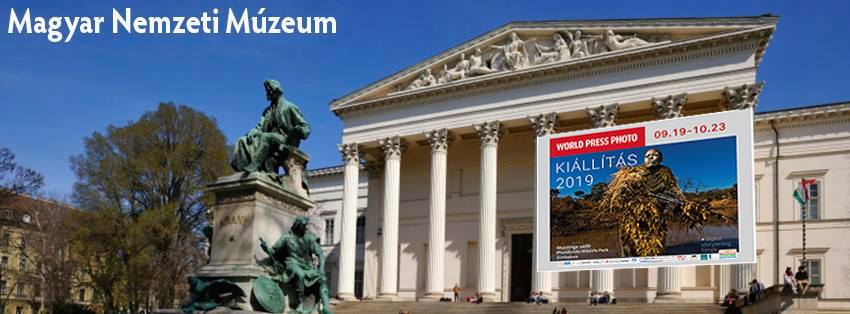
Connecting the world to the stories that matter … happend … stunning, impressive and shocking!
The unique photos and new perspectives playing a key role. Each year it shows a dramatic impression of the world. Aims to inform and to inspire the understanding of the world.
The global platform of visual journalism and storytelling was founded in 1955 with the aim of connecting the audience and professionals.
The travelling exhibit is presented in 114 locations worldwide of which the Budapest event is the second most visited. Last year more than 45 000 people visited the award-winning photos in the Hungarian National Museum.
In 2019 photographers from 129 countries entering 4,738 photographs, reviewed by international panel of judges #78,801 photographs and the best 143 were chosen. The 21 journalists and reporters, decided to award 43 photo reporters. One of them was Bence Máté who is a young Hungarian wildlife photographer, received a first price for the second time. His winning photo, “Harvesting Frogs’ Legs”, depicts the sad truth of frog’s legs being chopped off (and sold for gastronomy purposes) while they are still alive.
Ticket Prices: Reduced ticket: 1000HUF, Full price ticket: 2100HUF, Family ticket: 4400HUF
Open hours: Tuesday to Sunday: 10 a.m. – 6 p.m. Monday: closed.


 Rolling in Budapest