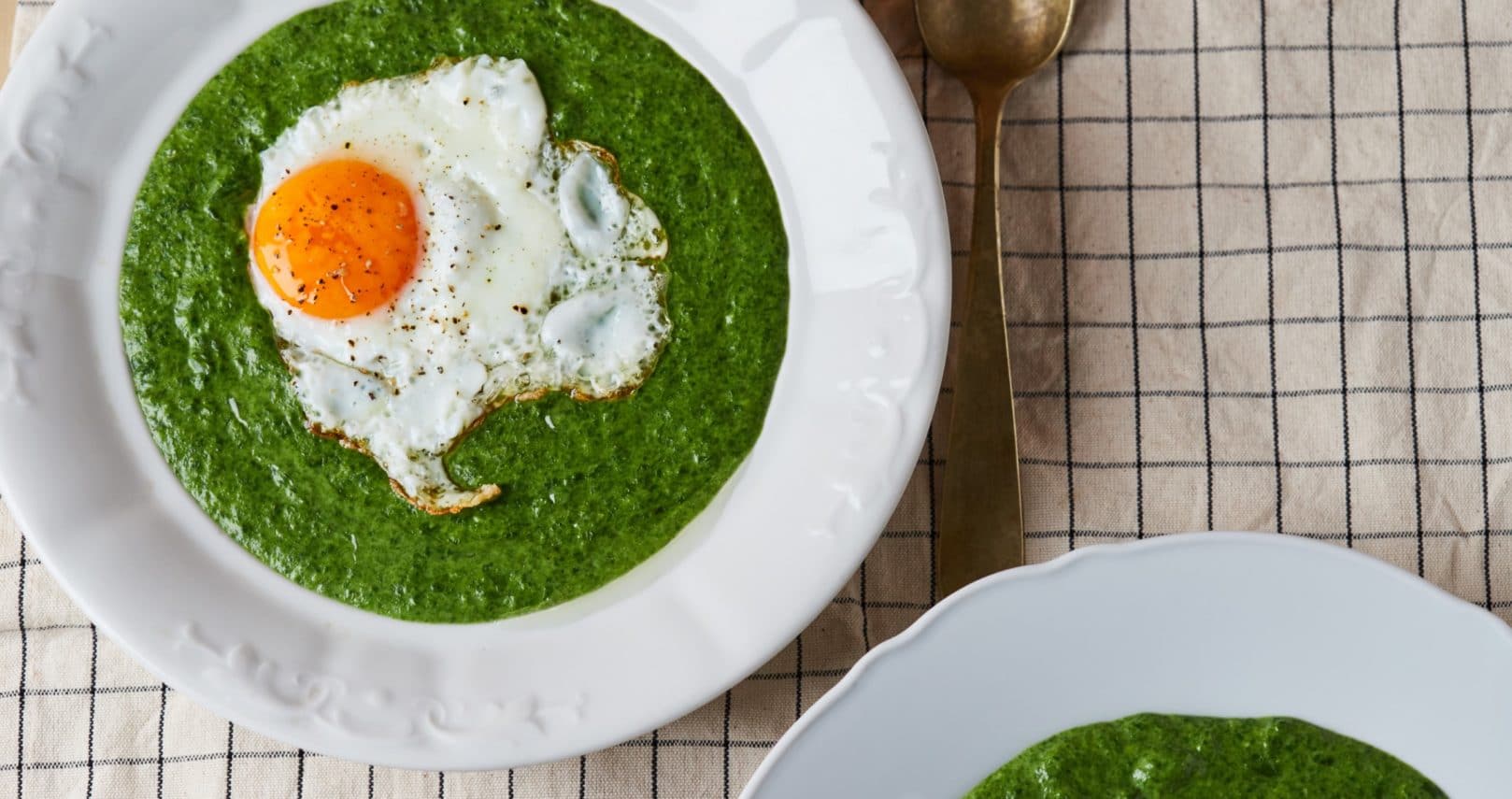
Day-By-Day #7 … Hungarian Cuisine – Cold Sour Cherry Soup – Meggyleves

Cold Sour Cherry Soup – Hideg Meggyleves

You haven’t ate nothing yet if not to taste the traditional Hungarian sour cherry soup. The taste buds cannot resist this delicious soup.


“Q” What is that fruit soup?

“A” Yes … they are very common in Hungary.  A traditional homemade soup and served mostly as an appetizer and only sometimes as a dessert. This cold sour cherry soup is a bit more tart, making it a great starter dish.

The fruit soups are very popular all over the country and made from a wide variety of fresh fruits, such as … apple, sour cherry, elderflower, strawberry, red currant and gooseberry … soforth. It is a quintessential Hungarian summer soup!

The wild cherries stretches back through prehistory, the cultivation of cherries is believed to date to about 300 BC. The word cherry comes from the Turkish town of Cerasus, which reflects the western Asian origin of cherry cultivation and can also be seen unchanged in the name of one species of cherry.  The nearest linguistic ancestor of the English word – cherise – sounded too much like it was plural, and by time became cherry.

Cherries wonderfully flavorful in a wide range … from jams to pies, This soup is enjoyed through the summer months, because sour cherries are the earliest of the spring fruits, this soup is often associated with spring festivals and, among Hungary’s Jewish community, is a favorite for Shavuot. This soup has a wonderful, sweet-tart flavor.  Yummy served chilled, it makes a refreshing first course but also by the end of the meal as a desert will fit on a warm day.

Sour cherry soup is made with sour cream, sugar and whole fresh sour cherries. The soup is a good example of Hungarian fusion of  Eatern/Asian influences and traditional Continental European cuisine.   The sour cherry also called tart cherry or wild cherry. The fresh of the fruit being softer and is more acidic – so it is better for cooking and pastry.

In Hungary sour cream is called “tejföl”. It is a dairy product that is produced by souring heavy cream. Whether nott to trace at your area for this receipe any cooking cream will do.

Receipt for 4 person – preparation 30 mins. + cooling time.

Ingredients:  350 g ripe sour cherries (or one jar of bottled cherries), 1 lemon (fresh or juice), pinch of salt, 4 whole cloves, 1-2 cinnamon sticks, 100 g sugar,  100 ml red wine, 200 ml sour cream, 1 tbs flour … A small amount of sweet white or dry red wine is also sometimes added before serving.

Cooking: Wash the cherries … if needed remove pits … and place them in a pot. If using bottle cherries, add the juice as well. Add water which should always be double the cherries. Add a pinch of salt, the cinnamon, cloves and sugar to taste the flavor with the lemon juice and the lemon peal.  Simmer over low to medium heat for cca. 10-15 mins. Time depends whether having fresh or botled cherries. Add the red wine … will bring more the body flavor, but if not prefer to have alcohol then leave it out, it will be delicous anyway. While cherries are cooking mix flour and cream or sour cream and a touch of salt in a small bowl. Remore soup from the fire, take out some of the liquid and mix into the cream and flour mixture. Carefully pour it back,  constantly  …  make sure to split the temp. correctly, so the creram does not curdle, but if needed use a strainer. Return to the heat and cook for 5 mins. more stiring occasionlly.

Just a tip … Put spices in a small gauze pad, tie it with thread, and by the end of cooking just take it out of the soup. That’s it, don’t have to look for them one by one. When cool, refrigerate go to the finished soup

Serving the soup may add … to taste … on the already chilled soup whipped cream it will be not only pleasing to the eye but also the taste buds.

This Hungarian dish has been adopted by the Austrians, Poles, Slovaks, and Germans and Hungarian-Americans and Hungarian-Canadians brought the soup to North America.

To read more about traditional Hungarian soups, visit previous receipt @ “Q” & “A” Culinary Heritage Into Hungarian Kitchen.

© Aggie Reiter

Day-By-Day #6 … Hungarian Cruisine – Chicken Ragout Soup with Tarragon

Chicken Ragout Soup with Tarragon – Tárkonyos Csirkeragú

This is a well-known traditional Hungarian fragrant creamy chicken soup with tarragon can be made with pork or chicken, choice depends on preference as at each region in Hungary everyone has their own recipe for it. Some people make it with chicken breast which is also fine and also may in using thighs because they give more flavor to the soup.

Easy to make this soup any day of the week. This healthy vegetable soup made with the twist of using tarragon and lemon juice.

Receipt for 4 persons – preparation time: 40-90 mins.

Ingredients: 2 chicken breast fillets, 1 head onion, 3 cloves garlic, 3 carrots, 2 white beets, 1 medium size kurnips, 1 medium size celery, 25 dkg mushrooms, 20 dkg green or yellow peas, 4 tbs oil, salt, pepper, tarragon, 4 veggie soup cubes, 2 dl cooking cream, 1 tbs flour, 1 tbs parsley, half a lemon.

Cooking: Cut the chicken breast fillet into small cubes. Chop the onion and garlic. The vegetables are cleaned and diced except for the green or yellow peas.

Heat the oil in a large saucepan and saute the onions over it. Add the meat and fry until white. Add the two types of beets, turnips and celery and sauté for 5 minutes. Season with salt, pepper, tarragon and chopped garlic. Then add to it as much water (cca 2 liters) as you want to make the soup… less water to make the soup thicker. Add the veggie soup cubes, bring to a boil, then add the peas and mushrooms. Cook until all ingredients are soft (about 10 mins).

Pour the cream into a small bowl, sprinkle with flour and mix. Add 3-4 tbs of less hot soup, stir until smooth, then add to the boiling soup. Bring to boil on it and finally add the chopped fresh parsley and freshly squeezed lemon juice (it is recommended to taste, rather add less lemon, which can be replaced to taste when served).

To read more about traditional Hungarian soups, visit previous receipt @ “Q” & “A” Culinary Heritage Into Hungarian Kitchen.

© Aggie Reiter

Day-By-Day #5 … Hungarian Cruisine – Palóc Style Soup

Palóc Style Soup – Palóc leves

The Palóc were a tribe of people of Slovak origin who settled in North-Eastern Hungary from where this soup originates.

The writer and MP, Kálmán Mikszáth, who is often referred to as the Great Palóc, asked János Gundel, the founder of the most famous dynasty in Hungarian gastronomy, to make him a dish that would be characteristic of the region where the Palóc folks live and with their cuisine. The most widely known village of the Palóc region is Hollókő – Hungary. The village is declared a world heritage site by UNESCO in 1987. The landscape of the village perfectly fits into fairy tale. The venue comprises 58 heritage buildings that are representative of 17th century village architecture.

The origin recept calls for mutton or lamb, yet if  prefer can also subsitute for pork or beef. Keep in mind, different meat pieces cook shorter and/or longer. Many people add some fresh dill or some drops of vinegar to it  depending on theindividuals taste.

Receipt for 4 people – preparation time 40 to 90 mins.

Ingredients: 900 g pork, beef or mutton, 1 big onion, 250 ml sour cream, 1 handful green fresh or fozen beans … In Hungary green and yellow beans are available. Growing in the season having fresh and if out of it the frozen one are cooked. Two médium size potatoes, 4-5 Bay leaves, sweet red paprika powder, dalt, ground caraway, ground pepper to taste and 1/2 tbs flour. A hint … add as many or as a few potatoes and beans as prefer, but roughly cca 1 medium potatoe and about 150 g beans/person to serve.

Cooking: Chop and fry the onions and season with bay leaf and caraway. Cut the meat in cubes, Wash and place them into a saucepan with the fried onions. Season with red paprika powder and some ground black pepper and stew slowly until about the meat is half tender. Add potatoes, cook and sauté them a little bit longer. Pouring water on it if needed and boil. Add the green or yellow beans and cook on for 10-15 mins more and look afterwards that all parts are cooked well. When the soup is ready, set aside to cool down a bit.

Next to thicken with the sour cream first take a seperate bowl in which add a little flour and mix together. Be careful when addig sour cream. Make sure to have non boiling temperature. Might wish to use a strainer, but addig the sour cream to the less hot soup it will be easy to mix the two.

To read more about traditional Hungarian soups, visit previous receipt @ “Q” & “A” Culinary Heritage Into Hungarian Kitchen.

© Aggie Reiter

Day-By-Day #4 … Hungarian Cruisine – Bean Soup á la Jókai

Bean Soup á la Jókai

(Jókai Bableves)

The soup is named after Jókai Mór who was a famous Hungarian novelist of the 19th century and this soup was his favorit. The bean soup is an exceptionally luscious dish. The flavor of the delicious vegyies mix with knuckle, sausage. At the end  may serve with 1-2 tbs of sour cream it brings the taste you cannot let go, simply marvelous  …  and nowonder just as the novalist you will love this bean soup. It is really a mouthwatering soup with the scrumptious smoky meat  that brings a perfect harmony of taste.

In Hungary the dried beans are grouped according to hardness, most Hungarian sorts have to be soaked well. By soaking the beans will grow and allow a shorter in time for cooking. The soup also preserves the most nutrients, and get the benefits of all proteins, vitamins and minerals.

Good to Know … It is common knowledge that beans are difficult to digest, but if at first only cook the beans in in cold water and after boiling  pour the  hot water off  twice, thenafter in fresh water cook with smoked meat, we get a much lighter soup and less harm to digest.

Receipt for 4 persons  – preparing time: cca 90-120 mins.

Ingredients:  300 g dried beans (soaked overnight), 300 g smoked pork sausage and ham shank, 1 celeriac root, peeled and diced, 3- 4  medium size carrots, 1 parsnip, 2-3 bay leaves, 2 tbs oil, 2 tbs flour 1/2 tbs sweet red paprika powder (but if prefer hot then use stronger one), 2 garlic cloves crushed, salt, peppercorn, vinegar to taste, hot chilli paprika on the top to feel the heat of the soup,  2-4 tbs sour cream, 2-3 tbs tinny rolyale (levesbetét).

Cooking: Soak the beans and the smoked ham overnight seperatly. Discard some of the water if too salty (it depends how smoked it was previously), pour some fresh water in the pot. Put them with bay leaves, peppercorns and sausage in a casserole and bring it boil over low heat. The same pot can be in use as soaking and cooking. Peal and cut the carrots, parsnip and celeriac. After 30-40 mins or when the beans and ham are already tender may add the vegyies to the casserole. Heat the oil in a small frying pan, add flour, keep stirring and heat it until it turns light brown. Take it off the heat, then add papirka powder and  sliced garlic. Take alittle out of the soup and add it to the roux, quickly mix well to get a liquid gravy. Stir th eroux into the soup, so it will thicken and bring it to boil. Add the tiny dry royale into the soup. Within that it will require 10 mins further cooking, best to know when ready seeing the royale slowly floating up to the top of the soup, then cca 3-4 mins and served.

To read more about traditional Hungarian soups, visit previous receipt @ “Q” & “A” Culinary Heritage Into Hungarian Kitchen.

© Aggie Reiter

Day-By-Day #3 … Hungarian Cruisine – Sour Cream Potato Soup with Sausage

As many already know by visiting Hungary or friends who have found out the for the Hungarians generally love soup. Hungarian cuisine is charactersed by light and heavy soups with herbs and also soups made of fresh fruits, creamed veggie side dishes, warm pasta dishes, fricassees, and of course countless variation of selicious sauces. Then comes te variety of fried, braised and cooked beef, pork, lamb an poutry dishes, oh and almost left out the mouthwatering fish from the lakes and river at Hungary. The history of Hungarian is a nutritional evolution accepting combining good ideas and even incorporating dominances … a synthesis of ancient, normadic, Slavic, Turkish, Italian, German, Austrian and French influences.

The Soup is an integral part of a meal at the table, but that doesn’t mean all Hungarians are dieing for soups, Some like it hot … spicey but not nessesary. Soup is an integral part of a meal in Hungary and one of course the first meals that come to your mind will probably the goulash soup.

Soup of the Day  – Creamy Potato Soup with Sausage

(Tejfölös burgonyaleves kolbásszal)

Receipt for 4 persons – Preparing time: 45-60 mins.

Ingredients: 4 big potatoes, 150 g smocked sausage, 3 tbs. oil, 2 tbs. flour, 2 tbs. sweet red paprika powder, 2 bayleaves,120 ml. sour cream,1 tbs.  vinegar, 1 small piece celery root, salt and pepper to taste.

Cooking:  Peel, cut the potatoes in large size of cubes.Slice sausage. Chop celery into 4 huge pieces. Add cca 3 times  as much water, salt, pepper and byleaves. Boil it until the potatoes get soft. Be sure to have enough water covering the potatoes. Then when its cooked , prepare the roux (hungarian – rántás) Heat the oil in a pot  then add flour, stirring constantly. After getting light brown, pull away from the fire and add one tsp of red paprika. Mix  some of the roux slowly with the potatoes. Follow sour cream. Take some of th gravy from the soup and mix it with the sour cream. Thenafter bring it to boiling point once more. When cooked as tasting adjust a little vinegar and salt if necessary.

Also, there ar some houeholds and regional variations… some people addsautéed onion as they make the rough, other like to put carrot and/or marjoram. Some people eat  with the potatoe soup the celeriac.

Sour cream (tejföl) it is a diary product that is produced by souring heavy cream very popular in Central and Eastern Europa. Mainly sold with 15% to 20% milkfat. It curdles less when cooked or added to the hot soup.

Hungarian smoky sasauge (Füstölt kolbász) is finely ground and contains nice  color red paprika than the Western sausages.

This soup is a fine example how something so simple can taste so good.

To read more about Hungarian soups, visit previous receipt @ “Q” & “A” Culinary Heritage Into Hungarian Kitchen.

© Aggie Reiter

Day-By-Day #2 … Hungarian Cruisine – Green Pea Soup

Gastronomy, cooking and food have always been quintessential elements of Hungarian culture and consequently Hungarian cuisine boasts a wide array of diverse and unique characteristic flavors. The Hungarian cuisine is an evalution of a 1000 year long history based on Hungary’s favorable geographical conditions as well as the heritage of traditional farming, small scale food and crop production. By-the-way … Pea soup has been eaten since antiquity … it is mentioned in Aristophanes’ The Birds, and according to one source “the Greeks and Romans were cultivating this legume about 500 to 400 BC. During that era, vendors in the streets of Athens were selling hot pea soup.

Green Pea Soup

(Zöldborsó leves)

This is a very easy to prepare this delicous soup, especially during the season when fresh peas are out to purchase. A fast and light soup, wonderful on hot summer days. Can use fesh, frozen or canned peas. If using canned peas, rinse them well.

The Hungarian veggie soups can be light soups and thick soups. To make the soup thicker make it with light roux. Depending on the season … green pea, cauliflower, green beans are almost regular soups for the Hungarians.

For 4 person – Preparing time 30 mins.

Ingredients: 500g green peas, 1-2 medium size carrot, 1 parsnip, 1 small chunk celleriac root, 1 small onion, 1 bunch of parsley, 3 tbs. oil, 1 tbs flour, 1 tbs. sweet red paprika powder, salt, black pepper as preferred.

Cooking: Heat the oil in the pot, sauté onion until glistening on medium heat for cca. 5 mins. Adding the cut up vegyies and sauté up 3mins. Scatter flour on top,  stir (practical with wooden soup) for a minute. Removing the pot from the heat add the red paprika. Add cca. 1 liter cold water, let it start to boil. Add the green peas.  When the veggies is done ad the dumplings, cook for 3-4 mins.  until the dumplings and veggies are tender.

Dumplings: 200 g wheat flour (1 cup), 1 egg, pinch of salt, 1 dl, cca 1/2 cup cold water (it should be smooth not hard)

Just a hint … with fresh peas is the best. Can be easily in use of frozen peas, cause peas freeze pretty good. May add alittle sugar, it will not sweeten the soup but the peas will taste yummy.

To read more about traditional  Hungarian soups, visit previous receipt @ “Q” & “A” Culinary Heritage Into Hungarian Kitchen.

© Aggie Reiter

Day-By-Day #1 … Hungarian Cruisine – Lentil Soup with Sausage

Lentil Soup with Sausage

(Lencseleves kolbásszal)

Lentils are one of our oldest crops, grown in Central Europe as early as the Stone Age.

Not only did lentils play a role as a food in ancient times, but they also gained herbal status: Hippocrates recommended the use of lentils to liver patients. It is good to know that it contains significant amounts of vitamins B1 and B2.

The largest lens-producing countries are Canada, India and Australia. It is grown mainly in the southern and south-eastern parts of Europe, especially in the countries along the Mediterranean. In Hungary only grown area is small.

Lentils at many countries (e.g. England, India) and made into flour, and are also used as an ingredient in food. It is also known as a pie-like state of fried potatoes (crisp), which is an appetizer in Indian restaurants, from which it can be dipped in various sweet sauces.

In Hungary, but also elsewhere in Europe, the lentil soup is kinda old traditional way to serve on the first day of the New Year to ensure prosperity for the coming years … It is symbolozing wealth. Lentil soup can be eaten not only at New Year’s Eve, but also a yummy soup at any time. As it is not a light meal, it is recommended to eat it in cold season, it will warm  up the body.  Lentil can also be in use for a salad or steamed as a side dish. In Hungary available three different types of lentils.

Receipt for 4 persons – Preparing time 30-45 mins.

Ingredients: 300 g dry lentils, 1-2 bayleaf, 1 smoked sausage, sliced thin, 1/2 handful parsley to serve, 1 medium size onion, 2 tsp oil, 1-2 garlic clove, minced, 2 tbs flour, 1 tbs sweet red paprika powder, 100 ml sour cream to serve as taste, 1 and a 1/2 liter chicken stock/water, 1tbs mustard.

Cooking instructions:  Place in the oil the cutted onion medium heat until translucent. Add the garlic and stir into it the flour. Remove from the heat  keep stiring whilest adding the paprika power, be careful not to burn the paprika powder. May add the bayleaf then. Pour 1and a 1/2 liter of chicken stock or water and the lentils. Continue slow simmer for 20-30 mins. Add the parsley and continue slow simmer.  Serve the soup with sour cream and season with salt. Some prefer  to add a 1/2 tsp of vinegar in their plate, may also add hot paprika cream as taste requires.

To read more about traditional  Hungarian soups, visit previous receipt @   “Q” & “A” Culinary Heritage Into Hungarian Kitchen.

© Aggie Reiter

Kashmir @ Kupwara District Receives Electric Current – India

This slideshow requires JavaScript.

The Kashmir’s Kupwara District Gets Electric Current Power for the First Time Since Independence.

Last village along LoC ( land of Control

The Keran village is cut off from the district for nearly six months every year due to the heavy snowing- heights of nine to 12 feet during the harsh winters, and the COVID-19 lockdown. The Kupwara district administration connected 3 villages located along the Line of Control in Jammu and Kashmir’s Keran area to the national electricity grid, ending a wait since Independence for power supply. The tasks  ere not easymcaused by the  shortage of manpower for the work after restrictions of lockdown due to the COVID-19 pandemic.

It is an arduous five hours journey to Keran on a fair-weather road that meanders through apple and walnut orchards of the Kashmir Valley and the Pherkian Pass at 10,000 feet in the Shamasbari Ranges.

A power grid has been installed. This will now provide the village with electricity for 24 hours. It will also help residets get rid of noise and pollution caused by the diesel generator set in the area. With the electricity project nearing its completion, the local administration constructed and improved roads in the area.

The government has also given the go ahead to plans to construct 100 new panchayat offices adding to repair another 100 buildings.

For three hours of electricity, the Keran area, with a population of 14,000 in four panchayats, was till recently dependent on three old diesel generator (DG) sets, for which fuel was transported from the district headquarters.

Installed over decade back, the three DG sets were prone to frequent breakdowns further disrupting the meagre power supply, more so in winters when conducting repairs are next to impossible. In 2012, the area’s residents were hopeful that a solution to their power problems was found. The plan was to extend power lines to Keran and establish a grid station. But hopes started to with as no substantial progress was made on the project for nearly seven years, apart from the installation of some solar lighting systems that had limited efficiency even during the summers for some villagers. Not being directly connected to the national power grid threw Keran into extreme backwardness with lack of industries and limited access to medical facilities and television.

All the essential commodities, especially food items and essential drugs are stored in advance for an year in the area to cater to the winter requirements during the cut off area. It was among 112 districts of the country that were chosen for quick and effective transformation.

The Kupwara district administration swung into action deploying multi disciplinary teams to ensure corridor clearance for the entire stretch of the electricity line, that passes through several villages, steep slopes and dense forests.

It may seem as a  small project for the district, but has hugely triggered revolutionary changes in the lives of the common masses starting from switching on a television set as and when they want, to better healthcare, water supply, lift irrigation systems and impacting almost every walk of life now dependent on power supply. The people who were living on the zero line are very pleased for the change to come.

Cultural heritage of Kashmir is multi demensional as the variegated backdrop of its phyisical exuberance which has nursed and inspired it all along. Its sanctity and evergreen stature can be conveniently inferred from the chast shimmering snow, with its virgin top to toe, adorning the towering peaks of its mountainous periphery. Rosy blush lending perennial health to our warbling brooks, roaring waterfalls and sedate and solemn lakes. To crown all, this verynectarine glow has most meanfully groomed out metal  attitude to glean unity  amidst  seeming diversty.  It is a nonstop mental journey with no mile-posts to cool its heels upon. This is a Happy Valley..

Adding Culture – Tradition – Dance, Craftworks and Cuisine.

Culture and Traditional … Jammu’s Dogra is very different from the Kashmiri culture. The Dogra culture is instead much similar to that of neighbouring Punjab and Himachal Pradesh. Traditional Punjabi festivals such as Lohri and Baisakhi are celebrated with great zeal and enthusiasm throughout the region, along with Accession Day, an annual holiday which commemorates the accession of Jammu & Kashmir to the Dominion of India.

It is important to note that Kashmiri culture is predominantly followed only in the Kashmir valley and Doda of the Chenab region. Jammu and Ladakh have their own distinct cultures that are very different from that of Kashmir.

Handicrafts … Handcrafts have been the main-stay of the State’s Economy since Centuries. The dawn of modern era of industries least affected the viability of the crafts that always had the capacity to hold sway in even International Markets. The Wanvun, Roaff, carpet/shawl weaving Kaleenbafi and Koshur Sufiana forms a very important part of Kashmiri identity.

Traditional Dance … The Dumhal is a famous dance in the Kashmir valley, performed by men of the Wattal region. The women perform the Roaff, another traditional folk dance. Kashmir has been noted for its fine arts for centuries, including poetry and handicrafts.

Cuisine … holds a unique place among different world cuisines … having  good resources of  water spread area in the shape of streams, rivers, springs and Irrigation sars. Thus has tremendous  scope for development in fisheries  sector both in trout and food fisheries. Also keeping up with the tradional the Salted tea or Noon Chai also called Sheer Chai is the traditional drink and is cooked in a Samavar, a Kashmiri tea-pot. Kashmir has been noted for its fine arts for centuries, including poetry and handicrafts. Kehwa, traditional green tea with spices like cardamom, Saffron and almond, is served on special occasions and festivals. Kashmiri weddings are regarded incomplete without the Kashmiri traditional food known as Wazwan, which is typically spicy food cooked by the traditional cooks (Waz). Wazwan is a multi-course meal in which almost all the dishes are meat-based.

Kashmir a.k.a. witnessing many spiritual gurus who migrated from their homeland to Kashmir.

© Aggie Reiter


Fairy Tale Run RB Leipzig via Atletico Madrid – UEFA Champions League

Less than 10 minutes FlashNews!
We Love Football/Soccer … you name it  … Footy Lovers had an unsuspected game to watch by person and/or through TV broadcasts from the Arena at Lisbon. Those did not have had the chance by any means here’s below shortage update.

Just like a fairy tale run of RB Leipzig in the UEFA Champions League continued on Thursday night at Lisbon as the German side piped Atletico Madrid 2-1 to qualify for the semi final.

This was the first time RB Leipzig were making it as far as the quarter final and many thought they had gotten to their final bus stop as they would face Atletico Madrid.

Both sides played in the first half, failing to create clear-cut chances, but “things have changed” in the second half when the German team returned with renewed energy and with a clear mission to go in search of the decisive goal.

The German side showed they meant business as they stormed into the lead five minutes into the second half after the first 45 minutes failed to provide any goal.

While it was looking like it was going to be a long night and the game would extend into extra time, both teams looked to the penalty shootout, RB Leipzig midfielder Sabitzer landed a spectacular pass to Angelino Tasende who served Tyler Adams at the edge of the area. Adams kicked and saw the ball deflect into the net in the 88th minute. Adams –  primarily a midfielder – American football player

who plays for RB Leipzig in the Bundesliga since January 2019.  With his goal in the 88th minute scored what proved to be the crucial winning goal.

A word or two cannot be unsaid about Péter Gulácsi  the first Hungarian footballer who plays as a goalkeeper for German club RB Leipzig from July, 2015 – June, 2023.

 Péter Gulácsi name is listed in the World’s  top 10 goalkeepers. This is the first time in the history footy having a Hungarian born – goalkeeper serving at the magic net.

Gulacsi been playing previously at several footy clubs. His latest club  German club RB Leipzig from July, 2015 – June, 2023. Gulacsi was the player of the Year 2019 in Hungary. He is also in Hungary’s national team. He is definetely one of the “main actor” in the  match RB Leipzig to beat Atletico Madrid by  2-1 of yesterday’s August, 14. Champions League semifinals.

The RB Leipzig competing in the UEFA Champions League for the 2nd time, stunned Atletico Madrid by result 2-1. This meant for them to enter the tournament’s demi-finals for the first time. RB Leipzig will take on Paris Saint-Germain, who defeated Atalanta on Wednesday. The coming up semifinal match scheduled to be the August 18.

The much talked about Bayern Munich vs Barcelona tie is predicted to be explosive. The game will be played on today on Friday at 9 p.m.

© Aggie Reiter

“Q”&”A” Jewish Delicious Food – @ Hungarian Cuisines – Journey Through the Taste Buds

The Hungarian Jewish cooking may be rooted in the past, but its recipes aren’t staying there!

Don’t have to be Jewish to love the Jewish cuisine, it is enough to be a gourmet.


There is hardly a culture in which Jewish food and its preparation are not known in the world.

Just a little insight into the countless inherited and localized Jewish food at Hungary

The first Jewish cookbook was published in Hungarian in the 1880s, followed by several other, practical, kosher recipe collections. Due to the dispersion of Judaism, as many communities, as to many food choices and tastes.

Of course, Hungarian Jewry cannot be an exception. The borders of East and West, the typical Hungarian countryside, or even Budapest’s Jewish circles distinct types of food have become popular with a variety of ages.

The Old Jewish Food, was first published in 1984 and presented traditional Eastern European Jewish food, with the aim of preserving Hungarian Jewish dishes from the turn of the 19th and 20th centuries and the first half of the twentieth century. The food descriptions are a bit concise compared to the recipes, the author entrusts the method of preparation partly to the imagination of the chef or cook.

The Hungarians make many spice mixes at home, most of which include cumin, a few cloves, cinnamon, ginger, coriander, seeds, leaves, mint and, of course, salt, pepper, and the essential peppers, but of course the climate in Hungary is not favorable for all of them. cultivation.

From this abundant gastronomic offer here is one of a good … but  heavy crunchy-munchy

Goose bump with red onion

Goose bump It can also be considered akind appetizer. The Hungarians eat it with alot or without red onion.

(Good to know to avoid smelly onion in the breath, eat a tsp of fresh parsley, also when having garlic and its gone.)

Ingredients: cca 1/2 kg of goose skin, little water.
Cooking: The goose skin is carefully peeled off the meat (usually from the breast and back) … usually Hungarians buy at the market goose  bump …  cut into 2 x 2 cm cubes and then placed in a pot. Add enough water to cover it and cook it on a moderate fire, stirring sometimes. By the time the water evaporates, the crumb will turn nice yellow. Bake for a few more minutes, then pour a cca. 2 tbs of water into the fat and squeeze the lid of the pot. This will make the crackling crispy. Filter and pour the goose fat into a jar  and let it cool, later place it in the fridge and can be in use for cooking ie meat soup  by adding 1 tsp to richer the flavor.
Carefully pour the water into the flag fat, it is advisable to pull away from the oven.


Another yummy appetizing … Chicken Breast Bags with Rosemary

Ingredients: 600 g chicken breast, 16 slices of bacon, salt, pepper, rosemary thread

Instructions: Cut the bacon slices in half. Slice up and tenderize the chicken and put salt, pepper and rosemary on it, then cut it into 16 pieces.
Roll each piece into two slices of bacon and fix the whole thing with a piece of thread. Fix a piece of rosemary on each little bag. It will intensify the mouth watering smell of the dish. Place the bags on a baking sheet and bake them in the oven for about 40 minutes.

Hungarian lunch is not lunch without soup on the table.

Meat soup with matzo dumpling

In Hungary, matzo dumplings are not so much made of mace flour, but there are those who make a mixture of coarsely crushed mace. Adding ginger and parsley is the secret to good matzo dumplings. Here is the recipe for mace.
Ingredients: 250 gr mace, 6 eggs,, 4 tbsp goose fat,, 2 bunches of chopped parsley, 2 heaped tsp. ginger powder, black pepper, salt and to make it more  a mocha spoon of soda bicarbonate as well and will be more lighter.
Cooking: eggs are mixed with the fat and the same amount of water is added to it as the amount of egg mixture in deciliters. Add the hand-crushed Passover, the finely chopped parsley, and then season with salt, freshly ground black pepper and lots of ginger. Once kneaded, place in the refrigerator for at least 60 mins. By hand form balls the size of a ping-pong ball out of it and cook it in hot goose soup or it can also cooked in the beef soup or chicken soup.

Stewed cabbage with smoked goose leg

It is very popular … heavy meal … by the Hungarians, but rather cooked in the season of winter.

Ingredient: 2 smoked goose legs, 3 tablespoons goose fat, 40 dkg barrel cabbage.

Cooking: Wash goose legs thoroughly with warm water and soak for an hour or two. Melt the goose fat and heat it over your thighs. Then add the washed sauerkraut and the whole thing, stirring occasionally, just simmer until soft.

Can almost hear the “Q” … where is the famous Jewish cholent? Not missing!

Goose leg and beef meat with boiled egg

Most probably many people have had already tasted the real Jewish Cholent, but maybe only a few have not cooked it yet. So here is a Hungarian cholent guided tour:

Before the recept … First things First …

“Q” Where does the name Cholent come from?

“A”  The word of uncertain origin …  it is a Jewish Sabbath meal consisting of beans mixed with meat, peas, or a mixture of beans and rice, or pasta. The Jews are forbidden to cook on Saturdays, therefore this food is placed on the embers of the closed stove on Friday, where it is cooked until Saturday.

“Q” How to cook cholent
“A” In a ceramic pot, iron pot or enameled pot.

“Q” Making it on a stove or an electric hob?

“A” The point is to put the dish in the oven, it should be well closed to bare cooking for long hours , also to prevent evaporation.

Ingredients: 40 dkg brown beans 40 dkg beef (for soup), 2 goose thighs, 40 dkg of smoked meat (smoked goose leg or breast is best), 1 small head onion, 1 tsp red pepper, 3 tbs oil or 2 dkg goose fat, 1 tbs flour.
Preparation of brine:
Fry the chopped onion on the fat, sprinkle with the red pepper, add the beans and smoked meat soaked the night before and thaw for approx. With 2 liters of water .Add the meats and sprinkle on top of the flour we mix. Cover the whole thing and bake in the oven until the garnishes are completely softened. Usually in large pots it is good to prepare and make sure the water at the beginning covers all. You only need to salt if the smoked meat in it is not salty enough. Many people put gerslit in the brine, but it is excellent without it. During cooking the water is absorbed by the beans and meats, if so it is recommended to add a little water, but it should be served with short juice, it should be dense.

Life is sweet but better to make it really sweet non the other way than baking Flódni. It is also prepared for some famous event or celebration. Its essential ingredients are all symbols of abundance: poppy, walnuts, dense plum jam, wine and apples. the most famous cake of Hungarian Jewry.

Flódni

Ingredients: 1/2 kg of flour, 1/2 kg of sugar, 1/2 kg of walnuts, 1 kg of apples, 3  tsp of honey, 3 egg yolks, 1 dl of oil, 1 lemon grated peel.

Baking instruction: Knead the flour, oil, egg yolks and a spoonful of honey. Divide the dough into three and then roll each out to the size of a baking pan. Oil the baking sheet and put in the first sheet. Lubricate it with oil, water it with honey and sprinkle it with the nuts mixed with half the sugar.  Lay the second sheet on top, oil it, water it with honey and sprinkle with half the grated apple mixed with sugar. May bake with other ingredients as listed a/m. Put the last plate on it, water it with oil and honey, smear it on it, and then bake it ready in the oven. Baking time 50mins.

Hopfully, the Hungarian Jewish delicacies cuisine took you on a yummy tour.

©Aggie Reiter