Archive for the ‘Hungarian cuisine historical retrospection’ Category

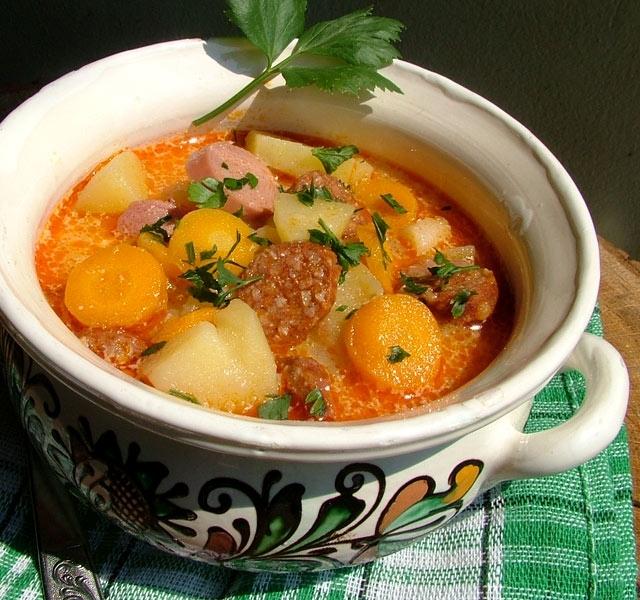
Day-By-Day #3 … Hungarian Cruisine – Sour Cream Potato Soup with Sausage

As many already know by visiting Hungary or friends who have found out the for the Hungarians generally love soup. Hungarian cuisine is charactersed by light and heavy soups with herbs and also soups made of fresh fruits, creamed veggie side dishes, warm pasta dishes, fricassees, and of course countless variation of selicious sauces. Then comes te variety of fried, braised and cooked beef, pork, lamb an poutry dishes, oh and almost left out the mouthwatering fish from the lakes and river at Hungary. The history of Hungarian is a nutritional evolution accepting combining good ideas and even incorporating dominances … a synthesis of ancient, normadic, Slavic, Turkish, Italian, German, Austrian and French influences.

The Soup is an integral part of a meal at the table, but that doesn’t mean all Hungarians are dieing for soups, Some like it hot … spicey but not nessesary. Soup is an integral part of a meal in Hungary and one of course the first meals that come to your mind will probably the goulash soup.

Soup of the Day  – Creamy Potato Soup with Sausage

(Tejfölös burgonyaleves kolbásszal)

Receipt for 4 persons – Preparing time: 45-60 mins.

Ingredients: 4 big potatoes, 150 g smocked sausage, 3 tbs. oil, 2 tbs. flour, 2 tbs. sweet red paprika powder, 2 bayleaves,120 ml. sour cream,1 tbs.  vinegar, 1 small piece celery root, salt and pepper to taste.

Cooking:  Peel, cut the potatoes in large size of cubes.Slice sausage. Chop celery into 4 huge pieces. Add cca 3 times  as much water, salt, pepper and byleaves. Boil it until the potatoes get soft. Be sure to have enough water covering the potatoes. Then when its cooked , prepare the roux (hungarian – rántás) Heat the oil in a pot  then add flour, stirring constantly. After getting light brown, pull away from the fire and add one tsp of red paprika. Mix  some of the roux slowly with the potatoes. Follow sour cream. Take some of th gravy from the soup and mix it with the sour cream. Thenafter bring it to boiling point once more. When cooked as tasting adjust a little vinegar and salt if necessary.

Also, there ar some houeholds and regional variations… some people addsautéed onion as they make the rough, other like to put carrot and/or marjoram. Some people eat  with the potatoe soup the celeriac.

Sour cream (tejföl) it is a diary product that is produced by souring heavy cream very popular in Central and Eastern Europa. Mainly sold with 15% to 20% milkfat. It curdles less when cooked or added to the hot soup.

Hungarian smoky sasauge (Füstölt kolbász) is finely ground and contains nice  color red paprika than the Western sausages.

This soup is a fine example how something so simple can taste so good.

To read more about Hungarian soups, visit previous receipt @ “Q” & “A” Culinary Heritage Into Hungarian Kitchen.

© Aggie Reiter

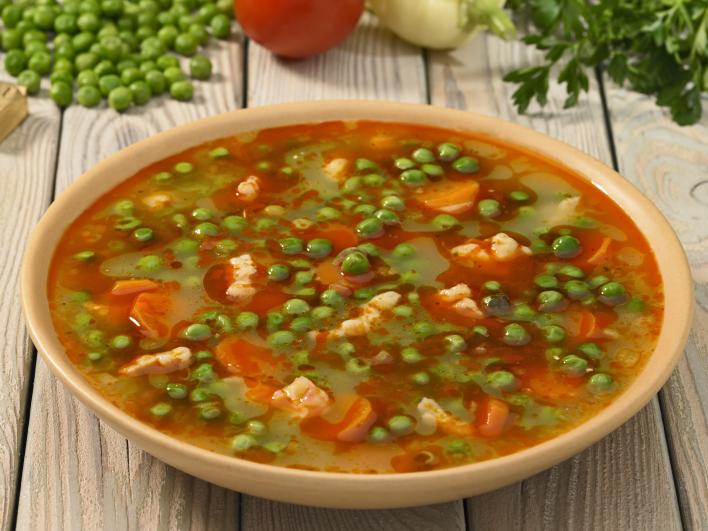
Day-By-Day #2 … Hungarian Cruisine – Green Pea Soup

Gastronomy, cooking and food have always been quintessential elements of Hungarian culture and consequently Hungarian cuisine boasts a wide array of diverse and unique characteristic flavors. The Hungarian cuisine is an evalution of a 1000 year long history based on Hungary’s favorable geographical conditions as well as the heritage of traditional farming, small scale food and crop production. By-the-way … Pea soup has been eaten since antiquity … it is mentioned in Aristophanes’ The Birds, and according to one source “the Greeks and Romans were cultivating this legume about 500 to 400 BC. During that era, vendors in the streets of Athens were selling hot pea soup.

Green Pea Soup

(Zöldborsó leves)

This is a very easy to prepare this delicous soup, especially during the season when fresh peas are out to purchase. A fast and light soup, wonderful on hot summer days. Can use fesh, frozen or canned peas. If using canned peas, rinse them well.

The Hungarian veggie soups can be light soups and thick soups. To make the soup thicker make it with light roux. Depending on the season … green pea, cauliflower, green beans are almost regular soups for the Hungarians.

For 4 person – Preparing time 30 mins.

Ingredients: 500g green peas, 1-2 medium size carrot, 1 parsnip, 1 small chunk celleriac root, 1 small onion, 1 bunch of parsley, 3 tbs. oil, 1 tbs flour, 1 tbs. sweet red paprika powder, salt, black pepper as preferred.

Cooking: Heat the oil in the pot, sauté onion until glistening on medium heat for cca. 5 mins. Adding the cut up vegyies and sauté up 3mins. Scatter flour on top,  stir (practical with wooden soup) for a minute. Removing the pot from the heat add the red paprika. Add cca. 1 liter cold water, let it start to boil. Add the green peas.  When the veggies is done ad the dumplings, cook for 3-4 mins.  until the dumplings and veggies are tender.

Dumplings: 200 g wheat flour (1 cup), 1 egg, pinch of salt, 1 dl, cca 1/2 cup cold water (it should be smooth not hard)

Just a hint … with fresh peas is the best. Can be easily in use of frozen peas, cause peas freeze pretty good. May add alittle sugar, it will not sweeten the soup but the peas will taste yummy.

To read more about traditional  Hungarian soups, visit previous receipt @ “Q” & “A” Culinary Heritage Into Hungarian Kitchen.

© Aggie Reiter

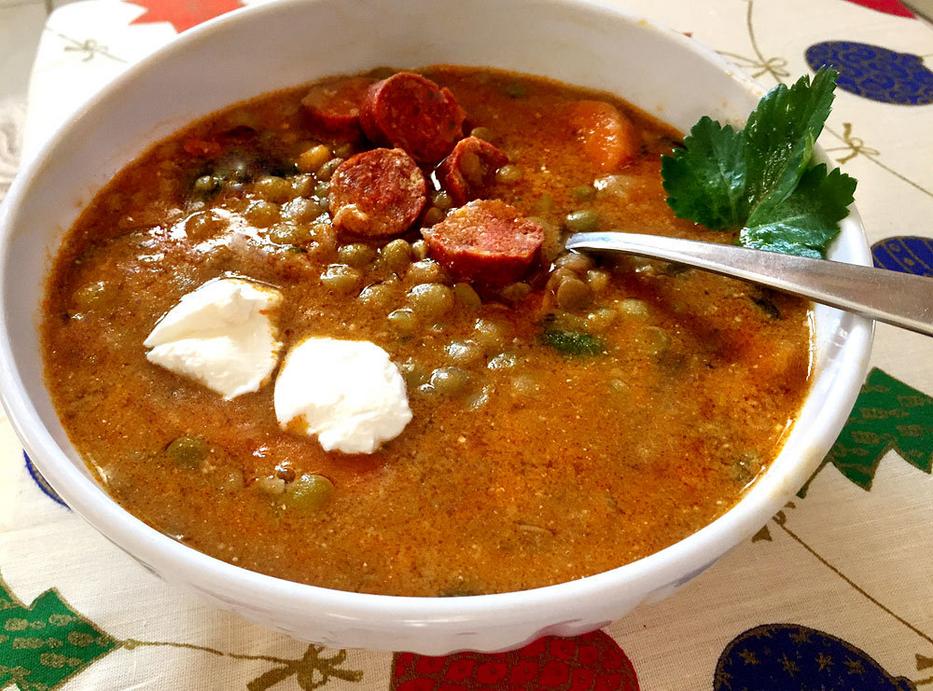
Day-By-Day #1 … Hungarian Cruisine – Lentil Soup with Sausage

Lentil Soup with Sausage

(Lencseleves kolbásszal)

Lentils are one of our oldest crops, grown in Central Europe as early as the Stone Age.

Not only did lentils play a role as a food in ancient times, but they also gained herbal status: Hippocrates recommended the use of lentils to liver patients. It is good to know that it contains significant amounts of vitamins B1 and B2.

The largest lens-producing countries are Canada, India and Australia. It is grown mainly in the southern and south-eastern parts of Europe, especially in the countries along the Mediterranean. In Hungary only grown area is small.

Lentils at many countries (e.g. England, India) and made into flour, and are also used as an ingredient in food. It is also known as a pie-like state of fried potatoes (crisp), which is an appetizer in Indian restaurants, from which it can be dipped in various sweet sauces.

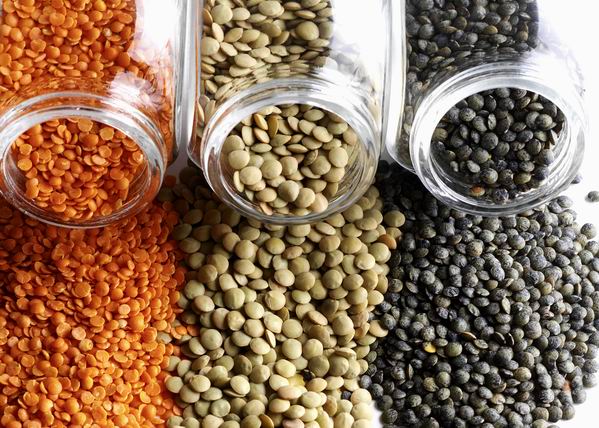
In Hungary, but also elsewhere in Europe, the lentil soup is kinda old traditional way to serve on the first day of the New Year to ensure prosperity for the coming years … It is symbolozing wealth. Lentil soup can be eaten not only at New Year’s Eve, but also a yummy soup at any time. As it is not a light meal, it is recommended to eat it in cold season, it will warm  up the body.  Lentil can also be in use for a salad or steamed as a side dish. In Hungary available three different types of lentils.

Receipt for 4 persons – Preparing time 30-45 mins.

Ingredients: 300 g dry lentils, 1-2 bayleaf, 1 smoked sausage, sliced thin, 1/2 handful parsley to serve, 1 medium size onion, 2 tsp oil, 1-2 garlic clove, minced, 2 tbs flour, 1 tbs sweet red paprika powder, 100 ml sour cream to serve as taste, 1 and a 1/2 liter chicken stock/water, 1tbs mustard.

Cooking instructions:  Place in the oil the cutted onion medium heat until translucent. Add the garlic and stir into it the flour. Remove from the heat  keep stiring whilest adding the paprika power, be careful not to burn the paprika powder. May add the bayleaf then. Pour 1and a 1/2 liter of chicken stock or water and the lentils. Continue slow simmer for 20-30 mins. Add the parsley and continue slow simmer.  Serve the soup with sour cream and season with salt. Some prefer  to add a 1/2 tsp of vinegar in their plate, may also add hot paprika cream as taste requires.

To read more about traditional  Hungarian soups, visit previous receipt @   “Q” & “A” Culinary Heritage Into Hungarian Kitchen.

© Aggie Reiter

“Q”&”A” Jewish Delicious Food – @ Hungarian Cuisines – Journey Through the Taste Buds

The Hungarian Jewish cooking may be rooted in the past, but its recipes aren’t staying there!

Don’t have to be Jewish to love the Jewish cuisine, it is enough to be a gourmet.


There is hardly a culture in which Jewish food and its preparation are not known in the world.

Just a little insight into the countless inherited and localized Jewish food at Hungary

The first Jewish cookbook was published in Hungarian in the 1880s, followed by several other, practical, kosher recipe collections. Due to the dispersion of Judaism, as many communities, as to many food choices and tastes.

Of course, Hungarian Jewry cannot be an exception. The borders of East and West, the typical Hungarian countryside, or even Budapest’s Jewish circles distinct types of food have become popular with a variety of ages.

The Old Jewish Food, was first published in 1984 and presented traditional Eastern European Jewish food, with the aim of preserving Hungarian Jewish dishes from the turn of the 19th and 20th centuries and the first half of the twentieth century. The food descriptions are a bit concise compared to the recipes, the author entrusts the method of preparation partly to the imagination of the chef or cook.

The Hungarians make many spice mixes at home, most of which include cumin, a few cloves, cinnamon, ginger, coriander, seeds, leaves, mint and, of course, salt, pepper, and the essential peppers, but of course the climate in Hungary is not favorable for all of them. cultivation.

From this abundant gastronomic offer here is one of a good … but  heavy crunchy-munchy

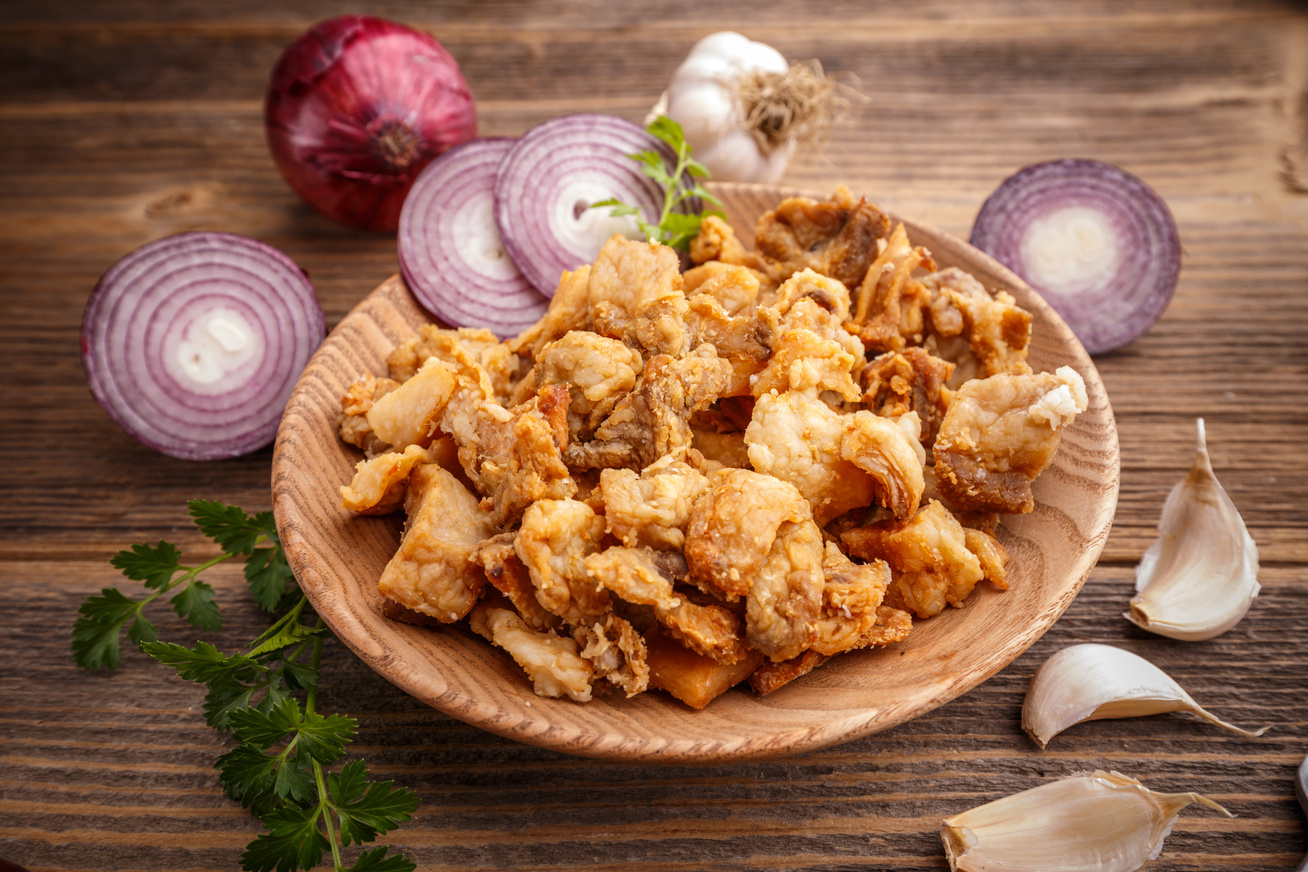
Goose bump with red onion
Goose bump It can also be considered akind appetizer. The Hungarians eat it with alot or without red onion.

(Good to know to avoid smelly onion in the breath, eat a tsp of fresh parsley, also when having garlic and its gone.)

Ingredients: cca 1/2 kg of goose skin, little water.
Cooking: The goose skin is carefully peeled off the meat (usually from the breast and back) … usually Hungarians buy at the market goose  bump …  cut into 2 x 2 cm cubes and then placed in a pot. Add enough water to cover it and cook it on a moderate fire, stirring sometimes. By the time the water evaporates, the crumb will turn nice yellow. Bake for a few more minutes, then pour a cca. 2 tbs of water into the fat and squeeze the lid of the pot. This will make the crackling crispy. Filter and pour the goose fat into a jar  and let it cool, later place it in the fridge and can be in use for cooking ie meat soup  by adding 1 tsp to richer the flavor.
Carefully pour the water into the flag fat, it is advisable to pull away from the oven.


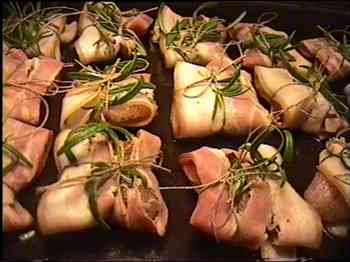
Another yummy appetizing … Chicken Breast Bags with Rosemary
Ingredients: 600 g chicken breast, 16 slices of bacon, salt, pepper, rosemary thread

Instructions: Cut the bacon slices in half. Slice up and tenderize the chicken and put salt, pepper and rosemary on it, then cut it into 16 pieces.
Roll each piece into two slices of bacon and fix the whole thing with a piece of thread. Fix a piece of rosemary on each little bag. It will intensify the mouth watering smell of the dish. Place the bags on a baking sheet and bake them in the oven for about 40 minutes.

Hungarian lunch is not lunch without soup on the table.

Meat soup with matzo dumpling
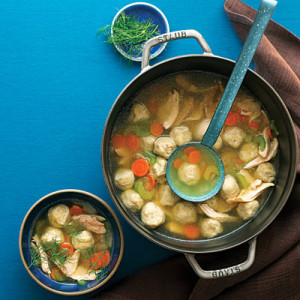
In Hungary, matzo dumplings are not so much made of mace flour, but there are those who make a mixture of coarsely crushed mace. Adding ginger and parsley is the secret to good matzo dumplings. Here is the recipe for mace.
Ingredients: 250 gr mace, 6 eggs,, 4 tbsp goose fat,, 2 bunches of chopped parsley, 2 heaped tsp. ginger powder, black pepper, salt and to make it more  a mocha spoon of soda bicarbonate as well and will be more lighter.
Cooking: eggs are mixed with the fat and the same amount of water is added to it as the amount of egg mixture in deciliters. Add the hand-crushed Passover, the finely chopped parsley, and then season with salt, freshly ground black pepper and lots of ginger. Once kneaded, place in the refrigerator for at least 60 mins. By hand form balls the size of a ping-pong ball out of it and cook it in hot goose soup or it can also cooked in the beef soup or chicken soup.

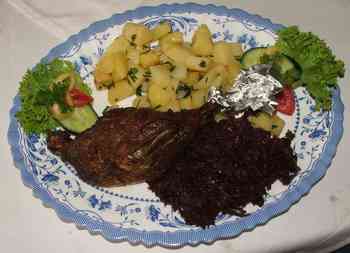
Stewed cabbage with smoked goose leg
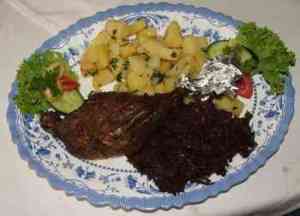
It is very popular … heavy meal … by the Hungarians, but rather cooked in the season of winter.

Ingredient: 2 smoked goose legs, 3 tablespoons goose fat, 40 dkg barrel cabbage.

Cooking: Wash goose legs thoroughly with warm water and soak for an hour or two. Melt the goose fat and heat it over your thighs. Then add the washed sauerkraut and the whole thing, stirring occasionally, just simmer until soft.

Can almost hear the “Q” … where is the famous Jewish cholent? Not missing!

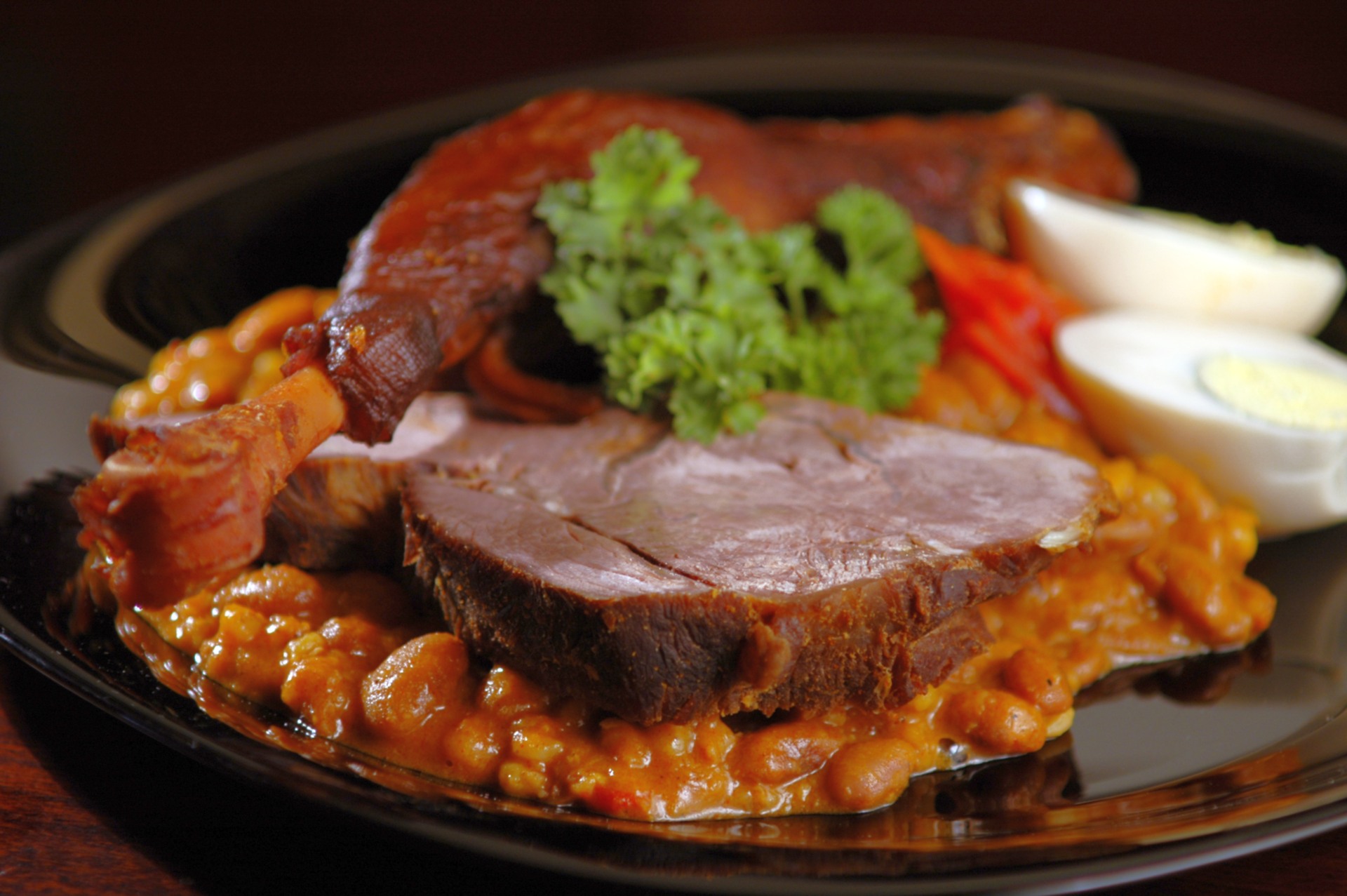
Goose leg and beef meat with boiled egg
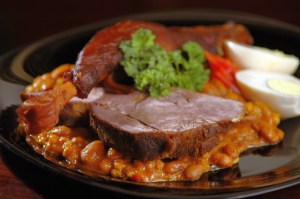
Most probably many people have had already tasted the real Jewish Cholent, but maybe only a few have not cooked it yet. So here is a Hungarian cholent guided tour:

Before the recept … First things First …

“Q” Where does the name Cholent come from?

“A”  The word of uncertain origin …  it is a Jewish Sabbath meal consisting of beans mixed with meat, peas, or a mixture of beans and rice, or pasta. The Jews are forbidden to cook on Saturdays, therefore this food is placed on the embers of the closed stove on Friday, where it is cooked until Saturday.

“Q” How to cook cholent
“A” In a ceramic pot, iron pot or enameled pot.

“Q” Making it on a stove or an electric hob?

“A” The point is to put the dish in the oven, it should be well closed to bare cooking for long hours , also to prevent evaporation.

Ingredients: 40 dkg brown beans 40 dkg beef (for soup), 2 goose thighs, 40 dkg of smoked meat (smoked goose leg or breast is best), 1 small head onion, 1 tsp red pepper, 3 tbs oil or 2 dkg goose fat, 1 tbs flour.
Preparation of brine:
Fry the chopped onion on the fat, sprinkle with the red pepper, add the beans and smoked meat soaked the night before and thaw for approx. With 2 liters of water .Add the meats and sprinkle on top of the flour we mix. Cover the whole thing and bake in the oven until the garnishes are completely softened. Usually in large pots it is good to prepare and make sure the water at the beginning covers all. You only need to salt if the smoked meat in it is not salty enough. Many people put gerslit in the brine, but it is excellent without it. During cooking the water is absorbed by the beans and meats, if so it is recommended to add a little water, but it should be served with short juice, it should be dense.

Life is sweet but better to make it really sweet non the other way than baking Flódni. It is also prepared for some famous event or celebration. Its essential ingredients are all symbols of abundance: poppy, walnuts, dense plum jam, wine and apples. the most famous cake of Hungarian Jewry.

Flódni
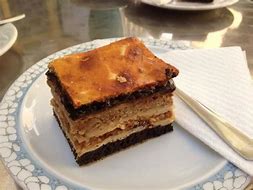
Ingredients: 1/2 kg of flour, 1/2 kg of sugar, 1/2 kg of walnuts, 1 kg of apples, 3  tsp of honey, 3 egg yolks, 1 dl of oil, 1 lemon grated peel.

Baking instruction: Knead the flour, oil, egg yolks and a spoonful of honey. Divide the dough into three and then roll each out to the size of a baking pan. Oil the baking sheet and put in the first sheet. Lubricate it with oil, water it with honey and sprinkle it with the nuts mixed with half the sugar.  Lay the second sheet on top, oil it, water it with honey and sprinkle with half the grated apple mixed with sugar. May bake with other ingredients as listed a/m. Put the last plate on it, water it with oil and honey, smear it on it, and then bake it ready in the oven. Baking time 50mins.

Hopfully, the Hungarian Jewish delicacies cuisine took you on a yummy tour.

©Aggie Reiter
“Q” & “A” … Inherited Croatian food in Hungary

Popular Croatian Dishes that made home in the Hungarian kitchen

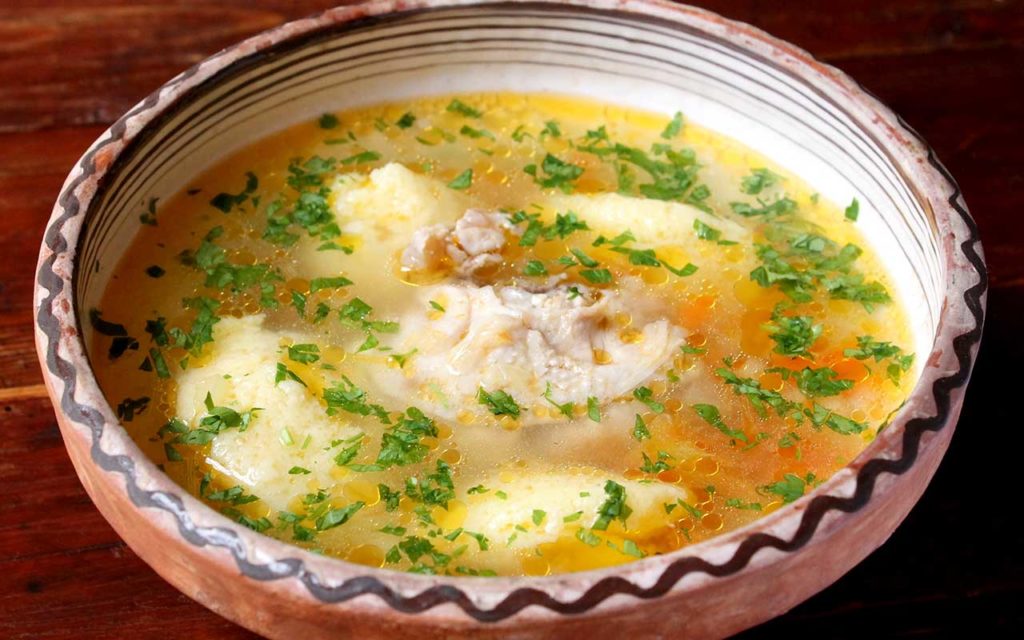
Ajngemahtec – Croatian Chicken Soup with Wheat Grits Dumplings

„Q” Where does the name „Ajngemahtec origin?

„A” The name comes from the German word eingemacht, which could be roughly translated as all in one, due to the fact this simple one-pot dish

„Q” Where did Ajngemahtec – Croatian chicken soup come from??

„A” The cuisine was strongly influenced by Croatia from the Austrian neighbors

Indeed it is nourishing soup with different veggies, containing chicken, heart dumplings and delicious with hearty dumplings. The soup usually served before Sunday lunch not only in Croatia, but Hungary as well as the home remedy to cure everything from flu to hangovers. In Croatia and Hungary it is common in adding to the chicken soup the VEGETA seasoning fulfills an extra flavor of veggies (but be careful with the salting later) Once you tried the mouthwatering soup you will love it. It is pretty simple to prepare it. Nice and comforting chicken soup, traditional (Sunday meal) both in Croatia and also delicious on the table in Hungary

Cooking time: 1h – Servings 4 – Ingredients: 4-6 pieces of chicken thighs bone in, 1 medium onion, 2 large carrots – 1 shredded and 1 finely sliced, 1 cup frozen peas, 1 small parley root (finely sliced), 1 chicken bullion cube, 6 cups of hot water, 2 tsp oil, 2 tsp chopped parsley leaves, 1 tsp VEGETA seasoning optional or any available veggie flavoring, salt and pepper

Dumplings: 2 medium eggs, 2 tsp oil vegetable or sunflower, about 2/3 cup semolina add more, for firmer dumplings.

Cooking instructions: In a large pot heat oil under medium heat, add chopped onion and cook about 2 minutes. Add shredded and sliced carrots and sliced parsley root, season with a pinch of salt and cook for 5 mins, stirring occasionally. Add chicken thighs, 1 -2 cups of water, bullion cube and cook on low heat for 25 mins, stirring occasionally and adding water if necessary. After 25 mins add frozen peas, pour remaining water and cook for 10-15 mins. Remove chicken from the soup and shred the meat of the bone. Put aside.

In a mean time in separate bowl beat eggs with 2 tsp of oil, slowly add semolina, stirring constantly until you get thick batter, making sure that no lumps remain. Warm tablespoon under hot water and with a tablespoon drop full spoons of batter into the soup and cook for additional 10 mins. Add the chicken back to the pot, add chopped parsley leaves, season with salt, pepper and 1 tsp VEGETA and cook for 1-2 mins. Serve warm.

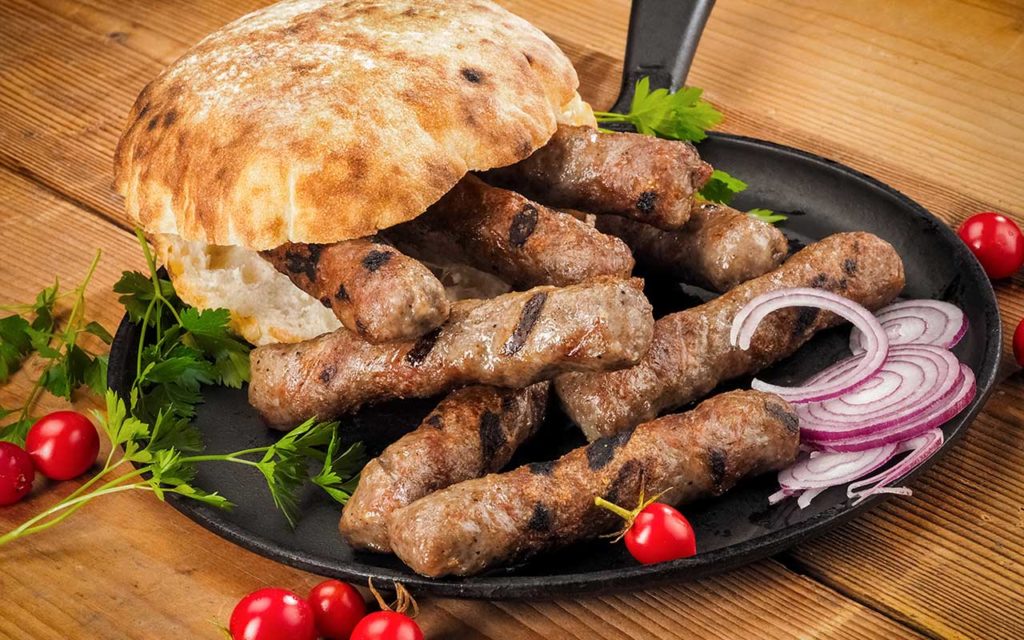
Ćevapi sausages

(In Hungary named: Csevap or Csevapcsicsa)

„Q” What are Ćevapi sausages?

„A” Bascially the Ćevapi are grilled, skinless finger-shaped sausages.

„Q” Where does the Ćevapi origin?

„A” The Ćevapi itself has a Turkish origin. Turkish influence in the similarity to the Turkish kofta kebab, which is a mixed-meat sausage that is molded onto skewers for easy grilling.

The recipe itself will not be complicated at all, in fact, it is extremely simple easy to make, the only possibility of mistakes is found only in the quality of the ingredients. That’s why it’s important to pick meats minced beef or pork, and spices. Ćevapi together with chopped onions, kajkmak, sour cream, minced red pepper, ajvar, and salt are incredibly tasty. For best flavor, let the sausages marinade in the refrigerator for at least 1 hour, up to an overnight.

Ćevapi has an incredibly unique taste and beside among Croatians at the Hungarian kitchen indeed appreciated. Delicious smoky flavor and are perfect for serving with flatbread and sliced onions.

Preperation time 20 mins, Cooking time: 10 mins.

Ingredients: 0.55 lb minced beef, 0.55 lb minced pork, 3 garlic cloves minced,1 ¼ tsp salt, 1 tsp ground black pepper,1 tsp paprika, ¾ tsp baking soda.

Cooking instructions: Take a large bowl mix together all ingredients.Using slightly over 1 tsp of meat mixture per sausage, shape the mixture into sausages the size and shape of a fat finger (roughly 3 inches long and ¾ of an inch in diameter).Place all the formed sausages in a single layer on a platter. Cover the platter and refrigerate for at least 1 hour (up to overnight). When you are ready to cook your sausages, preheat your grill to medium heat, 180⁰C -200⁰C (350-400⁰F) (You should be able to hold your hand a few inches from the cooking grate for 5-7 seconds.). To grill the sausages using a fine grate grill pan for 4-5 mins a side, until golden and springy. Serve the Ćevapi with sliced sweet onions and flatbread (like lepinja or pita). Mind you on the otherside of the Moon, @ Woolworths, Beef Chevaps are prepared ready just to roast Downunder.

Štrukli from Croatia to Hungary

„Q” Where origin of Štrukli?

„A” The exact origin of štrukli remains unknown, but traced a staple for … pastry and a salty stuffing made from cow cottage cheese, cream and eggs long ago on the hills and forests, northern Croatia … some say the original dish also called Zagorje strukli, originates from the Zagorje region of Croatia)

„Q” What is the Štrukli?

„A” It is a rather simple „pulled pasta” dish, which, depending on the type of filling, can be either savory or sweet.

There are 2 types of Štrukli: boiled and baked. Ingredient is most important need the fresh cottage cheese …  it has a fresh, slightly acidic taste and a refined taste of milk that is only really began to ferment.

Dough ingredients: 0.90 lb, 1 egg, 1 tsp oil, salt.

Serve: 8 – Ingredients for the filling: 20 oz (600 g) fresh cottage cheese, 3.3 oz (100 g) butter, softened + 2 tsp,4 eggs, 0.4 cups (100 ml) sour cream

Preparation time: 30 minsMeanwhile preheat then oven if baked to 180⁰C (365⁰F).

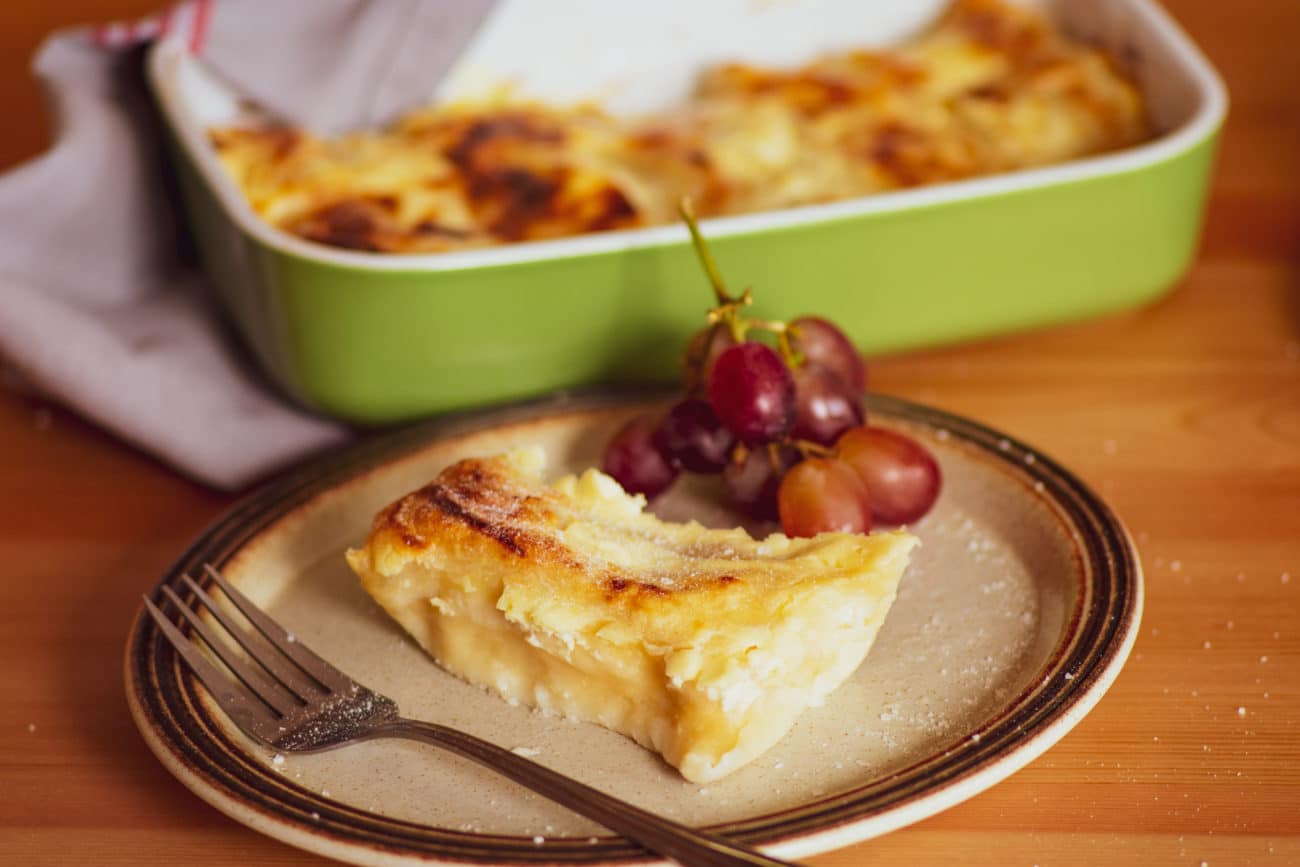
Mix a firm dough of flour, 1 egg, oil and a little salt water. Stir until bubbles appear, then shape the dough into 2 loave ball and roll it  using the tablecloth , stretch the dough out a bit and coat it with oil so that it doesn’t dry out and cover with a warm towel. Leave the dough to rest for 1h. The dough is then stretched out, as usual, on a sheet smeared with oil or on a cloth sprinkled with flour. Mix the ingredients of the filling well, then place small piles on the dough with a spoon in a row, not too far apart. The dough is rolled up, the dough is squeezed between the piles with a wooden spoon and then separated using a plate. This is how to get the separate pieces filled with cottage cheese, which is cooked in flag salt water. Don’t have to cook for long when it comes to the top of the water, good. Place the cooked Štruklies next to each other in a fireproof bowl or baking tray, pour over the cream to cover them.

Stuffing mixture: mix the cow cheese with 4 eggs, melted butter and a little salt and mix until smooth.

Cooking time: 50 mins.  Knead a medium-soft strudel dough from the dough.Divide into 2 loaves, smear with oil, rest for 1h in a warm place. The dough is then stretched out, as usual, on a sheet smeared with oil or on a cloth sprinkled with flour. Mix the ingredients of the filling well, then place small piles on the dough with a spoon in a row, not too far apart. The dough is rolled up, the dough is squeezed between the piles with a wooden spoon and then separated using a plate. This is how we get the separate pieces filled with cottage cheese, which we cook in flag salt water. You don’t have to cook for long when it comes to the top of the water, good. Bake in the oven for about 50 mins at 180⁰C (365⁰F) until golden brown.

Excellent both either hot or cold. You can also put a little filling on the cooked Štrukli.

© Aggie Reiter

Under the 150 years of Turkish rule had the greatest influence on Hungarian gastronomy.

During the Turkish occupation, countless, previously unknown flavors entered Hungarian cuisine.

If we approach from the side of gastronomy in the 16-17. century history, meet positive effects with countless, previously unknown flavors and its development of today’s culinary culture.

Hungarian eating habits during the Turkish occupation were characterized by the fact that the dishes were prepared with butter, many dairy products were in use and the dishes were very seasoned. Cooked pasta and dumplings were added as a side dish or used in soup. Among the dishes were pies, sausages, sausages, jellies, donuts, pancakes, and strudel. The cooking methods included grating, pickling, stitching, draping, ablation, steaming, toasting. In the Turkish occupation areas naturally the Turkish culinary culture came to the fore, using the characteristics of Turkish cuisine. We took the patties, flame, bejglit and stuffed cabbage from the Turks. Parsley, cumin, anise and horseradish are among our herbs inherited in our kitchen. Among the sweets, they brought barbecue, cakes, sponge cakes, bird milk, gingerbread, Turkish honey and its typical coffee. Then poppy, tomato and eggplant appeared. Turkish influences began to grow almonds, cherries, figs, nuts, grapes, peaches and cherries in Hungary. Pepper has become an indispensable element in Hungarian gastronomy through Turkish mediation. It has enriched our nutritional culture, has resulted in many common meals, and as a result, the Turkish-Hungarian tastes are quite close to each other. All-in -all, we can say that in the Hungarian nutrition culture by the Turkish influence has brought about significant changes that are still effective.

Regarding the consumption of meat, the pork has become increasingly popular in Hungary in the 16th century, as pork was not consumed by Turkish soldiers, so it could remain intact even during looting.

Meaty and rice dishes: Basically the shepherd’s dish into the Hungarian cuisine came from the Turks. These foods are mainly porridge and pasta dishes, lentils, sturgeon, egg barley. The pilau – rice and meat, biber – stuffed peppers, stuffed cabbage became our favorite food during the occupation and still today in the XXI century. Both peoples are well-known for their meaty buns, the only difference is that Hungarian cuisine pork was in use as the filling. Among the most well-known dishes of Turkish cuisine are the dishes stuffed with cabbage or rice in vine leaves which are available in tins at the local stores.

Sweets: From Turkish times, our cuisine becomes “sweeter” and finds its place in Hungarian cuisine with brittle cake, brioche, bird milk, honey brioche, turkey honey or quince cheese. Also arriving in the Turkish mediation the poppy seeds which later became in the Hungarian pasta and cakes, cakes.

Regarding to the Hungarian pastries, the „pogácsa” pastry (based on rather salty soft snack) and since the word itself is of Ottoman origin (called then Baghja), we have reason to believe that it was already known to the conquering Hungarians, only amplified by the Ottoman-Turkish era. Turkish honey was originally an Armenian sweet, but it came to us through the mediation of the Turks.

Turkish herbs and vegtables: Also played a significant role in Hungarian gastronomy. At that time it became an indispensable spice for peasant cuisine, but now-a-days these spices make our food even more colorful. Eggplants have been native in-and-around the Mediterranean and the Balkans since the 17th century, but to Hungary came through the Turkish mediation, which is a.k.a.  Turkish paradise.  One of the best known dishes made of it was the stuffed eggplant called “töltött padlizsán” “imam bayıldı” – “imam fainted”. Cannot skip to mention the seasoning with Turkish mediation includes sage, juniper, rosemary, thyme, peppermint, parsley, pepper, various onions, horseradish and saffron. The spread of maize in Hungary can be attributed to the Turks as well. Among the most well-known and favorite by many is cabbage stuffed with meat and/or rice in vine leaves.

Turkish Fruits: The influence may be also better discovered in the fruits that come to our land … apricots, strawberries, figs, medlar and Mediterranean plants and without them unimaginable in to-day’s Hungarian gastronomy.

We can see that in addition to our food, fruits and spices, the Turkish presence has influenced the long-term formation of our Hungarian dishes. Originally a fermented beverage made from millet, later made from different cereals, boza are very popular in Hungary. In addition to boza, the Turkish coffee as their traditional drink, appears in our country in the 16th century, and many people still to-day prefer to drink Turkish coffee. In the 15th century, like bozo, coffee was used as a medicine in addition to its enjoyment which shows an inpact to the Turkish presence and in our daily drinks.

Some recipes will be shared later, which we still consume to this day.

© Aggie Reiter