Archive for the ‘Uncategorized’ Category

“Q” & “A” … Inherited Slovak food in Hungary

Just Saying … Don’t start reading on an empty stomach … likely to become very hungry. but the good news is that you can make these at home by yourselves … enjoy your meal.

“Q” … Really inherited cuisine from the Slovak kitchen by Hungarians?

“A” …  Not really, because before 1920, a part of the territory belonged to Hungary and of which today lay in Slovak republic. There is nothing surprising in this because the gastronomy  flavors were kept on both sides no matter of the new borderlines, but as throughout the History of Hungary these borders frequently shifted and people moved around. So did the varied foods in Hungary within the world of experienced flavors.

(After the WWI monarchy ended came the Trianon Treaty of 1920, which altered the territorial integrity of Hungary. Appr. 70% of its historical territory, 58% of its former population were relinguished to neighboring countries.)

“Q” … What are the the most traditional Slovak dishes overlapping in time @ Hungary’s gastronomy?
“A” … Here are some of the most traditional Slovak dishes which are a well-known and popular by the Hungarians : Bryndzové halušky – potato dumplings with sheep cheese and roasted bacon. Zemiakové placky – potato pancakes with flour and garlic fried in oil. Fried cheese and sheep cheese. Lokše – potato pancake. Soups – chicken noodle soup, sauerkraut soup and bean soup.

 The Strapačky – in Hungary Sztrapacska is traditionally accompanied with local “juhtúró – sheep cheese” equivalent to bryndza.

Bryndzové halušky (potato dumplings with sheep’s-milk cheese)

The recipe would serve 10 people. Ingredients cooking instructions: Take 750 g peeled raw potatoes, finely grated, salt, optional, 250 g flour, 250 g sheep cheese (bryndze), 100 g pork fat or bacon, cooked, then cut up into small pieces. The ingredient that makes this national dish of Slovakia a favorite here  and there is the sheep’s milk cheese which has a sharp in taste. The most abundant ingredient is the raw potato, which comprises most of the dough that creates the potato dumpling (halušky). After the grated potatoes are mixed with the flour (and salt), they are molded into small cylindrical chunks of 3 cm., and gently placed in boiling (and if desired, salted) water. The dumplings rise to the top of the boiling water in a few minutes.  Removed from the pot of boiling water with a slotted spoon, and placed on a warmed plate. Immediately after dumplings are placed on the plate, small chunks of sheep’s milk cheese (bryndza) are placed on top, causing the cheese to melt over the potato dumplings. Sprinkle the crispy pork bits on top of the bryndza, some may prefer to mix up the potato dumplings and bryndza first, then serve piping hot.

Pečená hus s červenou kapustou a zemiakovými plackami – Roasted goose with red cabbage and potato pancakes – Sült liba, vörös káposzta és burgonyás palacsinta.

Ingredients cooking instructions:  Roast Goose (or with Duck same to follow) Wash, thoroughly dry and season the goose with salt from the outside and from the inside and sprinkle with cumin seeds. Place the goose with its breast (chest) down onto a roasting pan, and pour some water (about 3 dl) around it.
Bake the goose in an electric oven at 200° C, in a hot air oven at 180° C and in a gas oven at gas mark 4, for an hour per each kilo and keep basting the goose with the juices collected. (A 3 kg goose roasts for 3 hours).As you laid the goose breast down, in the middle of the roasting, turn the goose breast up and continue basting the goose with the juices collected, thus achieving an even browning and the breasts are not dried. After roasting, allow about 15 minutes to rest, cut into pieces and serve.

Braised cabbage … Sprinkle the cleaned and grated cabbage with salt. Put in a pot with the lard and cumin, fry it, add granulated sugar, leave to caramelize. Finely chop the peeled onion, add it to the caramel, stir it, immediately add the lard and stir it well again. Place the cabbage, bay leaf, and vinegar, braise together for 40-50 minutes, until the cabbage is soft, finally, season it.

Potato pancakes …  Take 50 dkg potatoes, push the unpeeled boiled potatoes through a sieve, 10 dkg of flour, 2 eggs, 50 dkg potatoes, 1 dl sour cream,, 1 small head onion, 1 clove garlic, oil, Finely grate the peeled potatoes and onions. Mix the flour with salt and season with strong pepper. Let the pancake batter stand for 20 minutes. Fry the pancakes from the dough in the usual way on a little heated oil. We offer topped with crushed garlic and salt. Brown on both sides.

Tradičné slovenské slivkové knedle – Traditional Slovak Plum Dumplings – Szilvásgombóc

Not only very popular dessert in Hungary, but across Eastern Europe.  The potato dumplings may be filled with all sorts of fresh fruits: cherries, strawberries, apricots, plums, blueberries depending on the season and taste.

Traditional Slovak Plum Dumplings not only very popular dessert in Hungary, but across Eastern Europe.  The potato dumplings may be filled with all sorts of fresh fruits: cherries, strawberries, apricots, plums, blueberries depending on the season and taste.

Preperation time …  1h … Cooking time: 10 mins. Ingredients and cooking … 1 kg white potatoes (cca 2 pounds), 2/3 cups flour 2 eggs, 20 fresh plums (ripe),2 cups breadcrumbs, 1/4 cups sugar, 2 tbsp cinnamon, 60 g butter (cca 2 oz).

Boil the potatoes, either with their skin on, or peeled, once they are tender, drain the water, and mash them well. Leave to cool a bit, then add the eggs and flour, and knead into a smooth, but sticky dough. Roll out the dough soon so as it won´t become runny. Cut it into squares, take one-two tablespoons of dough, flatten it up then drained plum into every piece in the middle and wrap the dough around into the shape of a ball. Cook in slightly salted boiling water for about 7 minutes until they float to the surface. Take them out but do not rinse! Procedure for the crumbly topping. Place the pan over a low heat, melt the butter, add the breadcrumbs, and stir well for 2-3 minutes until light color brown. Remove from the heat and set aside. Toss the dumplings  while they are still hot into the breadcrumbs. Leave to cool before serving.

© Aggie Reiter

Part2 – Continue Gastronomy Inherited Over 50 Years of Russian Rule @ Hungary

During the 50 years of Russian rule –  meals embedded in Hungarian gastronomy.

It is almost natural for many Russians surrounded by the Sea to bring sea life into the variety  in their meals. Here is one of the appetizers and well-known in the Hungarian kitchen.

Russian Beetroot Herring Salad – (Orosz cékla hering saláta)

Ingredients … 50 dkg pickled herring, 4 apples, 40 dkg pickles, 40 dkg pickled beets, 1 box of cream, 1 pinch of salt, 1 pinch ground pepper, 1 pc lemon juice,1 bouquet of dill, 2 tbsp olive oil. Preparation time 25 mins. The herring fillets are cut lengthwise along their spines and sliced ​​into tastefully sized pieces. If the herring fillet is small, the longitudinal halves can be omitted, cut into pieces. The apple is also diced after the seed coat has been removed and twisted well with the squeezed lemon juice to prevent it from browning. The pickles are also cut into pieces of similar size. Finally, the peeled beets follow, which we cut into thin longitudinal strips. Gently mix the fish, beets, cucumbers and apples in a larger bowl (in which we can conveniently mix the ingredients), sprinkle with the olive oil and sprinkle with the finely chopped dill. At the end add salt, pepper and refrigerate. When our salad has cooled, beat the cream and add. Carefully twist with a wooden spoon, taking care not to break. Serve cold with dill and lemon rings.

Perhaps the Russians are the first in the world to overtake the Hungarians with loving their soups!

  Borsch – hearty one-pot meal – thick soup – (Céklaleves)

The beet-based red borsch has become popular in the Hungarian cuisine. It is typically made by combining beef meat, bone stock both are the most commonly used, with brisket, ribs, shank and chuck considered to give the most flavorful results, sautéed vegetables, which basically beetroots and usually include cabbage, carrots, onions, potatoes and tomatoes.

Ingredients: 25 dkg beef meat, 5 dkg fat, 25 dkg potato can you translate 20 dkg beetroot, 20 dkg fresh cabbage, 5 dkg tomato, 5 dkg brown onion, 20 dkg sliced fresh cabbage, 5 mashroom, 5 dkg tomato 5 dkg brown onion, 15 dkg parsley root (i.e. white carrot), 10 dkg celeriac, 5 dkg tomato pasta, 4 dkg flour, quarter  deci litre vinegar, one and half deci litre sour cream, half of bay leaf, half gr black pepper, 2 dkg salt.

Stroganoff a.k.a Beef Strogonoff style

“Q” … How – When the Stroganoff Beef Tenderlion Ragout landed in Hungary?

“A” …  At first  the name “Stroganoff” became popular thoughout Hungary in the 70s  when screened the series of adventure novel Sztrogoff Mihály – Michel Strogoff on TV. It was a joint co-operation by Bulgarian, Italian, French and Germany, directed by Eriprando Visconti. Thereafter, the restaurants realized to cook this mouthwatering potty meal which perfectly rang the bell to the series to associate it to gastronomy.  In those days, just went to one of those restaurants having it on the menü and by just to say “Stroganoff” the waiter had no more question.

The Stroganoff sirloin ragout was born in Russian, but not named after the person who invented the food. The name Michel Strogoff originally was based upon the novel from Gyula Verne. The legend says that in the 18th century this delicious meal was invented by Stroganoff who was the chef to the Duke of Odessa. The meat-onion-sour cream dish with salted cucumber from thereon was named Beef Strogonov style … based on French and Russian gastronomic traditions … one of the most popular Tsarist dish which really dug itself into the Hungary’s gastronomy.

 Stroganov sirloin ragout embedded in Hungarian gastronomy

Stroganov Sirloin … here you go

Ingredients …  for serving 4 people, 500 g of beef tenderloin, 1 small head onion, 150 g sour cream (20%), 250 g .. table mushroom/champignon, 150 g butter, 70 g of pickle cucumber, 2 tsp Dijon mustard, 50 ml wine (white, dry), salt, black pepper  powder.

Cooking instruction … First, the ingredients are prepared. Slice the onion, quarter the mushroom lengthwise, and thinly strip the delicacy cucumber. Cut the sirloin into thin finger strips. Place the meat to cook into a large size pan. Melt the butter in the pan. Fry the onion on it. Put the sirloin on top and fry until white. You can add the mushrooms. Add salt and pepper. Simmer for a few minutes. Can also come with the striped delicacy cucumber, simmer it for a few minutes. Pour over the wine and bring to a boil. At the end you can add the mustard and sour cream, boil it together as well.

Ending the cooking make a light jerky, continue to stir for 10 minutes which will enrich the soup. Tomatoes cut into articles are placed in the soup 5-10 minutes before serving. Upon serving, put a spoonful of sour cream in each soup bowl. Roll over with the finely chopped parsley and the Stroganov sirloin is ready.

Cooking instruction …  Slice the onion, quarter the mushroom lengthwise, and thinly strip the delicacy cucumber. Cut the sirloin into thin finger strips. Melt the butter in the pan. Fry the onion on it. Put the sirloin on top and fry until white. You can add the mushrooms. Add salt and pepper. Simmer for a few minutes. Striped delicacy cucumber, let  simmer it for a few minutes. Pour over the wine and bring it to boil. At the end can add the mustard and sour cream. Boil it together as well. Ending the cooking make a light jerky, continue to stir for 10 minutes which will enrich the soup. Tomatoes cut into articles are placed in the soup 5-10 minutes before serving. Upon serving, put a spoonful of sour cream in each soup bowl. Roll over with the finely chopped parsley and the Stroganov sirloin is ready. May garnish with rice or potato croquette.

A Taste from Russia  – Pryaniki – Gingerbread 

The original Tula pryanik imprinted Tulsky … adjective form of Tula with the city’s coat of arm.

“Q” … When did in Russia appeared the Gingerbread?

„A” … In Russia, gingerbread appeared in the 9th century A.D. A dessert at the time being was called “honey bread” first enjoyed in Ancient Egypt and claimed top have been brought over Europe by the Armenian monk Gregory of Nicopolis to Russia. Then the gingerbread was made from rye flour mixed with honey and berry juice got ice. It gain the modern name when people started enhancing this recipe with spices from India and the Middle East. Decades later a square slab of spicy cake filled with jam or condensed milk. The cake is still extremely popular in Russia and same   goes to Hungary by the local confectioners and home-made. The gingerbread’s are one of the sweet cake, or cookie or biscuit in France, Sweden, UK, America having several different recipes.

Ingredients …  2 tbs butter, ½ cup honey, 1 egg, 1 ¾ to 2 cups flour, ¼ teaspoon baking soda, ¼ teaspoon each: ground Cardamom – Ginger – Maced – Cinnamon, 2 tablespoons crushed blanched almonds, ½ cup thick jam (plum is especially good). Glaze: ½ cup confectioner’s sugar, 2 tbs fresh lime juice.

Preparation … Cream the butter and honey, then beat the egg. Stir in the baking soda, spices and almonds, mixing well. Add enough flour to make a soft dough. Wrap the dough in waxed paper and chill in the refrigerator for 1 hour. Preheat the oven to  180 Celsius/350 F.  On a floured board roll the dough out 1/8 inch thick Cut out the rounds with a 2 ½ – inch cookie cutter. Spread a generous teaspoon of jam on half of the rounds. Top each jam-covered round with a plain round, sealing the edges with your fingers, them crimping them decoratively. Place on a greased baking sheet. Bake for 10 mins at above temp. then reduce the heat to 160 C/ 325 F and continue baking for 8 to 10 mins more. Cool it down on a rack. To prepare the glaze, mix together the confectioners’ sugar and lemon juice. Pour over the cooled cookies. 18 pieces of gingerbread prepared.

Hungarian Gingerbread filled with fruit

Gingerbread is ageless!

Good to know … Was recorded to be the World’s largest gingerbread house but it broken. Lately, recorded was set by the Mall of America in 2006. Here is the size to have a hint … the new winning gingerbread house, spanning nearly 40000 cubic feet, was erected at Traditions Golf Club in Bryan, Texas. The house required a building permit and was built much like a traditional house. Used 4000 gingerbread bricks during its construction. To put that in perspective, a recipe for a house this size would include 1800 pounds of butter and 1080 ounces of ground ginger … Sounds more like a gingerbread resort!

© Aggie Reiter

“Q” & “A” … During the Russian Rule Inherited One Pot Meals @ Hungary

From Russia to Hungary many meals have been inherited into Hungary’s gastronomy.

Until the beginning of the 20th century, the order of food served was as follows: appetizers, salads, jellies, pies. This was followed by grilled meats and to end a meal was/is unique the Russia way, traditionally closed with soup … Here if so, after appetizer or not starting with the soup … the Russians say to end the meal with soup the digestion is greatly aided by the soup consumed.

The most important Russian dishes are known all over the world, such as borsch, scsi, pelmeny or pirog, and their national drink need not have to be introduced cause well known everywhere around the world, the Russian vodka … but the Hungarians rather have a sip of their Pálinka.

“Q” … From where originates the Beetroot Herring Salad?

“A” … It is a Russian and Ukrainian speciality.

“Q” … What does beetroot herring salad consist of?

“A” … Main ingredients … Herring, vegetables (potatoes, carrots, beetroots), onions, mayonnaise.

Q” …What is one of the popular Russian mouthwatring meal also inherited for the Hungarians?

„A” … Borsch Beef  … Stroganoff Style

„Q” … Interested… what is the difference between Goulash and Stroganoff?

„A” … The traditional Goulash is a thick stew/soup, usually may be in use of beef lower leg, the hindquarters, the brisket or the shoulder bladecut of meat suited to slow cooking. It usually contains potatoes and other vegetables, as well as noodles. A true Stroganoff consists of paprika-dusted fillet steak quickly pan fried with mushrooms and onions in a sour cream and brandy sauce.

“Q” … What kind of meat is Strogonoff made of?

„A” … Main course of Stroganoff can be prepared in any form of meat … beef, chicken or turkey. The main dish is often accompanied by side dishes: potatoes, pasta, rice, barley porridge, vegetables either boiled, fried or steamed.

“Q”… How do you add flavoring to Stroganoff?

“A” … Salt, Pepper & Onion Powder – Most recipes call for these not-so-spicy ingredients. While browning your coated beef, throw in some real chopped onions (1/4 cup), a couple sliced cloves of garlic, a little tarragon, sea salt, fresh mushrooms and yes, some hot mustard.

„Q” … Is Gingerbread originally a Russian dessert?

„A” …  The dessert at the time being was called “honey bread” first enjoyed in Ancient Egypt and claimed top have been brought to Europe in 992 CE by the Armenian monk Gregory of Nicopolis to Russia. At that time, gingerbread was made from rye flour mixed with honey and berry juice. It got its modern name when people started enhancing this recipe with spices from India and the Middle East. Decades later a square slab of spicy cake filled with jam or condensed milk. The cake is still extremely popular in Russia and same in Hungary by the local confectioners and home-made. The gingerbread’s is one of the sweet cake, or type of cookie or biscuit popular in France, Sweden, England, America containing within several different recipes.

Recipes coming up @ Part2.

© Aggie Reiter

Back to the Future from 1952 to 2020 @ Budapest

Drive in movie theater opening June, 3. 2020.

Park-In Theaters–the term “drive-in” came to be widely used only later–was the brainchild of Richard Hollingshead, a movie fan and a sales manager at his father’s company, Whiz Auto Products, in Camden. Reportedly inspired by his mother’s struggle to sit comfortably intraditional movie theater seats, Hollingshead came up with the idea of an open-air theater where patrons watched movies in the comfort of their own automobiles. He then experimented in the driveway of his own house with different projection and sound techniques, mounting a 1928 Kodak projector on the hood of his car, pinning a screen to some trees, and placing a radio behind the screen for sound. He also tested ways to guard against rain and other inclement weather, and devised the ideal spacing arrangement for a number of cars so that all would have a view of the screen.

In 1933, eager motorists park their automobiles on the grounds at Park-In Theaters, and that was
the first-ever drive-in movie theater, located at New Jersey.

 Paris was the first innovation centers of the diffusion process in the sense of HÄGERSTRAND (1952) were the big cities of Europe, Vienna, Berlin and Budapest.

Decades have past and the large outdoor movie screen, projection booth, and the large parking area for automobiles seemed to have disappear, BUT lately since the virus keep folks from moving out from their home watching the movie channel.  The cinema season is starting again – with the still-threatening epidemic, everyone can watch the cult classics from the safety of a car.

As the number of effected patients spreading the virus became lower, many wish to go back to live the way they did before, brighten up  their evening/nights more than  ever. Therefore the drive in movie theater welcomes movie lovers at the  Westend Drive-In Cinema to be open for the first time on

June, 3. 2020 @ Budapest. Gate open 7.30 p.m. Screenings 9 p.m.

At the opening will be screened for the movie lover to watch the indefatigable favorite The Great Lebowski, followed by masterpieces such as American Beauty, Joker, Grease and Back to the Future in the coming days. With Subtitles HUN/ENG. Those interested can always find the current program on the Budapest Rooftop Cinema website.

© Aggie Reiter

Upon the Era of Austro-Hungarian Monarchy Gastronomy Influence on Hungary

The Hungarian cuisines are as just sailing on flavors cruise through the waves on the gastronomy history of Europe.

Upon the era of Habsburg influence culture and gastronomy during – Austro-Hungarian Monarchy in the 17th century added tastes into the Hungarian kitchen and the Austrian cuisine often became into play visa-versa.

The influence beyond no doubt in gastronomy from the time of the Austo-monarchy turning around in the Hungarian meals. Still today the below meals are very popular for the Hungarian restaurants and in homemade kitchen. In addition to the various regional specialties, the Hungarian menu offers many dishes, as an influence from different countries such as Austria, the former monarchy. There was so much going along in Hungary’s history that even often the Hungarians themselves don’t have a clue where their favorite food comes from. Indeed the Hungarian people are especially masters of presenting different cultural influences on a plate. Foreigners  and tourists may consider many recipes and foods typically Hungarian – country-specific – that’s right in a way, but they could never have been created without the appropriate Austrian intercultural effects.

For Instance… For the Hungarians beside many other inherited cuisine with the spread of Wiener schnitzel made it’s way into homemade foodies and restaurants throughout Hungary. But let’s start with the soup …The famous Tafelspitz was also taken into Hungarian gastronomy. Especially fond of the beef meat soup. … Cooking meat (instead of baking) is an ancient cooking process. But to cook beef exclusively is already an Austrian invention, namely the XV. century. The Viennese at that time liked the meat of the Hungarian fattening ox the most. A piece of meat cut from the back of these animals by proper technique was also called Tafelspitz due to the thin layer of fat surrounding the meat.

The “Tafelspitz” (Marhahúsleves) is considered as a national dish of our neighbor country Austria and is equally popular in Hungary especially in the wintertime having to warm up with the rich tasty soup.

Preparation time 120 – 140 minutes  – Ingredients for 4 persons – Meat soup (broth), in Hungary it is typically made with chicken (chicken soup – tyukhúsleves), or beef (beef soup – marhahúsleves). The slower you cook, the more parts of the meat you use and the more bony parts you use – the better it will get. Recipe: 1 big piece of beef and/or beef bones for beef soup, 1 full  chicken for a chicken soup, 2 carrots  (don’t put too much it will make the soup too sweet, 1 celeriac root, 1 parsnip , 1 onion with the outer leaves  (it gives nice color to the soup , some people like the cooked onion but if not leave it). 1 tomato ,1 Hungarian sweet yellow pepper, 2 Chili’s if you like a little kick, salt and peppercorns just season. Cooking: Add the meat pork bones cover them with water cook slowly for an hour. Add your vegetables according to their cooking time. Seasoning is limited to salt and peppercorn. While cooking take off the foam from the top from time to time. You have to make sure you filter and strain it well.

Good to know … one of the local favorit here the Chicken soup  – Újházi tyúkhúsleves (was named after Újházi Ede a famous actor of the 19th century.) He liked his hen soup extremely rich with a lot of meat and fines strips of homemade pasta, plus carrots, celery, mashroom and green peas.) Good to know … the boiled beef in broth, (Főtt marhahús) is popular here to place aside and after eating the soup and eat he beef meat with horseradish.

The“Viennese schnitzel”  (Bécsi szelet) was originally not from Vienna but from Venice-Italy.

Italian chefs already in the XVI. century, roasted meat into breadcrumbs, and indeed the Jewish population of Constantinople probably even earlier roasted that way. Legend say that the Viennese schnitzel arrived in Austria in 1857, thanks to the Austrian General Radetzky. Subsequently, in imperial times, the food was further refined to become what we know today as the Viennese schnitzel, and one of the most popular and made its way into main course throughout Hungary. As the  legacy of centuries the two countries have been as one: deep fried meat is  number one main dish in Hungary. Can be prepared from pork or as here  in Hungary often from poultry or veal meat.

Preparation time: 60 mins. –  Ingredients to 2-4 persons –  Recipe : 4 big slice of pork or veal medaillons (about 150-200g each),  4 eggs, 250 g flour, salt, pepper, 250 g breadcrumbs, oil for deep-frying. Cooking: Prepare and tenderize the meat to thin slices. Salt and pepper then turn both sides first in flour.Then dip them in the salted beaten eggs. Finally coat with the breadcrumbs. Heat enough oil to cover the slices in a pan util very hot, then fry both sides until golden brown (just takes a couple of minutes) don’t let it get dark brown as it will become dry. Just a tip… it is  also very popular to coat precooked cauliflower and mashrooms  and roll them on in breadcumbs and deep fry.

Good to Know .. The food was first described in a cookbook in the 19th century. Yet many assume the food “Cotoletta alla milanese” from the middle age is pretty much the same … so we are talking about an Italian dish that became in top seller in Austria and Hungary alike.

Not only for sweeties lovers, worth to give it a try when in Hungary

“Kaiserschmarrn”  (Csásármorzsa).

The Austrian desserts have lived through the centuries and welcomed the sweet tooth individuals both in Austria and Hungary. It is a substantial dish, usually served as a main course even though it is sweet and is basically pancake  batter prepared like scrambled eggs. There are two ways to prepare this meal: the labor-intensive way, on top of the stove or the lazy way made in the oven.

Preparation time: 40 minutes – Recipe for 4 persons – Ingredients:  200 g grits, 15 g flour, 250 ml milk, 5-6 eggs separated, 200 g sugar, 2 tbsp raisins, for baking 20 g butter. Cooking: Mix the grits and the flour with the milk. Stir it well. Add raisins and let the mixture rest for one hour to let the grits absorb the milk. After one hour whip the eggs yorks with the sugar and add it to the mixture. Whip the egg whites with a pinch of salt and add this to the mixture as well. Melt the butter in a pan and pour ove the mixture. Heat should be low. Stir with a wooden spoon until it falls apart to smaller pieces. This might take  up to 10 or 20 mins. depending on the strength of the cooker. Serve it warm, sprinkle with sugar, jam or maple syrup. Usually served with apricot jam or castor sugar, but naturally stewed fruit, but make enhanced taste by adding vanilla or rum to the milk at the outset.

Good to know … Well known the Austrian German name for the dish is Kaiser-schmarrn  – Kaiser meaning “emperor” and the “Schmarrn” nonsence. Generally the dish was 1st prepared for the Austrian Emperor Franscis Joseph (1830-1916).

© Aggie Reiter


“Q” & “A” … The Birth of the Lángos … The Origin of Lángos – (fried scone)

This slideshow requires JavaScript.

Most probably many who have not visited Hungary or have never met, heard about the „Lángos” will raise a question or two, but who have tasted it will always remember the crispy golden crunch!

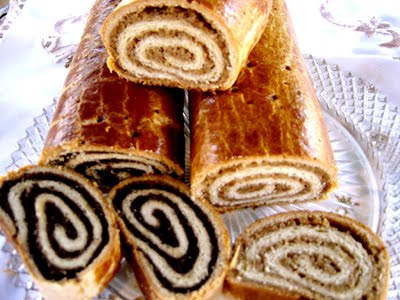
During the Turkey occupying the territory of Hungary, the Turkish culinary habits came into the foreground, both countries population had and are sweet-toothed. Hungarians borrowed the „Pogácsa” (see previous upload), „Lángos”  fried scone. Also stayed as a traditional cake the „Bejgli” (basically baked for the season holidays.) Indeed the Hungarians used the traits of Turkish cuisines.

„Q” … Where …  whence origin the Lángos?  „A” … According to some assumptions the Langos „invented” in Hungarian cuisine during the Turkish occupation, other claims saying to be of ancient Roman origin.

„Q” … „Since when do Hungarians eat Lángos”?  „A” …  It is likely to be counted back in time, most probably as old as the bread.

„Q” … “What is a Langos?  „A” … It is a deep-fried flat bread made into a round, flat shape. The name comes from “láng”, the Hungarian word for flame/fire. The modern lángos, despite its name, is deep fried and not done in open flame. The savoury Lángos fried back then in fat, now-a-days in Hungary fried only in oil.

“Q” … How were the Lángos baked? “A” … The lángos were baked in the oven. After rising of bread a piece was cut out and hand extended and tossed on the coals. This deep-fried flat bread was traditionally baked at home and used as a quick filling meal for farm workers. So that on the days when the new bread was baked, also the bread lángos made. Was eaten along at breakfast, with sour cream, jam or powdered sugar.

Now-a-days … Most of the lángos sellers are rather hard to trace in Budapest or in the regions of Hungary, but locals will be handy to advise. One thing for sure the city markets always welcome the foreigners for a bite.  For foodie lovers worth a stop and taste not only the classic salt and/or typical garlic sauce version, but the one with ham-cheese-sour cream/cheese-sour cream, onion and/or bacon, or with dill-cottage cheese/smoked pork/chicken, Hungarian stew „pörkölt”,  Hungarian sausage „kolbász”, the Hungarian paprika – hell stronger than the chili – with all sorts of fillings. Foreigners staying in Hungary most probably had already tasted the unquestionably Lángos, and foreigners, tourist  will discovers … taste it – love it … especially with the endless varieties of toppings and fillings.

Most probably day trippers simply will not be able to choose from “fortified” with sausage, bacon and deciding to choose from several toppings. Worthwhile to also taste the stuffed lángos with inside pork or poultry stuffings, hot or medium fillings. Despite its dense appearance, the lángos is light, with a pillow texture on the outside and a crispy golden crunch in the middle. Anytime time of the day the Hungarians have their favorite Lángos. It can be very filling, so you might want to try before a main meal. The Langos is certainly something to avoid being on a diet, but once in a while people may commit a sin.

Now the time has come for those who may wish to bake their own Lángos at home, keep in mind to focus on the flour, and as much of a great significance to have the fresh yeast as well. The supply of the tows is very wide. Once baked, worthwhile to make topping with garlic (garlic is a smelly super food enriched with Vitamin B1, B2, B3 and also known for natural health care for centuries, so need not give up, go for it … Never mind for the smelly garlic,  avoid your breath from the unpleasant smell of garlic, chew a few strands of raw parsley to cover the unpleasant breath and its gone.

Prepare your own Lángos step-by-step …

Ingredients for 8 pieces: 50 dkg potatoes, 5 tbs flour, 2 pieces eggs, 1 tsp salt. Preparation time: 30 minutes.

Baking instructions: Without yeast: Wash the potatoes thoroughly and cook in their shells. Peel and still warm through the potato press. Wait for it to cool, then knead with eggs, flour and salt. If it is too sticky or not stretchable, add more flour. Transfer the dough to a floured board and roll it out to about one and a half inches thick, then whisk in medium sized discs. Boil the oil, then pull the dough with your hand and fry both sides of the flame until golden. When done, remove it on a paper towel and drain off the oil.

With yeast: Let rinse the yeast in 2 dl of lukewarm sugary milk, mix 10 dkg of flour and to make yeast. Peal the cooked potatoes are passed through a sieve and mixed with the remaining flour. Add the yeast and the remaining milk, a little salt. Knead the dough for at least 10 minutes. Leave dough at a warm place cover it, wait to rise to the size of the original dough as three times bigger. Stretch it a fingertip thick, tear it down with a glass and stretch the circles well by hand. Fry in plenty of hot oil. Your hands should be oiled, so dip your hands previously in oil so that the dough does not stick to the palm. It takes cca. 10-20 sec. to bake then turn over the other side. Pick the Lángos out from the pan with metal forceps … Be careful cause it is very hot. It is advisable to place the Lángos on a grid so that the oil may drip and cool down a bit.

Don’t wait for the end of the quarantine try it now – bake your own Lángos at home.

© Aggie Reiter

“Q” & “A” … Turkish and Hungarian tastes are similar?

Indeed, the tastes of Turkish and Hungarian cuisine are very similar. Maybe the Turks ate and still eat a little lighter food, more sour soup and sour food, which is mainly due to their climate, but they basically prefer paprika, sturgeon, juicy dishes, even vegetables, and throughout the years the Hungarian gastronomy become pretty close to the Turkish cuisine.

Turkish Red Lentil Soup – Török Lencseleves

Whatever the season and whatever the time of day the original Turkish Lentil soup being red or green lentil is popular in the Hungarian kitchen. As long as having some lentils in the cupboards can always rustle something up. Indeed the Red Lentil is full of Nutrition… there’s certainly no need to feel guilty about what you’re about to eat, either, when you’re making red lentil soup. These colorful little discs  have lots of healthy benefits. They’re gluten free, virtually fat free and low in calories. They’re high in fiber, high in protein, Vit. B and potassium and they’re also a good source of iron.

Receipt – Ingredients for 4 persons – 1 cup red lentils (approx 150g), 1 large onion, finely chopped, 1 large potato, scrubbed and roughly chopped, 1 large tomato, roughly chopped (or 1 – 400g can), 1 dessert spoonful chili flakes, pinch of cumin, salt and pepper to season.

Cooking instructions – In a large pan, heat the olive oil, but not too hot. Add the potato and onion and keep stirring for a few minutes over a low your chopped tomato, chilli paprika and cumin and stir. Now add two mugfuls of hot water or stock, salt and pepper and stir everything together. Served within 50 mins.

Stuffed Cabbage – Töltött Káposzta

The idea of using minced meat is a legacy of the Turkish/Ottman times.  the seuerkraut culture is originally related to Germans/Schwabs living in the country and so now talking about a fusion dish that is now classic Hungarian.

Cabbage leaves wrapped around a meaty filling, then cooked/baked in a sauce are a common item on the tables. Also popular throughout Eastern Europe.The Hungarian version seasons the stuffed cabbage rolls with paprika powder an simmers them on a bed of flavorful sauerkraut.

Receipt – Ingredients for 4 persons – 500g sauerkraut + some pickled cabbage leaves, 2 tbs oil or lard, 2-3 onions, finely chopped, 300 g minced por kor poultry meat, 100 g rice, half-cooked in boiling salt water or just add to the  raw meat, 2 tbsp sweet red paprika powder, 1 tbsp salt, freshly ground pepper, sour cream to serve. Taste more creamy and tasty with 4-5 garlic cloves.

Preparation time: 5 mins. Cooking: cca. 120-180 mins.

Cooking instructions: Wash the seuerkraut in cold water, need not have to soak it, only test it if it is not enough sour. Squeez dry and set aside. Saujté 1 onion and garlic in oil, until the onions are lightly colored. In a large mixing bowl, combine the meat, rice, 1 tbsp paprika, the onion mixture, salt, black pepper. mix well with a fork. Place  2 tbsp of the stuffing int he center of one of the cabbage leaves and begin with a thick end of the leaf, fold over the sides, then roll the whole leaf tightly. Repeat with all the leaves until all the stuffing has been used. Chop the rest of the onions finely, and sauté in a casserole in oil at medium heat until little brown. Then remove from fire, season, add black pepper and 1 tbsp paprika power. Add some water (not too much, does not have to cover the whole cabbage leaves) Add 2-3 bay leaves. Bring the liquid to a boil, then cover the pan and cook the stuffed cabbage over low heat for at least 1 to 2 hours.

Tips and hints – Use lard and/or some chopped bacon and use the fat to sauté your onion. Season meat filling with some chopped fresh majorana or dill. Spread the sauerkrauft on the pan’s bottom and arrange the cabbage rolls on top of  each other.

The stuffed cabbage is not really a summertime food (a little heavy) Hungarians often eat it during the the winter seasons holiday. The already cooked stuffed cabbage can be kept very long in the fridge for a week or two. In fact the more reheated the better it gets.

Sajtos Pogácsa – Hungarian Cheese Puffs 

The pogácsa is one of the oldest and most famous baked food in Hungary.

In several restaurants, pubs and other restaurants there is already fresh plain or cheese puffs – Pogácsa as welcoming the guests brought to their table. It is also an ultimate crowd-pleaser at social gatherings. The Turkish call it Poğaça. Pogácsa can be made with cheese, sour cream, cottage cheese, crackling, cabbage, butter, fat, seeds, potato, onion, leek etc.

Receipt Ingredients:  500 gram flour , 1 package dry yeast  cca. 7 gram, 1 tsp sugar, 1,5 dl warm water, 200 gram butter, 1 tsp salt, 2 eggs – divided to yolks and egg whites, 1/2 cup plain yogurt, 250 gram shredded cheese – also may use smoked cheese or cheddar.

Baking Instructions: I pour the flour into a large bowl, add the sugar, salt and eggs. By putting the eggs in it, we leave little and smear with the remaining eggs before placing in the oven. Stir in the margarine and sour cream at room temperature, then finally add to the flour. Allow to knead and rise for about 1/2 hour. After resting, fold three times every 20 minutes, then stretch to about 2 fingers thick, grease with beaten eggs, grate with a knife, sprinkle with grated cheese and form small round circles. To get started, put  the backing pan into the cold oven. To bake at 200 C degree, ready in 30 minutes.

©Aggie Reiter

Herald News: Gyula Castle Bath Reopening!

During the period to the forced shutdown the exhibition venues and the numerous accommodations of the city is getting back on its tracks. The spa has undergone a number of renovations and maintenance to receive guests wishing to relax with appropriate security measures. The Gyula Castle Bath and its venue will be wide open also to the domestic tourism.

Herald News: With the further easing of the measures was announced due to the corona virus epidemic on May, 14. 2020., that the Gyula Castle Bath will open its doors and receive its guests again from Saturday, May, 30. 2020. Indeed it was a long in waiting to reopening one of the best thermal bath in Hungary at the City of Gyula.

Again the guests who wish to relax, enjoy the full range of services with the right security measures Gyula can finally show itself and its values to their visitors enjoy it in the safest possible conditions. That is why they also ask their guests to kindly cooperate in order to protect the health of visitors and their colleagues.

The spa will be open daily from 9 a.m. to 6 p.m. with the necessary restrictions. Entry is possible at the Stone Bridge. The operating pools: the Children’s Water Paradise will be for the time being without the usual experience elements. The wave pool without the waves, the slide pool with slides and the water trail. Most of all the pools can be only operated with a capacity.

Admission can be purchased at unit price of 990HUF, under the age of 6 is free.

©Aggie Reiter

King Matthias Renaissance Era Cuisine

The reign of King Matthias (1458–90) was a high point in Hungarian history, for both culture and food. Hungarian cuisine underwent a huge change in the 15th century when King Matthias ascended the throne and married his second wife Beatrice, daughter of King of Naples. Through his Italian wife, Queen Beatrice, King Matthias brought Italian cooking to Hungary. The Hungarian cuisine has been enriched with the sophisticated methods of Italian Renaissance cooking. During this period, cooking was raised to a fine art. As being Italian she cherished the Renaissance culture and also brought chefs from Italy to the court.

Many kinds of fish were served in Matthias’ court. The most popular fish included pike, ling, eel and trout. Meats include beef, sheep, domestic and wild pigs, goats, deer, deer, rabbits, geese, ducks, prisoners and pheasants. Fat peacock meat was very a popular delicacy.

Likewise, the new seasoning flavors, bringing new cooking techniques and ingredients. King Matthias was the one who brought and planted across the country the Burgundy wines … but that is another historical chapter.

Many of Matthias’ reforms, such as the central courts and treasury offices, and also the gastronomy in the era’s new ingredients such as sweet chestnut, garlic, mace, saffron, onion, breadcrumbs, pasta and cheese were introduced, while the use of fruits were also cooked with meat. Just as well used as fruit stuffing in the meat. From this era was inherited  along the way to today’s as part of the Hungarian cuisine.

A peck into King Matthias and Queen Beatrice one of their favorite meals.

The feast of King Matthias was gray beef salami, spicy mangalica sausage, goose crackle, smoked peasant ham, goose liver mousse. Mostly of all the fish meal could not be absent from the table. Sirloin with potato crisps. Homemade plum strudel with brandy prunes ragout. 

One of the feast of King Matthias – Fish Soup 

The fish soup is a hot soup prepared with mixed sweet river fish on a paprika/ onion stew. Nowadays every region in Hungary has its own fish soup recipe.

About 1 kg slices of different sort of whitewater or lake fish … carp, catfish, zander … Salt the fish prior 1 hour before cooking. May cut the harder fish meat pieces smaller, softer pieces can be left bigger.

Ingredients: to 4 persons: 1 tbs oil or lard. 2 onions (palm hand size). 3-4 cloves of garlic, 2 tbs tomato puree, 2 liter water, 2 tbs sweet red paprika powder, 1 hot dry chili pepper, salt to taste. Preparing time from 6 to 12 mins.

Cooking: Chop the onions finely, start sautéing them in oil together with crushed garlic. When soft add half of the paprika to it. Pour in water.Add the fish slices and pieces to it. Bring to a boil. When it is boiling ad the other half of the grounded paprika powder, the tomato puree and chili. Don do stir the soup, only sake it with carefully, so the fish pieces do not break. Salt to taste. Cook it for 2 to 4 minutes until the fish is cooked and the soup gets thicker … the soup is always served with fresh white bread. Best will be to add some chili at the end to have a kick.

The feast of Queen Beatrix – Beef soup with its own meat. Grilled Balaton tooth fillet with jasmine rice. Somló dumplings.

One of the feast of Queen Beatrix – Tooth Fillet

Ingredient:  4-6 tooth fish fillets, about  ½ kg – 1 kg (1 lb), but could be a little over a pound)1 cup milk or buttermilk, Salt, 3/4 cup fine cornmeal (do not use coarsely ground cornmeal), 1/2 cup flour, 1 tsp. garlic powder, 1 tsp. black pepper, 1 tsp. paprika, 1/2 tsp. cayenne, 1/4 tsp. celery seed, Oil for frying (use peanut oil if available). Prep time: 15 mins. Cook time: 15 mins. Served to 4 person.

Cooking: Heat oil in pan, heat warming oven. In a heavy frying pan (prefer cast iron), pour enough oil to come 1/2 inch (one-and- a-half height up the sides of the pan. Heat the pan on medium-high. Heat your oven up to 9°C (200°F) and lay a cookie sheet inside. Place a wire rack on top of the cookie sheet. Soak catfish in milk or buttermilk: While the oil is heating, soak the catfish in the milk or buttermilk. Mix together cornmeal, flour, spices for dredging: Mix the cornmeal, flour and spices together. (Or substitute to favorite seasoning instead.) Place in a shallow dish for dredging. Dredge fillets in flour mixture, then fry in hot oil: Let the oil reach 180°C (350°F) — a good test is to flick a little of the dry breading into the oil, and if it sizzles at once, you nailed it. Once the oil is hot, sprinkle the catfish fillets with salt and dredge them into the breading. Shake off the excess and gently lay into the hot oil. Fry until golden brown, about 2-4 minutes, depending on how thick the fillet is. Use a metal spatula and gently turn the fish over and cook for another 2-4 minutes. Cast iron heats up and stays hot, so monitor the heat as frying. May need to lower the heat on the burner at some point. Keep cooked fillets warm in oven. Once the fish is ready, move it to the oven while cooking the rest of the catfish. Keeping the fried catfish warm in the oven will help keep it crispy. All done, serve at once with your favorite hot sauce, cole slaw or whatever suits the taste of the individual.

© Aggie Reiter

A 1000 Year History Cuisine of Hungary

Where do we place middle age in history cuisine?

(We place it at this time of Stephen I, a.k.a King Saint Stephen (Hungarian: Szent István király)  born 975 – 1038 AD (The year of his birth is uncertain). Was the last Grand Prince of the Hungarians between 997 and 1000 or 1001, and the first King of Hungary until his death in 1038.)

In the Middle Age period, at the time of King Saint Steven era the cooks were respected artisans and evolved the cuisine of Hungary. At the palace and at homes the meat dishes made from pork, poultry, beef, duck and goose were consumed. Mostly the fish-based dishes were highly popular. At the time being at the Buda market offered food products, ingredients and variety of herbs and spices from far lands (these were the times when the Hungarians meals were cooked with the new ingredients available. The birth of the Goulash (Gulyás) soup was indeed a melting pot, spirit of its original Magyar folks who combined the heavy soup  with several ingredients to their own taste.

The original  Goulash was being prepared by itinerant cowherds or shepherd,  cooked in cast-iron cauldron (bogrács) over an open fire with ingredients they carried in their saddle-bags, such as onions, cured bacon, lard and millet. Whenever one of their animals was too weak to go on, or they had the good fortune to come across a wild pig, they would kill it and add its meat to the pot. This become national speciality  with a number of alternative variations.  The Hungarian paprika, which was only added early in the 161th century after the arrival  by explorers who brought hot and spicy peppers (capsicum annuum) from Central Mexico to Spain. The Hungarians were fond of the paprika and kept in use as dried, crushed and made into a spicy powder.  Added addition of tomatoes during the first half of the twentieth century with potatoes or noodles to modern adaptations. The thick soup is often eaten as a main course. It is served with thickly sliced dumplings, or with csipetke (egg noodles). The history of goulash illustrates it is that it is really no one’s. Rooted in the restless wandering of medieval stockmen, always been a dish without borders.

The recipes are for portion/person 3-4 dl (1 and ¼ – 1 and ¾ cups).

Ingredients: 360g (2 and 1/2 cups) cubed beef, 80g (5 tbs) lard, 150 g (7/8 cup onion, 15 g (1 tbs) paprika, salt, garlic, caraway seeds, 800 g (1 and ¾ lb) potato, 3-4  red and white carrots, 140 g (1 cup) green pepper, 60 g (1 small) fresh tomato.

Slowly simmer for cca  2 and a 1/2 Hs. The Hungarian goulash soup is often served in a loaf and the loaf can be eaten as well.

Steps to make it  … chop the veggies and cut the meat about the same size. Chop the onion finely – start to sauté in oil on high heat until it starts getting soft but not brown. Remove the pot from the fire and add the paprika powder. Pour some water in the pot but always just a touch. The goal is to make a ”pörkölt” – stew base Add the mat and the spices (salt, pepper, caraway seeds (cumin seeds will do as well), bay leaves. Turn around so that they are covered with the „pörkölt” sauce. Keep cooking for an hour. When the meat is half cooked add the veggies and mashed garlic, spices (in the absence of stock bouillon cubes may be used) and keep cooking. When almost cooked, add twice as much water to the „pörkölt” base, lower the heat, cover and slowly boil. Keep adding water as necessary as the soup simmers.

Csipetke  – egg noddle – pinched pasta: cca. 15 mins. before finishing add the „csipetke” – means pinched dumpling. It is a stiff dough from flour, egg and salt. Make it fresh or buy ready-made dried version if available at your end.

If possible cook the soup in family size „bogács” (round metal pot which gives an authentic air to the table serving… in the absence of stock bouillon cubes may be in use. The Hungarian goulash soup is often served in a loaf and with the fresh loaf is simply delicious, and can be eaten as well.

Many folks knows that macaroni is Italian.

The Austrians in Vienna have tasty schnitzel

The French eat frogs

Hungarians are fond of their traditional Goulash thick soup

© Aggie Reiter

Cook your own Goulash Soup and would like to hear your own feedback …Tks.