Seven-meter globe floating … pin-point copy of the Earth … above visitors’ heads during the 4-days Light Festival @ Pécs

gdif_southall_2020

Walking on light carpet, shining coral reefs and an enchanted playground at night…

… the core of the Zsolnay Light Festival (external link) is the eye-catching light paintings, installations and light programs, which make up the Path of Light. July 6-9. between, at the Pécs‘s festival, a gigantic globe shines above the visitors heads, while the folklore of the Mecsek forces also comes to life.

After night falls, visitors in Pécs will be amazed by the building projections and site-specific light creations of domestic and foreign light artists. Works on the streets and squares of the city can be viewed free of charge.

The closed spaces can be visited with the Light Path Extra wristband, these are: Kodály Center, Cella Septichora Visitor Center, House of Civil Communities, Hassán Dzámi Jakovali, Baranya County Assembly Hall.

The Kodály Center has an external light projection, and it also has two indoor works. The Superb team comes from Belgium with an interactive choir installation, where can conduct a choir made up of our own copies as a conductor. The seven-meter globe floating in the concert hall, Gaia, is one of the most anticipated attractions of the festival. The hypnotic work of the Englishman Luke Jerram brings out the deepest, most intense feelings about our planet from the viewers. The experience is completed by the surround sound composition of BAFTA award-winning composer Dan Jones.

Looking at the light projection of the Dzami on Széchenyi Square, can immerse themselves in the world of coral reefs of ethereal beauty, home to millions of colorful creatures. The projection is based on data collected by NASA over 20 years; it shows changes in ocean currents, water temperature, chlorophyll, wind, salinity and water, illustrating how the world of coral reefs is transformed in warming waters.

The artists who come to the ÁRKÁD Pécs Shopping Center break down the ordinary barriers of cities to make the world a brighter, happier and more surreal place. Humorous, giant fairy-tale creatures cover the building, guaranteed to bring a smile to everyone’s face! In the shopping center, another, both playful and thought-provoking creation awaits those interested, which requires two people to try. While watching themselves in the mirror, their facial image merges with that of the other, which creates an exciting feeling, reflecting on the world of ideas of identity and empathy.

In Czinderi Park, an enchanted playground awaits young and old, after nightfall, the games come alive and offer new stimuli and experiences through the light. For many years, one of the most popular creations on the Light Carpet Path which includes analog light painting of the pavement and house walls of Janus Pannonius Street.

The light painting that comes to life on Theater Square invites the visitor on a journey through the forest. In addition to the animals, plants and mushrooms of the domestic forests, the work of Laluz Visuals uses light and music to create the fairytale world of the forests of Mecsek.

The light projection on the Barbican bastion shows how environmentally harmful plastics “come to life”. The PET/LED interactive art installation on Jókai Square also draws attention to the importance of recycling. By touching the PET bottles, anyone can conjure up lights on the surrounding buildings.

The work called LIMEN, which can be seen in the hall of the Baranya County Assembly, translates the ultrasounds emitted by the lamps, which are not perceptible to the human ear, into perceptible frequencies, so that while is to see, also hear the invisible sound of light.

In the Nádor Gallery, the contemporary sound-light “organ” weaves light phenomena with the help of light beams that move to the sounds that fill the space. It is nothing more than visual music extended into space.

On the Búza Square, a mechanical light playground awaits those interested, which come to life with sunlight and human power in an enchanted chapel.

The Path of Light opening hours: Thursday, Friday, Saturday: 9.30 p.m. – 1 a.m. Sunday: 9.30 p.m.– Midnight.

The Kodály Center, the House of Civil Communities and the Dzami Hassán Jakováli welcome visitors from Friday to Sunday from Noon.

Recommended by Aggie Reiter

Temple of Arts latest documentary of Leonardo da Vinci.

elveszettleonardo_poster

The Lost Leonardo can be seen in the Hungarian cinemas from June, 29, 2023.

Robb Report’s crime-thriller film is about the vomiting of Leonardo da Vinci’s painting Salvator Mundi, which was believed to be lost forever. Around 1500, when the painting was created, Leonardo was almost 50 years old. He is the world’s most famous visual artist. There is an assumption that it could have been made for an outstanding art patron. He worked with first-class ingredients; and surface treated; which was rare. He began many pictures and left almost as many unfinished; but he finished that.

The fate of the tableau remained unclear for a hundred years, until it appeared in the collection of the English ruler Charles I, who, when he died in debt, the Crown decided to sell a large part of his art collection in order to pay off his debts. He goes to a stonemason – in today’s terms an architect – John Stone, in exchange for his unpaid work. 9 years later, during the restoration of the monarchy, when II. Károly ascends the throne, the parliament passes a bill that reclaims for the Crown the assets that were given to the sons of the common people as compensation for the debt of Károly I. Thus, the painting II. It enters Károly’s collection, then passes to his younger brother, II. Jakabra. From him to Jakab’s lover, Catherine Sedley, with whom he also has an illegitimate son. Catherine marries the first Duke of Buckingham, the builder of Buckingham House. The palace is sold by the heirs, it is known today as Buckingham Palace. In 1763, when the palace was purchased for the Crown, the furnishings were auctioned off. Then it disappears from our sight for hundreds of years.

We don’t know anything about it. Leonardo was sold as a painting, but for an insignificant sum. Therefore, we assume that they could have been heavily overpainted by this time! In 1763, we lose sight of it, until the XIX. until the end of the century, when it became the property of a famous English art collector, Francis Cook. But at that time it was already on the market as a Leonardo copy or a work made in the style of Leonardo. The topcoat layers are quite thick! It was reworked to make it more masculine because it probably suited the 19th century. century public taste. It remained a mediocre item in the Cook collection until 1958… when it changed hands at London’s Sotheby’s auction house for £45. We know he found an American buyer. It remains in the possession of American collectors until 2005, when it is auctioned again, for a similarly low price, because it is believed to be a Louisiana copy. In November 2017, Christie’s sold Leonardo da Vinci’s Salvator Mundi to a Saudi prince for a record $450,312,500. It is currently in long-term deposit at the Louvre in Abu Dhabi.

This is not just a portrait of Jesus Christ commissioned by a king! This tableau reflects Leonardo’s thinking about painting techniques and time, eternity, and the universe.

The lost Leonardo can be seen in Hungarian cinemas from June, 29, 2023.

Not intended for children under 12 years of age.

Distributor: Pannonia Entertainment.

Recommendation by Aggie Reiter

A week-long festival for lovers of old music @ Vác.

_005572-20230621135232-01

Gems of the German baroque, domestic masters of early music and world-famous soloists – this is what the 39th Old Music Days’ one-week program series offers with master classes, exciting stories and adventures, and wonderful baroque music in secret locations in Vác.

For the series of events of the 39th Old Music Days organized by the Hungarian Philharmonic  @ Vác, July 1-8, 2023. takes place between The event awaits the participants with a unique seven master classes, which are accompanied by concerts by world-renowned artists. The event provides an excellent opportunity for Hungarian and foreign professional musicians, as well as students studying at all music universities in the country, to continue their education.
The one-week program series offers exciting and adventure-filled experiences again this year. The leading performers of Hungarian early music, Capella Savaria and the Purcell Choir, this time under the leadership of Marcus Creed, the famous British conductor and early music expert, will present the treasures of the German Baroque on July 1 in Fehérek Temple. Selected works by Handel and Strattner will be performed this evening. On July, 3. the professors leading the master classes will delight the audience with a chamber concert. After that, on July, 5. in the Church of the Whites, the Savaria Baroque Orchestra and the Capella Du Mont chamber choir will give an unforgettable concert, in which the grateful motets of Henry Du Mont, one of the outstanding creators of the French Baroque era, will be heard. Finally, on July, 8. after the free concert for the course participants, the final concert will take place, where the masters of Hungarian early music, György Vashegyi, the Purcell Choir and the Orfeo Orchestra, accompanied by excellent soloists, will perform two beautiful cantatas by Johann Sebastian Bach.

Residents of Vác can buy tickets for the concerts with a 50% discount on the spot by presenting their address card. Families will be able to hear a selection of madrigals and pre-classical dances on the main square of Vác on the morning of Sunday, July, 2. with the participation of the Ewald Brass Ensemble, as a free program, seasoned with interesting stories and a presentation of period instruments.

Recommended by Aggie Reiter

16th Kecskemét Animation Festival between June 21-25. 2023.

On the evening of June 24, the closing event of the 16th Kecskemét Animation Festival was held at the Hírös Agóra in Kecskemét. There were 111 works in competition and prizes were awarded in 20 categories. The festival’s grand prize, the audience prize and the prize for the best European film went to Áron Gauder’s The Four Souls of the Coyote, sharing the latter with Nuno Beato’s Grandfather’s Demons. Nayola received a special award. The Pannónia-Matolcsy award for the best Hungarian full-length feature film was awarded to Műanyag égbolt. The best European TV series was Patouille and the parachute seeds. The award for the best short film went to Olivér Hegyi’s A hív kertje, while the Ágnes Bálint award for the best television series went to Orsolya Buzási-Gyopár for her work The Musician: Szorít a ház.

The Hungarian Film Critics Award went to Mira Zénó’s short film Fox Tossing, and Oliver Hegyi was awarded a special prize for his work A hív kertje. Márton Csutorás took home the Junior jury prize for the film Cured. The prize of the National Student Jury in the category of European films went to My Grandfather’s Demons, and a special prize was awarded to Dogs and No Italians!. Kühnel-Szabó’s short film Anita Apád won the award for Hungarian films by the Aranyhomok Small Region Development Association and the National Student Jury. The students gave Máté Fillér special prizes for his three works – Telexikon, Folkfonics – Szól a kakas and Endre Tót: Why paint? Bence Bárány was the winner of the critique writing competition, Mátyás Béres took second place, and Norbert Böhm took third place.

Update by Aggie Reiter

Luxury Silks and Velvets from the Esterházy Treasury  – Exhibition at the City Hangzhou – Chinese State Silk Museum.

52_2773_ma_dsc_2936_35_34

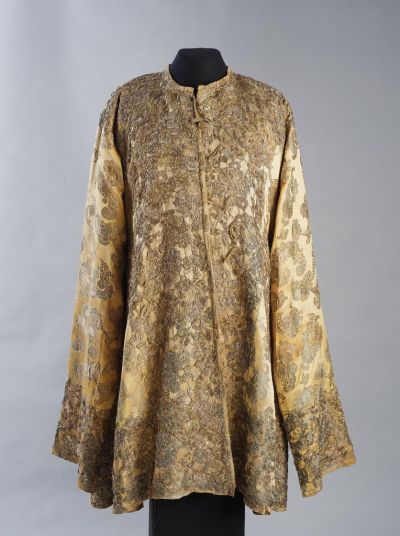
Silk fabrics and velvets 16th and 17th-century aristocratic textiles from the collection of the Museum of Applied Arts – Budapest will be shipped and opens at an exhibition at the City of Hangzhou in the Chinese State Silk Museum.

The most important raw material of textile art is silk, which, due to its value, also played a significant role in the history of Hungarian textile art. Since there was no independent silk industry, since the 11th century, in Hungary, expensive foreign silk fabrics were used for decorative clothing and church regalia that corresponded to the taste of the time. Byzantine from the 11th century, from the 12th to the 15th From the 19th century, we preserve Hungarian church vestments and mass vestments (casula) made of Italian silk fabrics, secular vestments from this period have not survived. In the 16th century, as a result of the Ottoman-Turkish conquest, Hungary was divided into three parts, the Kingdom of Hungary, the Principality of Transylvania and the conquered territory in the middle.

When selecting the material for the treasury focused on artefacts made from the most valuable silk fabrics of the period in such a way that the 16th-17th century by exhibiting objects representing the lifestyle of Hungarian aristocrats in the 19th century, we will also provide an insight into the history of the Hungarian holidays, fashion, housing culture and warfare of the time. In addition to the costumes worn by the male members of the Esterházy family and preserved as relics, tapestries also made of special silk fabric, as well as ceremonial costumes and decorative weapons used on festive occasions – accompanied by decorative weapons – will be presented.

In the eastern part of the country, in the territory of the Principality of Transylvania, which was a vassal state of the Ottoman Empire, many valuable Turkish silk fabrics and silk kaftans (hil’at) were brought to the territory of the Principality of Transylvania in the 16th and 17th centuries through its trade and diplomatic relations. during the century. The western, north-western part of the country under the authority of the Habsburg Empire and at war with the Ottoman Empire, the Kingdom of Hungary, was ruled by palatines (palatinus) elected by the Hungarian orders. Palatines and other lords of the Kingdom of Hungary bought silk primarily in Vienna or Italy in the 16th and 17th centuries. century and their costumes were made from Italian, less often Spanish or French silk fabrics, but Ottoman-Turkish and Persian Safavid fabrics were also highly valued. The written sources of the period, dowry registers and inheritance inventories list many women’s and men’s costumes made of valuable silk fabric from this period, but only a few of them have survived in Hungary, which was hit by wars over the centuries. These include the textile ensemble of the treasury of the Palatines of Hungary, Count Miklós Esterházy (1583-1645) and his son Prince-Nádor Pál Esterházy (1635-1713), on the basis of which we can learn about the 16th-17th centuries. the magnificence of the luxurious costumes, tapestries, tablecloths, horse equipment and gun holsters of the 19th century Hungarian nobility. The textile relics of the treasury are kept by the Budapest Museum of Applied Arts, and although the II. The collection suffered severe damage during the Second

World War, and thanks to the careful restoration work of the past decades, they once again represent the wealth of the former Hungarian nobility’s collections in a dignified manner.

Update by Aggie Reiter

The 3rd Déryné Theater’s Festival – Sátoraljaújhely

347239953_1180336772645213_5577537832420289187_n

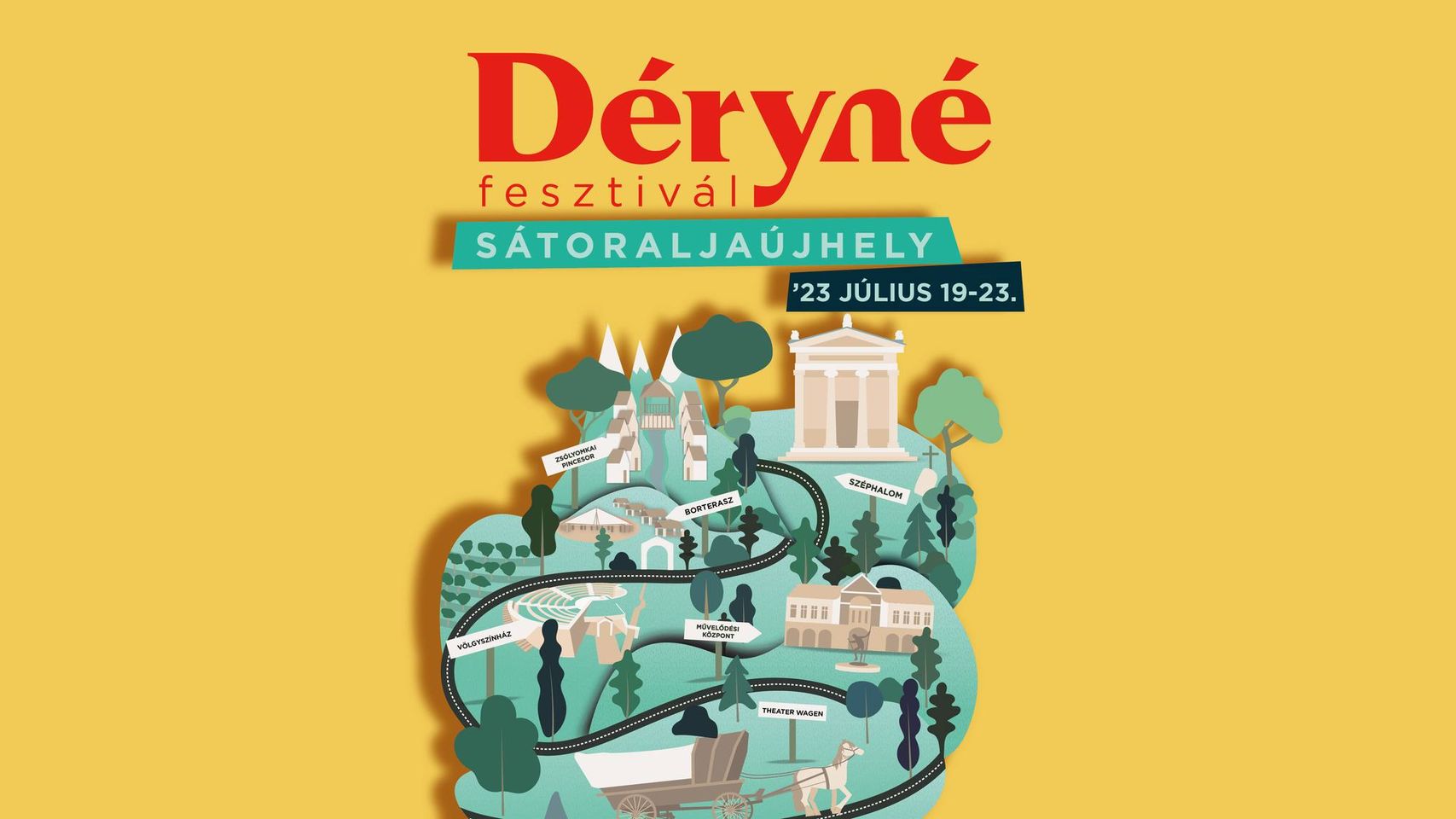
Five days, eleven locations, more than seventy free programs in between July 19 – 23, organizing the Déryné Festival for the 3rd time. Fond of culture programs are welcome in and around Sátoraljaújhely with free theater performances, family programs and concerts.

An overview of some programs:

Concerts: Ungvári Borterasz: July, 20. Csík orchestra – Tárkány Művek – Kaláka – July, 21. Budapest Jazz Orchestra – Swing Girls – DÁNIELFY – July, 22. Besh o droM – Aurevoir – Keleti Brass Band – July, 23. Bohemian Betyars – Balkan Fanatik – Hutchky & Stars.

Theater performances: July, 19. Déryné Company – Lajos Kossuth Cultural Center
Valley Theater: July, 20. 8.30 p.m. Forrás Folk Dance Ensemble: Masterwork
TheaterWagen moving stage – Mancsi Puppet Theater – July, 20. Hollózáza – 6 p.m. For the little foolishness.

Family programs: July, 22. Széphalom
10 a.m. – 6 p.m. Kenderkóc Folk Playhouse, 11 a.m. – 11.45 a.m. – Creative music playshop – 4 p.m. – 4.30 p.m. Naninski and Figaro: Flying acrobats. – 5 p.m. – 5.50 p.m. Concert by Eszter Kárász and the fairy-tale band Eszter-lánc

Recommendation by Aggie Reiter

Monyo Brewery Created Completely Two New Flavors!

This slideshow requires JavaScript.

In America the Soda v/s Pop most common terms for soft drinks.

Here in Hungary the “Soda” as a term, is in use for decades.

Recently, MONYO Brewery released its two newest product Craft Hop Soda and Cascara Cola!

Both are soft drinks that is produced in small quantities from natural ingredients. It is gluten-free, low in carbohydrates, sugar-free, and calorie-free! Thanks to the hops in use, it also has a gently calming, stress-relieving effect. Whether or not addicted to soda, it has became in Hungary as a lifestyle habit that leads to drink instead of plain water or having enough of juicy beverages. This coming heatwave to cool down will surely quench the thirst by the new fizzy Hop Soda delight. It is made with popular Citra and Centennial hops, offering the tropical fruity and citrusy notes characteristic of an IPA, with minimal bitterness from the Monyo brewery.The MONYO HOP SODA 0% Alcohol – 0.33L. They are easy to find at the local Monyo Tap House located at District, IX. 7. Kálvin Square a few steps rolling down from the Freedom Bridge, or visit their Tap Room next door of their Factory. Also may catch-up with other Monyo brands around their website: https://www.monyobrewing.com. The MONYO HOP SODA 0% Alcohol – 0.33L

The other new Hop Soda coming your way this summer is also packed in Al cans and it brings to your tasting buds the exotic fruit of coffee known as Cascara Cola. MONYO craft sodas are made using real fruits. Ain’t secret anymore … Absolutely, just as having a sip of coffee fruit with its fig and date-like aroma, which comes from the Bányai Coffee’s plantation in Costa Rica. It boasts an exceptionally high antioxidant content and energizing effects, making it one of the most unique refreshments to cool down this summer! The MONYO CASCARA COLA 0% alcohol – 0.33L.

The four pack of can from the MONYO Brewery … Hop Soda and Cascara Cola in the picture received as a taster. Really pleasant flavor, the chilled taste simply eases the thirst and I couldn’t stop sipping the wonderful flavor.

With both of these Craft products … Hop Soda & Cascara Cola you can Drink and Drive!

HopOver to taste both Monyo’s Brewery latest canned “Craft Hop Soda and the Cascara Cola”  definitely expect the trigger to work. Let It Be Your Habit Soda this Summertime!

Update and snaps: Aggie Reiter

The golden saber from the 10th century sparkles in its old light @ the Hungarian National Museum.

a762f6e1e5e34ced853381978692abb1

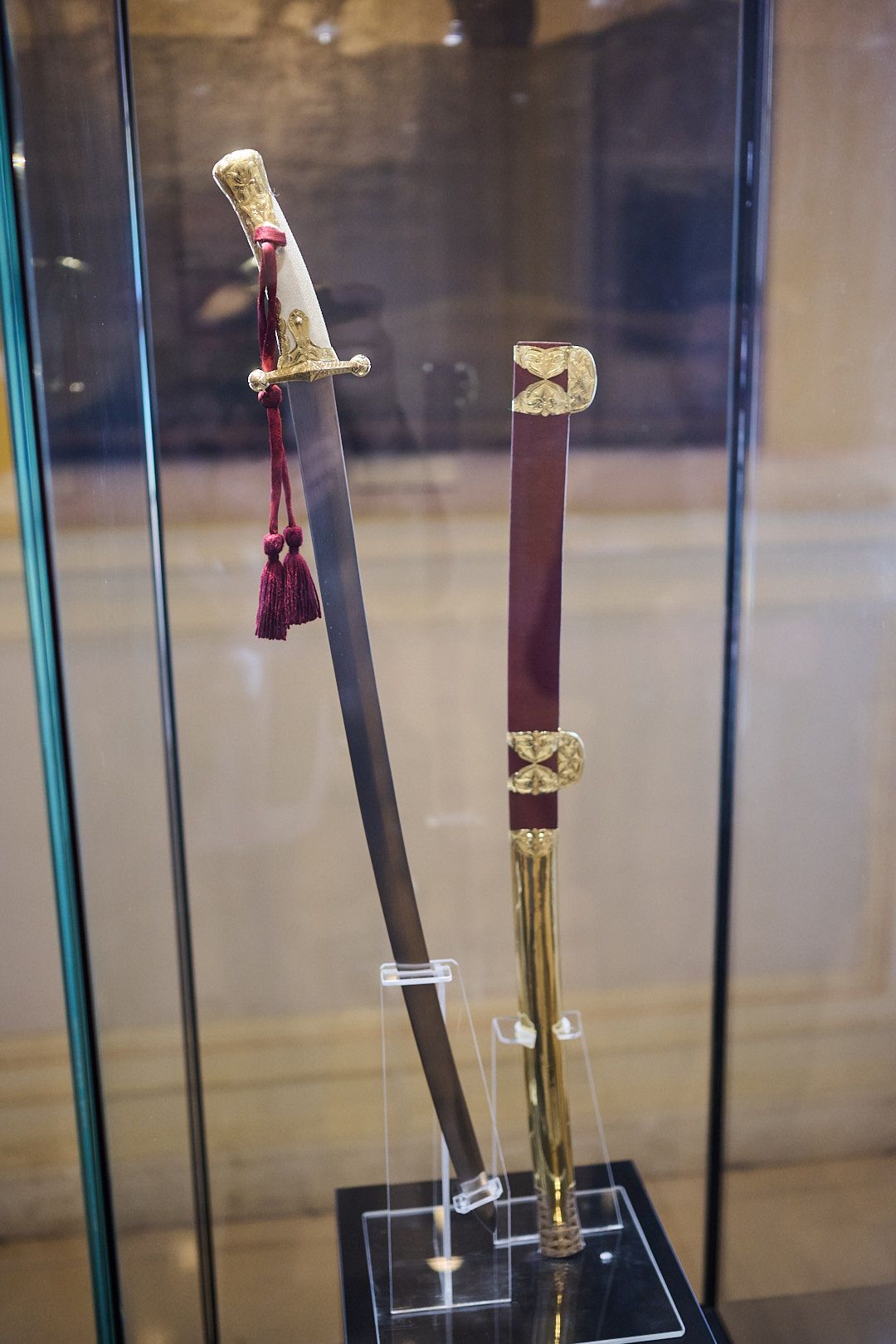
The reconstruction of the Gesteréd golden saber was presented last Thursday during the media gathering@ the National Museum.  A real curiosity was introduced  after the authentic reconstruction of the Geszteréd golden saber.

The press conference stated with a question “Should we insist on fragmentation when presenting artefacts?” – asked and gave the answer at the same time by László L. Simon – the director general of the Hungarian National Museum … “Indeed worth showing what the fragmentary find was like in its original state. Moreover, the authentic reconstruction becomes an art object in itself.”

Then after, just as in a fairy tale, János Rácz – chairman of the board of trustees of the Geszteréd Golden Sable Society, brought the tale come alive… “Balázs János Kondas was guarding livestock at the border of the Nyírség settlement in May 1927, when he suddenly noticed that the pigs were gnawing on some shiny, shiny object. They dug the saber out of the sandy ground, chewed up bones and tarsal plates, and if that wasn’t enough, the people from the surrounding farms flocked to the place when they heard about the treasure and fell on it with hoes and spades, destroying the grave.”

It is a great loss that no archaeologist excavated the site said Péter Németh – titular museum director of the Józsa András Museum, said so “Landowner László Goldstein went to the site to investigate the 10th century jewels and found: buckles, belt ends, belt buckles and also for horse tools. It is thanks to Goldstein’s presence of mind that the badly damaged golden saber, together with more than a hundred gold, silver, bronze and iron objects, was finally put in the András Jósa Museum in Nyíregyháza.”

Who could have owned the golden saber from Geszteréd? This is a question which most probably never have the answer. Many questions came upon surface … Who the golden saber from Geszteréd belong to? Who was buried in the grave? The unknown person has already been called a noble warrior, a clan head, a relative of the prince, a tribal chief. Who knows!?! but one thing is for sure … the person buried was not an ordinary individual, he was a high-ranking person and an excellent warrior, the latter of which can also be seen in his use of the saber. According to László Révész, the saber could certainly have been worn by a high-ranking man who was part of the conquest.

Beginning in 2019, titular museum director Péter Németh, László Révész, associate professor of the University of Szeged, and István Fodor, former director general of the Hungarian National Museum, who passed away two years ago, subjected the find to archaeological investigation. At the same time, the Geszteréd Golden Saber Society contacted the traditional gunsmith István Szabó and the goldsmith and chiseler Ádám Strohmayer, who prepared a reconstruction of the ornate saber based on the research results. The work of the past years is summarized in the study volume Reconstruction of the Geszteréd Golden Saber 2019–2023.

Based on the archaeologists’ description, the NGO asked István Szabó, a traditionalist gunsmith and folk craftsman, to make the blade of the saber, and goldsmith Ádám Strohmayer to decorate it. As János Rácz pointed out, in order for this golden saber to be completed, the support of many companies, institutions and private individuals was necessary, to whom he thanked for their contribution. Was also told,  that thorough preparatory work preceded the forging of the weapon, which required the knowledge and experience of archaeologists to make the reconstruction as authentic as possible.

The Gesteréd golden saber with its decorated golden verets can be seen by the public for a month in the museum’s Kandálló Hall.

Riport by Aggie Reiter

Circus artists can obtain their college degree in 2023.

hq720_2

Upon the latest news … The National Circus Arts Center Nonprofit Ltd., creates training courses which has launched a gap-filling initiative for circus artists. Until now, circus art was the only branch of the arts that did not offer a college-level diploma to young people interested in the branch. In 2023, the centuries-old dream of circus artists will come true,. The circus art lovers will also have the opportunity in starting their studies for a college degree. creates training courses

In the World of Circus many countries already offers a college-level degree to artists who have completed their careers in the arts. This year in Hungary, the trainings will start in September.

With the support of the Metropolitan Grand Circus, artists who wish to continue their education can start their studies in three majors. In the equestrian acrobat training, secondary school students can learn the master tricks of equestrianism, equestrian acrobatics, jigging and equestrian archery. For 3 years, they can ride the Capital City Circus’ own horses, in the circus stables. Applicants who are close to acting can master the genre of master clowns in the clown artist major. Those interested in movement can use their skills in the circus dance course.

During the training, the Metropolitan Grand Circus also provides the students with the opportunity to practice and perform, allowing them to get to know the international circus community.

Update by Aggie Reiter

The slogan of the evening … “Have a barrel of fun!”

This slideshow requires JavaScript.

Saturday Night Live wasn’t a live broadcast … but indeed was Live Barrel Pig exclusive VIP beer night!

 As the night slowly appeared, the guests arrived for an exclusive beer tasting to the new series of HopTop unique beers. It was held in the tasting room of the wonderful wine shop of WineHub. Were able to taste continuously  6+1  beers, but may also tasted 3 special IPA beers as to warm-up ourselves.  The premium beers selection were terrific: Surprise beer – Rudeboy – Sex on the barrel – Fear of the dark II. – Canadian Lover – Fear of the dark I. – Mental trainer.

Unfortunately, Ali Rawech Szami – owner of the HopTop brewery had to leave earlier. We, the audience heard interesting facts about the Barrel Pig beer from László Szilágyi – head of marketingÁdám  – brewing masters. Talked about the special flavors given from the wooden barrels.  During the ongoing tasting were initiated about the Barrel Pig project and overall made the audience spice up a bit with the features of the new series as introducing the 6 items for tasting. As it turned out, they had been at the brewery continuously tasting  from the start of the first barrel-aged beer and its flavors for a year.

Each of the HopTop beers are matured in a special barrel. The whiskey barrels bought from abroad gave the taste to these special new beers. Indeed … no wonder the resulted superb beers. For each batch, the Barrel Pig is aged from the aroma and flavor gained from the previous life of the wooden barrel.  There are rum, bourbon, whiskey and even maple syrup barrels. Within these the aromas extracted from different barrels that can be tasted the characteristics of dark chocolate combined with soft-creamy and vanilla notes.

What really dominates are Imperial Milk Stouts and Multigrain Barley casks. Imperial stouts with the unicorn pig barrel logo and a barley wine rested primarily in the Kentucky Bourbon barrels, maple syrup barrels and a Barbadian rum barrel. The beer called Sex on the Barrel kept various periods of time and bottled when deemed appropriate. There is no addition to the beers. The outwardly look shows something different by the color of the cap draining wax.  Stands as a crown making it truly special and elegant.   Mouthwatering were the sublime fruity and spicy flavors.  These HopTop beers really deserve to be served outstandingly and now reached their best form.

Going to another level and watching with high eyebrows  – shining eyes came to be really in the mood to the mental training taste. Indeed looked as all liked what tasted. Was told next we are tasting the Milk Imperial Stout (11.8%), which was aged for 1 year in a Kentucky Bourbon barrel to extract all the aromas from it. The end result was a real, creamy Mental Trainer! The reason why the “Milk” stand on some of the beer label is a reminder for those to know it is not lactose free!

At the Winehub which gave the platform to the exclusive beer tasting is an awesome wine shop which is usually operating as a bistro.

Entering their store sight catching venue welcome the visitors. The guests were perfectly cared and led to the tasting tables by  Péter Lakatos – experienced Sommelier with a demonstrated history of working in the wine and spirits industry. Heard about the enormous  “plant” one the spot where more than 500 wines from nearly 60 Hungarian and foreign wineries were out on display. The wine center is also unique on an international level.  May connect all players of wine making and the wine world without restrictions. They provide countless services that are not too much different on the Hungarian wine market. They are wholesale partners, but in their wine center they also offer tasting rooms, meeting rooms and special sales points. They pay attention to the wine-drinking community. They offer much more than an online and offline wine space. In addition to their wine shop and web shop, they welcome guests with continuous training, courses, tasting events, tasting rooms. Not to mention, a well arranged comfy community space, where grooving on the 60’s-’70s music with friends along a smooth wine. They have a bistro and a fine dining restaurant for those who want to immerse themselves also in the world of gastronomy.

Riport and snaps by Aggie Reiter