Posts Tagged ‘Venice’

Exhibition on Screen: I, Claude Monet – Cinemas Nationalwide

I - Claude Monet

Cultural History Documentary – 2017.

Directed and produced by Phil Grabsky

Length of the film:1h 30m

From October, the iconic episode of Phil Grabsky’s highly successful British art and cultural history documentary series, Exhibition on Screen: I, Claude Monet, will be out in cinemas nationwide.
From Paris and Le Havre to London and Venice, filmmaker Phil Grabsky goes on a journey to profile Claude Monet as he uses 2500 letters written by the celebrated artist to gain an intimate insight into his life.
Phil Grabsky’s film, made in 2019, recalls the life of one of the world’s most beloved painters in the master’s own words. Using letters and personal testimonies, it gives an insight into the life of the man who in 1872 painted the painting that gave the name to the Impressionism style (Impression, the Rising Sun), and who in the 19th century he was the most influential creator of the end of the century. A story about a man who dazzled audiences with his visuals while suffering from depression and suicidal thoughts. However, his passion for painting, horticulture, his famous garden in Giverney and his humor also showed his love of life.

The film, shot in Paris, London, Normandy and Venice, provides a broad immersion in the work of one of the most popular painters of Western art.

“Not many people can tell their personal story 92 years after his death! However, Claude Monet wrote letters throughout his life – very intimate letters that he sent to friends and family. The writings collected here and read by Henry Goodman form the basis of the documentary, which follows the artist from his early youth to the last months of his life. For fans of his paintings who want to know more about the man behind them, this is fascinating material! And in general, it provides a rare insight into the small details of nineteenth-century life.

Grabsky takes us to many of the sites where Monet worked and allows us to see them side by side with the paintings, allowing us to appreciate the painter’s achievements on a new level. We will also briefly visit the garden that he laid out in his later years and see his famous bridge and water lilies. Dozens of paintings are used throughout the film to illustrate his life and work.

The film is distributed by Pannonia Entertainment Ltd.

Update by Aggie Reiter
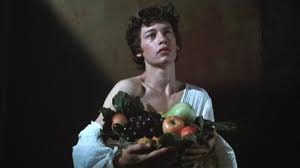
Italian Master: Caravaggio – Soul and Blood – Budapest.

Wednesday, September, 19.

7 p.m.  and  9 p.m.

Urania Cinema – Ceremonial Hall

Italian documentary film biopic, documentary, screening: 90 minutes.

The art educational movies are now 4 years of the series arriving  to Uránia Movie Theater at Budapest.

After huge success in terms of audiences and critics of “The Vatican Museums” and “Florence and the Uffizi Gallery”, and after the release of “Raphael – The Lord of the Arts”, here comes a new documentary … a retelling of the life of the celebrated 17th century painter through his brilliant, nearly blasphemous paintings and his flirtations with the underworld, dedicated to an Italian Master: Caravaggio – Soul and blood.

The film by the creators of the „Painter Lords” new film, which is again a prominent Italian master Caravaggio shows the time path of the working class and through personal struggles.

A journey through life, works and struggles of Michelangelo Merisi from Caravaggio. His existence, no less than his art, is characterized by lights and shadows, contrasts and contradictions, genius and sobriety. Revolutionary artist, he was often not so beloved by contemporaries. He travelled Italy in search of luck or perhaps in search of himself, escaping the enemies that he always found at his passage. Milan, Venice, Rome, Naples, Malta, Sicily. His death seems a twist of faith: he died in Porto Ercole, one step away from Rome, one step away from salvation.

According to the Longhi’s lesson (the main Caravaggio expert), his work will be read with strict reference to his existence, finding in his masterpieces the echo of personal experiences.

The narrative unfolds on two levels …The artistic digression, in which the commentary of the main artworks will be entrusted to an illustrious art historian from the first painting: Bacchus and Boy with a Basket of Fruit. Through the roman period artworks: cardsharper, Judith Beheading Holofernes to the last works as David with the Head of Goliath. “Photographic” scenes that, accompanied by the voice of Caravaggio himself, evokes an object or a situation symbolizing his life and his works. A basket of fruit, a musical instrument, a sword, a great of a cell etc. These emotional and evocative moments – thanks to the use of light and cinematic techniques such time-lapse and slow motion – help the viewer to go deep inside the mind and soul of Caravaggio, empathizing with his impulses and fears.

The Artistic Film productions are brought by the Pannonia-Entertainment Ltd.

Update: Aggie Reiter