Posts Tagged ‘Gastronomy’

Part2 – Continue Gastronomy Inherited Over 50 Years of Russian Rule @ Hungary

During the 50 years of Russian rule –  meals embedded in Hungarian gastronomy.

It is almost natural for many Russians surrounded by the Sea to bring sea life into the variety  in their meals. Here is one of the appetizers and well-known in the Hungarian kitchen.

Russian Beetroot Herring Salad – (Orosz cékla hering saláta)
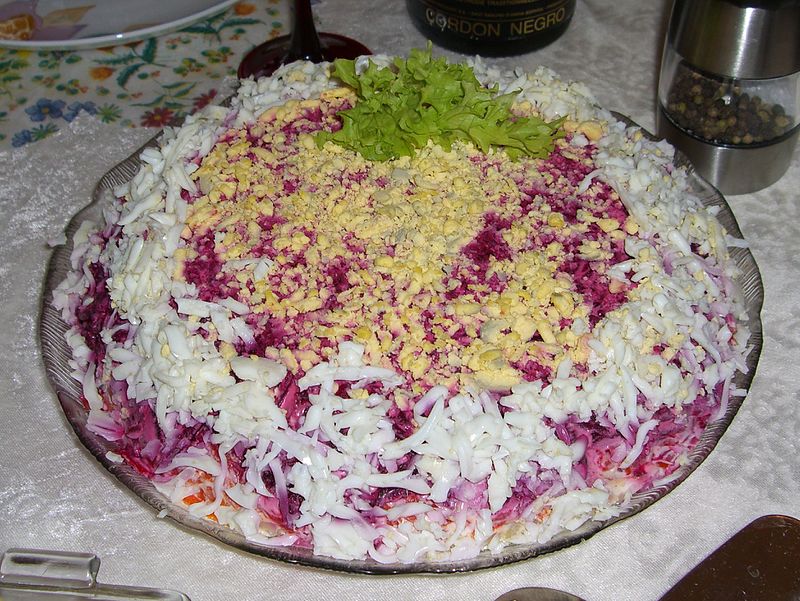
Ingredients … 50 dkg pickled herring, 4 apples, 40 dkg pickles, 40 dkg pickled beets, 1 box of cream, 1 pinch of salt, 1 pinch ground pepper, 1 pc lemon juice,1 bouquet of dill, 2 tbsp olive oil. Preparation time 25 mins. The herring fillets are cut lengthwise along their spines and sliced ​​into tastefully sized pieces. If the herring fillet is small, the longitudinal halves can be omitted, cut into pieces. The apple is also diced after the seed coat has been removed and twisted well with the squeezed lemon juice to prevent it from browning. The pickles are also cut into pieces of similar size. Finally, the peeled beets follow, which we cut into thin longitudinal strips. Gently mix the fish, beets, cucumbers and apples in a larger bowl (in which we can conveniently mix the ingredients), sprinkle with the olive oil and sprinkle with the finely chopped dill. At the end add salt, pepper and refrigerate. When our salad has cooled, beat the cream and add. Carefully twist with a wooden spoon, taking care not to break. Serve cold with dill and lemon rings.

Perhaps the Russians are the first in the world to overtake the Hungarians with loving their soups!

  Borsch – hearty one-pot meal – thick soup – (Céklaleves)
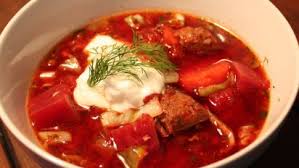
The beet-based red borsch has become popular in the Hungarian cuisine. It is typically made by combining beef meat, bone stock both are the most commonly used, with brisket, ribs, shank and chuck considered to give the most flavorful results, sautéed vegetables, which basically beetroots and usually include cabbage, carrots, onions, potatoes and tomatoes.

Ingredients: 25 dkg beef meat, 5 dkg fat, 25 dkg potato can you translate 20 dkg beetroot, 20 dkg fresh cabbage, 5 dkg tomato, 5 dkg brown onion, 20 dkg sliced fresh cabbage, 5 mashroom, 5 dkg tomato 5 dkg brown onion, 15 dkg parsley root (i.e. white carrot), 10 dkg celeriac, 5 dkg tomato pasta, 4 dkg flour, quarter  deci litre vinegar, one and half deci litre sour cream, half of bay leaf, half gr black pepper, 2 dkg salt.

Stroganoff a.k.a Beef Strogonoff style

“Q” … How – When the Stroganoff Beef Tenderlion Ragout landed in Hungary?

“A” …  At first  the name “Stroganoff” became popular thoughout Hungary in the 70s  when screened the series of adventure novel Sztrogoff Mihály – Michel Strogoff on TV. It was a joint co-operation by Bulgarian, Italian, French and Germany, directed by Eriprando Visconti. Thereafter, the restaurants realized to cook this mouthwatering potty meal which perfectly rang the bell to the series to associate it to gastronomy.  In those days, just went to one of those restaurants having it on the menü and by just to say “Stroganoff” the waiter had no more question.

The Stroganoff sirloin ragout was born in Russian, but not named after the person who invented the food. The name Michel Strogoff originally was based upon the novel from Gyula Verne. The legend says that in the 18th century this delicious meal was invented by Stroganoff who was the chef to the Duke of Odessa. The meat-onion-sour cream dish with salted cucumber from thereon was named Beef Strogonov style … based on French and Russian gastronomic traditions … one of the most popular Tsarist dish which really dug itself into the Hungary’s gastronomy.

 Stroganov sirloin ragout embedded in Hungarian gastronomy
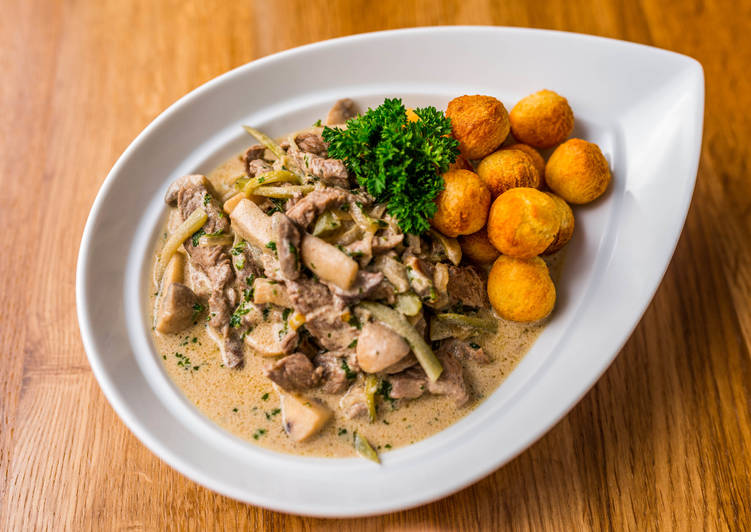
Stroganov Sirloin … here you go

Ingredients …  for serving 4 people, 500 g of beef tenderloin, 1 small head onion, 150 g sour cream (20%), 250 g .. table mushroom/champignon, 150 g butter, 70 g of pickle cucumber, 2 tsp Dijon mustard, 50 ml wine (white, dry), salt, black pepper  powder.

Cooking instruction … First, the ingredients are prepared. Slice the onion, quarter the mushroom lengthwise, and thinly strip the delicacy cucumber. Cut the sirloin into thin finger strips. Place the meat to cook into a large size pan. Melt the butter in the pan. Fry the onion on it. Put the sirloin on top and fry until white. You can add the mushrooms. Add salt and pepper. Simmer for a few minutes. Can also come with the striped delicacy cucumber, simmer it for a few minutes. Pour over the wine and bring to a boil. At the end you can add the mustard and sour cream, boil it together as well.

Ending the cooking make a light jerky, continue to stir for 10 minutes which will enrich the soup. Tomatoes cut into articles are placed in the soup 5-10 minutes before serving. Upon serving, put a spoonful of sour cream in each soup bowl. Roll over with the finely chopped parsley and the Stroganov sirloin is ready.

Cooking instruction …  Slice the onion, quarter the mushroom lengthwise, and thinly strip the delicacy cucumber. Cut the sirloin into thin finger strips. Melt the butter in the pan. Fry the onion on it. Put the sirloin on top and fry until white. You can add the mushrooms. Add salt and pepper. Simmer for a few minutes. Striped delicacy cucumber, let  simmer it for a few minutes. Pour over the wine and bring it to boil. At the end can add the mustard and sour cream. Boil it together as well. Ending the cooking make a light jerky, continue to stir for 10 minutes which will enrich the soup. Tomatoes cut into articles are placed in the soup 5-10 minutes before serving. Upon serving, put a spoonful of sour cream in each soup bowl. Roll over with the finely chopped parsley and the Stroganov sirloin is ready. May garnish with rice or potato croquette.

A Taste from Russia  – Pryaniki – Gingerbread 
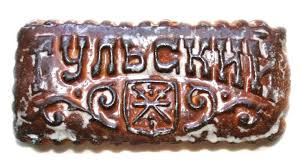
The original Tula pryanik imprinted Tulsky … adjective form of Tula with the city’s coat of arm.

“Q” … When did in Russia appeared the Gingerbread?

„A” … In Russia, gingerbread appeared in the 9th century A.D. A dessert at the time being was called “honey bread” first enjoyed in Ancient Egypt and claimed top have been brought over Europe by the Armenian monk Gregory of Nicopolis to Russia. Then the gingerbread was made from rye flour mixed with honey and berry juice got ice. It gain the modern name when people started enhancing this recipe with spices from India and the Middle East. Decades later a square slab of spicy cake filled with jam or condensed milk. The cake is still extremely popular in Russia and same   goes to Hungary by the local confectioners and home-made. The gingerbread’s are one of the sweet cake, or cookie or biscuit in France, Sweden, UK, America having several different recipes.

Ingredients …  2 tbs butter, ½ cup honey, 1 egg, 1 ¾ to 2 cups flour, ¼ teaspoon baking soda, ¼ teaspoon each: ground Cardamom – Ginger – Maced – Cinnamon, 2 tablespoons crushed blanched almonds, ½ cup thick jam (plum is especially good). Glaze: ½ cup confectioner’s sugar, 2 tbs fresh lime juice.

Preparation … Cream the butter and honey, then beat the egg. Stir in the baking soda, spices and almonds, mixing well. Add enough flour to make a soft dough. Wrap the dough in waxed paper and chill in the refrigerator for 1 hour. Preheat the oven to  180 Celsius/350 F.  On a floured board roll the dough out 1/8 inch thick Cut out the rounds with a 2 ½ – inch cookie cutter. Spread a generous teaspoon of jam on half of the rounds. Top each jam-covered round with a plain round, sealing the edges with your fingers, them crimping them decoratively. Place on a greased baking sheet. Bake for 10 mins at above temp. then reduce the heat to 160 C/ 325 F and continue baking for 8 to 10 mins more. Cool it down on a rack. To prepare the glaze, mix together the confectioners’ sugar and lemon juice. Pour over the cooled cookies. 18 pieces of gingerbread prepared.

Hungarian Gingerbread filled with fruit
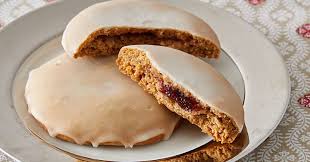
Gingerbread is ageless!

Good to know … Was recorded to be the World’s largest gingerbread house but it broken. Lately, recorded was set by the Mall of America in 2006. Here is the size to have a hint … the new winning gingerbread house, spanning nearly 40000 cubic feet, was erected at Traditions Golf Club in Bryan, Texas. The house required a building permit and was built much like a traditional house. Used 4000 gingerbread bricks during its construction. To put that in perspective, a recipe for a house this size would include 1800 pounds of butter and 1080 ounces of ground ginger … Sounds more like a gingerbread resort!

© Aggie Reiter

“Q” & “A” … During the Russian Rule Inherited One Pot Meals @ Hungary

From Russia to Hungary many meals have been inherited into Hungary’s gastronomy.

Until the beginning of the 20th century, the order of food served was as follows: appetizers, salads, jellies, pies. This was followed by grilled meats and to end a meal was/is unique the Russia way, traditionally closed with soup … Here if so, after appetizer or not starting with the soup … the Russians say to end the meal with soup the digestion is greatly aided by the soup consumed.

The most important Russian dishes are known all over the world, such as borsch, scsi, pelmeny or pirog, and their national drink need not have to be introduced cause well known everywhere around the world, the Russian vodka … but the Hungarians rather have a sip of their Pálinka.

“Q” … From where originates the Beetroot Herring Salad?

“A” … It is a Russian and Ukrainian speciality.

“Q” … What does beetroot herring salad consist of?

“A” … Main ingredients … Herring, vegetables (potatoes, carrots, beetroots), onions, mayonnaise.

Q” …What is one of the popular Russian mouthwatring meal also inherited for the Hungarians?

„A” … Borsch Beef  … Stroganoff Style

„Q” … Interested… what is the difference between Goulash and Stroganoff?

„A” … The traditional Goulash is a thick stew/soup, usually may be in use of beef lower leg, the hindquarters, the brisket or the shoulder bladecut of meat suited to slow cooking. It usually contains potatoes and other vegetables, as well as noodles. A true Stroganoff consists of paprika-dusted fillet steak quickly pan fried with mushrooms and onions in a sour cream and brandy sauce.

“Q” … What kind of meat is Strogonoff made of?

„A” … Main course of Stroganoff can be prepared in any form of meat … beef, chicken or turkey. The main dish is often accompanied by side dishes: potatoes, pasta, rice, barley porridge, vegetables either boiled, fried or steamed.

“Q”… How do you add flavoring to Stroganoff?

“A” … Salt, Pepper & Onion Powder – Most recipes call for these not-so-spicy ingredients. While browning your coated beef, throw in some real chopped onions (1/4 cup), a couple sliced cloves of garlic, a little tarragon, sea salt, fresh mushrooms and yes, some hot mustard.

„Q” … Is Gingerbread originally a Russian dessert?

„A” …  The dessert at the time being was called “honey bread” first enjoyed in Ancient Egypt and claimed top have been brought to Europe in 992 CE by the Armenian monk Gregory of Nicopolis to Russia. At that time, gingerbread was made from rye flour mixed with honey and berry juice. It got its modern name when people started enhancing this recipe with spices from India and the Middle East. Decades later a square slab of spicy cake filled with jam or condensed milk. The cake is still extremely popular in Russia and same in Hungary by the local confectioners and home-made. The gingerbread’s is one of the sweet cake, or type of cookie or biscuit popular in France, Sweden, England, America containing within several different recipes.

Recipes coming up @ Part2.

© Aggie Reiter

“Q” & “A” … The Birth of the Lángos … The Origin of Lángos – (fried scone)

This slideshow requires JavaScript.

Most probably many who have not visited Hungary or have never met, heard about the „Lángos” will raise a question or two, but who have tasted it will always remember the crispy golden crunch!

During the Turkey occupying the territory of Hungary, the Turkish culinary habits came into the foreground, both countries population had and are sweet-toothed. Hungarians borrowed the „Pogácsa” (see previous upload), „Lángos”  fried scone. Also stayed as a traditional cake the „Bejgli” (basically baked for the season holidays.) Indeed the Hungarians used the traits of Turkish cuisines.

„Q” … Where …  whence origin the Lángos?  „A” … According to some assumptions the Langos „invented” in Hungarian cuisine during the Turkish occupation, other claims saying to be of ancient Roman origin.

„Q” … „Since when do Hungarians eat Lángos”?  „A” …  It is likely to be counted back in time, most probably as old as the bread.

„Q” … “What is a Langos?  „A” … It is a deep-fried flat bread made into a round, flat shape. The name comes from “láng”, the Hungarian word for flame/fire. The modern lángos, despite its name, is deep fried and not done in open flame. The savoury Lángos fried back then in fat, now-a-days in Hungary fried only in oil.

“Q” … How were the Lángos baked? “A” … The lángos were baked in the oven. After rising of bread a piece was cut out and hand extended and tossed on the coals. This deep-fried flat bread was traditionally baked at home and used as a quick filling meal for farm workers. So that on the days when the new bread was baked, also the bread lángos made. Was eaten along at breakfast, with sour cream, jam or powdered sugar.

Now-a-days … Most of the lángos sellers are rather hard to trace in Budapest or in the regions of Hungary, but locals will be handy to advise. One thing for sure the city markets always welcome the foreigners for a bite.  For foodie lovers worth a stop and taste not only the classic salt and/or typical garlic sauce version, but the one with ham-cheese-sour cream/cheese-sour cream, onion and/or bacon, or with dill-cottage cheese/smoked pork/chicken, Hungarian stew „pörkölt”,  Hungarian sausage „kolbász”, the Hungarian paprika – hell stronger than the chili – with all sorts of fillings. Foreigners staying in Hungary most probably had already tasted the unquestionably Lángos, and foreigners, tourist  will discovers … taste it – love it … especially with the endless varieties of toppings and fillings.

Most probably day trippers simply will not be able to choose from “fortified” with sausage, bacon and deciding to choose from several toppings. Worthwhile to also taste the stuffed lángos with inside pork or poultry stuffings, hot or medium fillings. Despite its dense appearance, the lángos is light, with a pillow texture on the outside and a crispy golden crunch in the middle. Anytime time of the day the Hungarians have their favorite Lángos. It can be very filling, so you might want to try before a main meal. The Langos is certainly something to avoid being on a diet, but once in a while people may commit a sin.

Now the time has come for those who may wish to bake their own Lángos at home, keep in mind to focus on the flour, and as much of a great significance to have the fresh yeast as well. The supply of the tows is very wide. Once baked, worthwhile to make topping with garlic (garlic is a smelly super food enriched with Vitamin B1, B2, B3 and also known for natural health care for centuries, so need not give up, go for it … Never mind for the smelly garlic,  avoid your breath from the unpleasant smell of garlic, chew a few strands of raw parsley to cover the unpleasant breath and its gone.

Prepare your own Lángos step-by-step …

Ingredients for 8 pieces: 50 dkg potatoes, 5 tbs flour, 2 pieces eggs, 1 tsp salt. Preparation time: 30 minutes.

Baking instructions: Without yeast: Wash the potatoes thoroughly and cook in their shells. Peel and still warm through the potato press. Wait for it to cool, then knead with eggs, flour and salt. If it is too sticky or not stretchable, add more flour. Transfer the dough to a floured board and roll it out to about one and a half inches thick, then whisk in medium sized discs. Boil the oil, then pull the dough with your hand and fry both sides of the flame until golden. When done, remove it on a paper towel and drain off the oil.

With yeast: Let rinse the yeast in 2 dl of lukewarm sugary milk, mix 10 dkg of flour and to make yeast. Peal the cooked potatoes are passed through a sieve and mixed with the remaining flour. Add the yeast and the remaining milk, a little salt. Knead the dough for at least 10 minutes. Leave dough at a warm place cover it, wait to rise to the size of the original dough as three times bigger. Stretch it a fingertip thick, tear it down with a glass and stretch the circles well by hand. Fry in plenty of hot oil. Your hands should be oiled, so dip your hands previously in oil so that the dough does not stick to the palm. It takes cca. 10-20 sec. to bake then turn over the other side. Pick the Lángos out from the pan with metal forceps … Be careful cause it is very hot. It is advisable to place the Lángos on a grid so that the oil may drip and cool down a bit.

Don’t wait for the end of the quarantine try it now – bake your own Lángos at home.

© Aggie Reiter